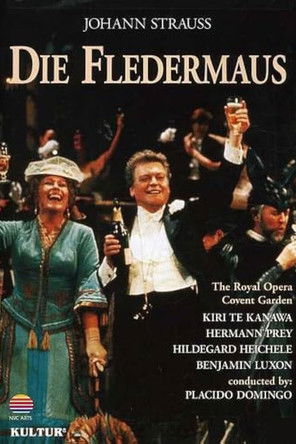
Most opera houses ring in the New Year with Johann Strauss Jr.'s most popular operetta--the festiveness of which is appropriate for the occasion--and this December 31, 1983, Covent Garden performance follows suit. An exceptional cast--led by Hermann Prey and Kiri Te Kanawa as the couple whose marriage survives the comic indiscretions of three long acts--obviously has as much fun as the audience. Plácido Domingo leads the Orchestra of the Royal Opera House through its paces with panache. Prince Orlofsky's Act II party is always a splendid opportunity to pull out all the stops with surprise "guests," and this performance makes the most of its chance: entering the proceedings to sing one of his tailor-made chansons, "She," is French crooner Charles Aznavour, who is followed by dancers Merle Park and Wayne Eagling, their delightful pas de deux flashily choreographed by Sir Frederick Ashton.
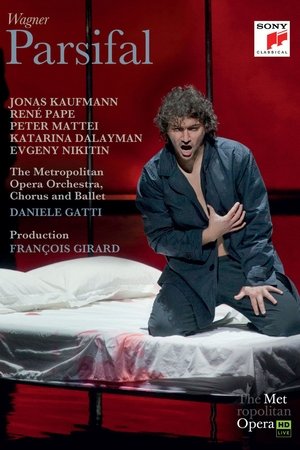
The Met assembled an ideal cast for François Girard’s acclaimed new production of Wagner’s final masterpiece: Jonas Kaufmann in the title role of the fool “made wise by compassion”, René Pape as Gurnemanz, the veteran Knight of the Grail, Katarina Dalayman as Kundry, Peter Mattei is Amfortas, the anguished ruler of the Grail’s kingdom, and Evgeny Nikitin sings the evil magician Klingsor.
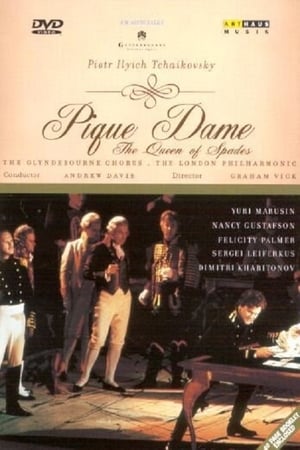
Filmed at the 1992 Glyndebourne Festival in Lewes, England, this production won unanimous critical acclaim for its innovative interpretation of Tchaikovsky's opera "Pique Dame" ("Queen of Spades"). Although sung in Russian, the production features English sopranos Felicity Palmer as the old countess and Nancy Gustafson as Lisa. Russian tenors Dimitri Kharitonov, Sergei Leiferkus and Yuri Marusin co-star.
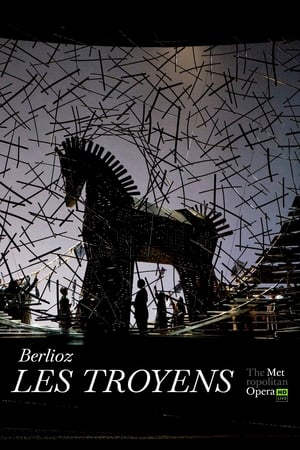
Berlioz’s epic masterpiece retells the magnificent saga of the aftermath of the Trojan War and the exploits of Aeneas. Rising tenor Bryan Hymel, in his Met debut, stars as the hero charged by the gods with the founding of the city of Rome. Susan Graham is Dido, Queen of Carthage, who becomes Aeneas’s lover, and Deborah Voigt sings Cassandra, the Trojan princess whose warnings about the impending destruction of Troy go unheeded. Francesca Zambello’s atmospheric production, featuring choreography by Doug Varone, is led by Met Principal Conductor Fabio Luisi.
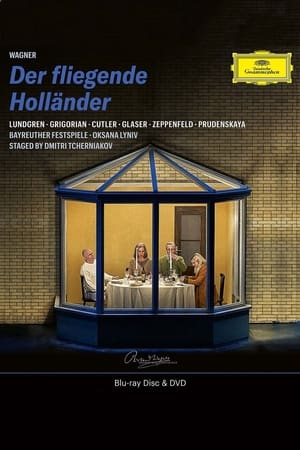
This is a performance of Wagner's three-act opera Der fliegende Holländer ("The flying Dutchman"), performed by Bayreuther Festpiele, directed by Dmitri Tcherniakov. The staging was notable for two other milestones, as Oksana Lyniv became the first woman to conduct at Richard Wagner’s legendary Festspielhaus since its opening in 1876, and the sensational Lithuanian soprano Asmik Grigorian made her house debut with a standout performance as the opera’s heroine, Senta. The exceptional cast also included John Lundgren (The Dutchman), Georg Zeppenfeld (Daland), Eric Cutler (Erik) and Marina Prudenskaya (Mary).
Figaro and his betrothed Susanna are preparing for their wedding day. The Count, Figaro's master, has plans to use his ancient right to sleep with Susanna on their wedding night. The couple and the Countess plot to keep the Count at bay.
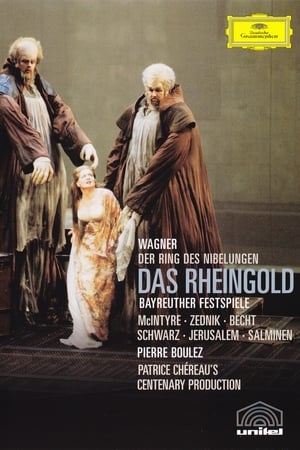
This is a beautifully conducted and thoughtfully staged performance of the first opera (the prologue) in Wagner's Ring Cycle. As soon as the clouds of mist have dissipated, while the daring, long-held opening chord is still reverberating, the screen clears to show not only the River Rhine and the three maidens (dressed like prostitutes in this production) assigned to guard the gold hidden there. It also shows an enormous dam (not mentioned in Wagner's text). This is the underwater base of a hydroelectric plant, and its presence tells us two things immediately: that this production takes the story out of the vaguely medieval fantasy world in which Wagner had placed it, and that a basic theme of the four-opera cycle would be power. Alberich, the Nibelung, is willing to renounce the love of women, after stealing the gold from the Rhine, to become the ruler of the world. Another basic theme is greed.
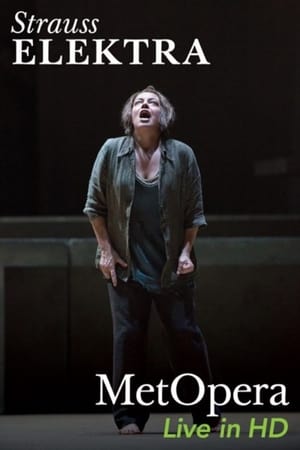
The great singing actress Nina Stemme gives a heart-wrenching performance in the title role of Strauss’s blazing one-act drama, adapted from the ancient Greek myth. Patrice Chéreau’s acclaimed production—the last staging he worked on before his death in 2013—also stars Waltraud Meier as Klytämnestra, Elektra’s nightmare-haunted mother, Adrianne Pieczonka as Chrysothemis, her sister, and Eric Owens as Orest, their brother, whose return home brings their family story to a terrifying climax. Esa-Pekka Salonen conducts the monumental and highly influential score.
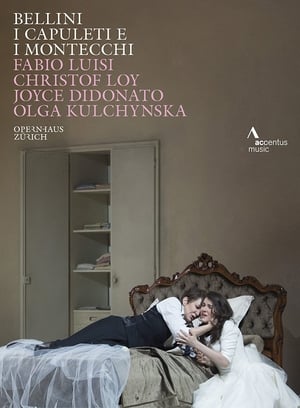
The story of Romeo and Juliet, who pay for their passion with their lives, has been interpreted in the widest variety of literary and musical genres ever since the Renaissance. Vincenzo Bellini's much too rarely staged Romeo and Juliet opera, I Capuleti e i Montecchi, is far removed from Shakespeare's version: rather than telling the story of a tenderly burgeoning love, the piece is an account of the last 24 hours in the two young people's lives. The underlying mood of the piece is thus one of melancholy - which then develops into a catastrophic maelstrom. The première of the thrilling Zurich production of this bel canto gem, directed by Christof Loy and conducted by Fabio Luisi, was enthusiastically received by critics and audiences alike. The two protagonists also met with acclaim: experience world star Joyce DiDonato in the trouser role of Romeo, with the young Ukrainia soprano Olga Kulchynska at her side as Giulietta.
Performance 07.03.2021 at Vienna State Opera
Raised by a scheming dwarf and unaware of his true family origins, a young man embarks on an epic journey.
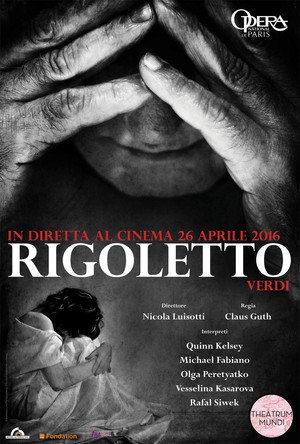
Rediscover a monumental moment in Verdi's oeuvre: the immortal Rigoletto! In this eye-catching production staged by Claus Guth at Paris's Opéra Bastille, soloists Quinn Kelsey (Rigoletto), Olga Peretyatko (Gilda), Michael Fabiano (the Duke of Mantua), and Rafal Siwek (Sparafucile) put their incredible talents to captivating use. To revisit this well-known opera, Guth recounts the story from the point of view of an aged Rigoletto, a clown past his prime, who watches his memories pass before his eyes as he looks back on his life. The set design by Christian Schmidt and Olaf Winter's careful lighting create an imposing, chilly, and implacable ambiance, perfect for the melodrama unfolding onstage. The Choir and Orchestra of the Paris Opera, under the baton of Nicola Luisotti, offer up a powerful interpretation of this timeless work.
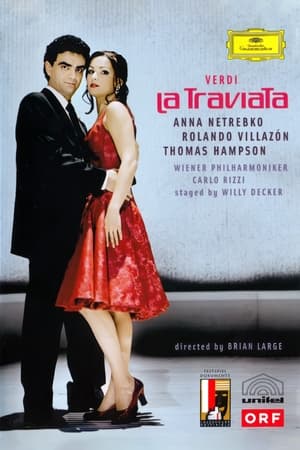
Violetta, a courtesan much wooed by Parisian society, organizes a grand party that is attended, amongst others, by the young Alfredo Germont. He confesses his feelings to Violetta, who is already suffering from consumption. She vacillates between genuine affection and a realistic assessment of her situation as a "fallen woman", which precludes any lasting relationship with a man. The Willy Decker production of La Traviata, recorded live at the Salzburger Festspiele in August, 2005. Anna Netrebko stars as Violetta Valéry, with Rolando Villazón as Alfredo Germont and Thomas Hampson as Giorgio Germont. Carlo Rizzi conducts the Wiener Philharmoniker.
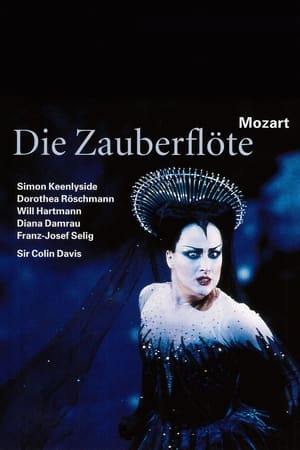
The Queen of the Night enlists a handsome prince named Tamino to rescue her beautiful kidnapped daughter, Princess Pamina. Aided by the lovelorn bird hunter Papageno and a magical flute that holds the power to change the hearts of men, young Tamino embarks on a quest for true love, leading to the evil Sarastro's temple where Pamina is held captive. The internationally renowned Mozart interpreter Sir Colin Davis conducts the chorus and orchestra of the Royal Opera House and a glittering cast in David McVicar's 2003 production of the opera Mozart wrote in the final year of his life, recorded live at Covent Garden.
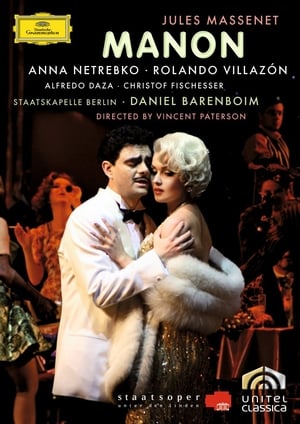
Massenet's opera centres on its charming but contrary heroine, the vivacious young Manon who longs for luxury and excitement. We first encounter her en route to a convent, where her family are sending her to be educated. Along the way, she falls in love with the young student Des Grieux, and, impetuously, runs off with him. She soon leaves him, however, to become the mistress of a rich nobleman. Thus begins her descent into criminality and depravity, all too soon dragging the besotted Des Grieux with her, until she is imprisoned. Despite its tragic story, the opera is full of French charm and vitality – typified by the ambiguous Manon herself. Her plight is touching because of the subtle play of innocence and calculation in her character. The score contains many sparkling arias and ensembles, moving rapidly from moods of exuberance to tenderness, with perfect dramatic timing. Recorded live at the Staatsoper Unter den Linden, Berlin, April/May 2007.
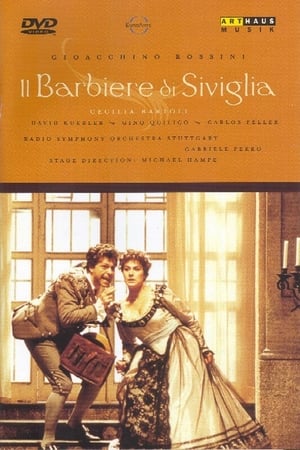
Live performance from Schwetzinger Festspiele, 1988. What sets this IL BARBIERE DI SIVIGLIA apart from all others available is its elegant realism. None of its visuals are the least bit cartoonish or blatantly designed for comedy. Dr. Bartolo’s house is a stark, stern-looking structure of plastered brick with a comfortable yet plain, white-curtained interior, while the costumes are highly realistic 18th century garb in subdued colors. Yet despite its fairly austere appearance the production is delightful, thanks to its performers and staging. The stage business is lively, witty and free of excessive slapstick, and every singer brings his or her character to life, all offering rich, vibrant characterizations that strike a perfect balance between comedy and humanity.
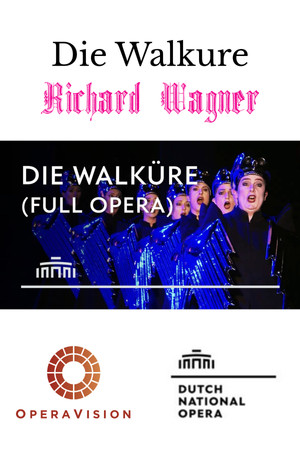
This is the Ring cycle of the Dutch National Opera, directed by Pierre Audi. Fleeing for his life, Siegmund seeks shelter at Sieglinde's house. Her husband Hunding happens to be one of Siegmund's pursuers, and the two of them must cross swords the next day. As Siegmund laments his lack of a weapon, Sieglinde directs him to the sword Nothung stuck in an ash tree. Despite discovering they are twin siblings, the two fall in love. The King of Gods Wotan, their father, sends his Valkyrie daughter Brünnhilde to aid Siegmund. Fricka protests, and Wotan uses his spear to break Siegmund's sword during the battle. Siegmund is slain, but Brünnhilde rescues both the sword fragments and Sieglinde who is pregnant with Siegmund's child Siegfried. Wotan is angry that she intervened, but since Brünnhilde is his favorite child, he merely strips her of immortality and sends her into an enchanted sleep, surrounded by fire.
This is the Ring cycle of the Dutch National Opera, directed by Pierre Audi. Alberich's brother Mime raises the orphan Siegfried, hoping that Siegfried will kill Fafner and enable Mime to gain the ring. Mime attempts unsuccessfully to reforge the Nothung. Fulfilling prophecy, Siegfried reforges the sword himself and kills Fafner, who has the form of a dragon. When he accidentally tastes the dragon's blood spilt on his hands, Siegfried understands the song of a woodbird, who instructs him to take the Ring from Fafner. Reading Mime's thoughts of betrayal, Siegfried kills the dwarf as well. The woodbird also informs Siegfried of a mysterious woman asleep in the midst of fire, and Siegfried sets off to find her. After defeating a disguised Wotan and breaking his spear, Siegfried successfully awakes Brünnhilde, and the two fall in love.
This is the Ring cycle of the Dutch National Opera, directed by Pierre Audi. In the depths of the Rhine, the three Rhinemaidens guard the Rhinegold, a treasure of immeasurable value. The Nibelung dwarf Alberich is dazzled by the sight of it. The girls explain that whoever wins the gold and forges it into a ring will gain power over the world, but must first renounce love. Frustrated by his unsuccessful attempts to catch one of the girls, Alberich curses love and steals the gold. Wotan, lord of the gods, is reproached by his wife Fricka: he has promised to give Freia, goddess of youth, to the giants Fasolt and Fafner in return for their building a fortress for the gods. When the giants demand their reward, Loge, the god of fire, suggests an alternative payment: the ring Alberich has forged from the Rhinegold, and his other treasures. The giants agree, and Wotan and Loge leave for the Nibelungs’ underground home.
Puccini: La Fanciulla del West