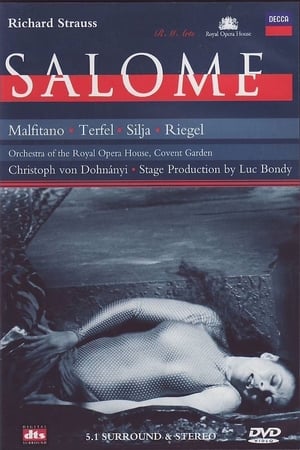
Richard Strauss's opera, from the Royal Opera House, Covent Garden.
Live performance at the Metropolitan Opera in 2000.
Live performance from the Opéra National de Paris, 2003.
Robert Lepage’s dreamlike production, with its thousands of twinkling LED lights stretching across the stage to represent the sea, encapsulates the mystic feeling of L’Amour de Loin, Saariaho’s haunting opera of distant love. Eric Owens is Jaufré Rudel, a troubadour in 12th century France who has become tired of his hedonistic life and longs for an idealized love. Enter the Pilgrim (Tamara Mumford) who tells him his perfect love does, in fact, exist, far across the sea. She is Clémence, Countess of Tripoli (Susanna Phillips). The magic of the characters’ inner lives as they explore the meaning of love, longing, life, and death is heightened by Saariaho’s hypnotic and bewitching score, conducted by Susanna Mälkki.
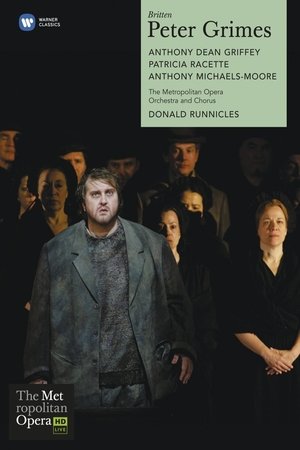
Anthony Dean Griffey creates a haunting portrait of the outcast fisherman who struggles under the burden of presumed guilt. This chilling production by Tony Award-winning director John Doyle also features the superb Patricia Racette as the sympathetic Ellen Orford and the Met chorus in a truly hair-raising performance as the oppressively judgmental fishing village.
Mozart’s early masterpiece returned to the Met for the first time in more than a decade with Music Director Emeritus James Levine, who led the work’s company premiere in 1982, again on the podium. Tenor Matthew Polenzani brings both steely resolve and compassionate warmth to the title king of Crete, who is faced with an impossible decision. With her rich mezzo-soprano, Alice Coote sings the trouser role of Idomeneo’s son Idamante, who loves the Trojan princess Ilia, sung with delicate lyricism by Nadine Sierra. Elza van den Heever gives a thrillingly unhinged portrayal of the jealous Elettra. Jean Pierre-Ponnelle’s timeless production blends the grandeur of ancient myth with the elegance of Enlightenment ideals.
In his new production, Robert Carsen places the action at the end of the Habsburg Empire, underscoring the opera’s subtext of class and conflict against a rich backdrop of gilt and red damask
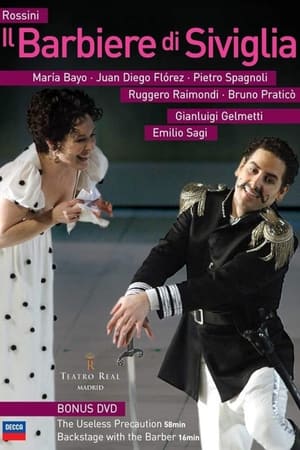
Stage director Emilio Sagi's production of the legendary Barber of Seville is enriched by a bright distribution. Maria Bayo returns to one of her signature role as Rosina, opposite Juan Diego Florez, the Rossini expert tenor. The title role is embodied by the Italian baritone Pietro Spagnoli, while Ruggero Raimondi and Bruno Pratico reconcile the audience with Don Basilio and Don Bartolo.
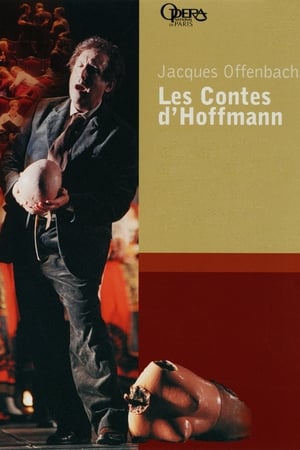
Opera in three acts, a prologue and an epilogue, by Jacques Offenbach (1819-1880), with a libretto in French by Jules Barbier (1825-1901), based on a work that Barbier himself and Michel Carré (1821-1872) had written based on stories by E.T.A. Hoffmann (1776-1822). Approximate duration: 2 h 45 min Recommended for those over 15 years old. The young poet Hoffmann, accompanied by Nicklausse, his alter ego and confidant, is in a tavern next to the theatre where Mozart's Don Giovanni is being performed. During the opera's intermission, some diners arrive at the bar who, upon seeing the poet, encourage him to sing and tell them the story of his famous love affairs. Hoffmann finally gives in and shares with them the stories of Olympia, Antonia and Giulietta. They, absorbed in the poet's stories, remain in the tavern, forgetting about the opera performance.
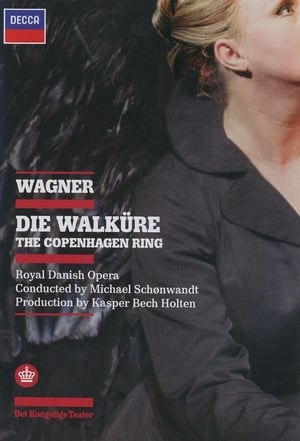
Die Walküre (The Valkyrie), WWV 86B, is an opera in three acts by Richard Wagner with a German libretto by the composer. It is the second of the four operas that form Wagner's cycle Der Ring des Nibelungen (The Ring of the Nibelung). The story of the opera is based on the Norse mythology told in the Volsunga Saga and the Poetic Edda.[1][2] In Norse mythology, a valkyrie is one in a group of female figures who decide which soldiers die in battle and which live. Die Walküre's best-known excerpt is the "Ride of the Valkyries". DVD release June 2009.
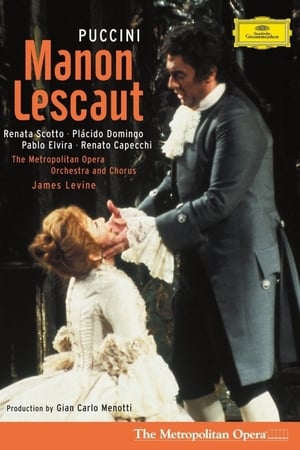
All the throbbing eroticism—and ultimate heartbreak—of Puccini’s youthful score is unleashed by James Levine and his top-flight cast. Plácido Domingo is Des Grieux, the handsome, headstrong young aristocrat who falls head over heels for the enticing, impetuous Manon Lescaut (Renata Scotto). Manon returns his love, but her obsession with luxury ruins them both. Gian Carlo Menotti’s opulent production, with sets and costumes by Desmond Heeley, superbly captures the colorful world of 18th century France.
Der Rosenkavalier - Bayerische Staatsoper
What happened to Figaro and his friends after the events told in Rossini’s and Mozart’s operas? One possible sequel is told in John Corigliano’s “grand opera buffa” The Ghosts of Versailles—an uproariously funny and deeply moving work inspired by Beaumarchais’s third Figaro play, La Mère Coupable, and commissioned by the Met to celebrate its 100th anniversary. This telecast captures its world premiere run, conducted by James Levine. Håkan Hagegård is Beaumarchais, Figaro’s creator, who is deeply in love with Marie Antoinette (Teresa Stratas in a heart-searing performance) and determined to rewrite history and save her from the guillotine. A young Renée Fleming, at the beginning of her international career, sings the unfaithful Rosina. Gino Quilico is the wily Figaro who tries to take matters in his own hands, and Marilyn Horne stops the show as the exotic entertainer Samira.
Visually this is a gripping production which captures the drama of this opera perfectly. It's downright exciting! and I found the singing, acting, and orchestral playing reasonably fine. I found only one major problem with it, a problem that kept Puccini for quite a few years. Turandot has been looking for an opportunity to kill Calif and Calif has singlemindedly tried to get Turandot to love and wed him focusing on her and ignoring a better looking girl who loves him truly. The problem is how to get the audience to applaud the match once Calif gets his wish. Puccini couldn't figure out how to do it. The traditional quick ending doesn't do it, and Berio's attempt is longer , tries its best, but ends up making it plain this is one wierd couple.
Wagner's Ring of the Nibelungen is regarded as one of the most important milestones in the history of music. In the first part, the Rheingold, it begins with the chain of fateful entanglements that ultimately attracts the downfall of the race of the gods.
The stupendous climax to Wagner’s four-part Ring cycle is brilliantly realized by the Otto Schenk/Günther Schneider-Siemssen production and byJames Levine’s monumental conducting. The Met orchestra, chorus, and an all-star cast make this Götterdämmerung one that truly rises to the occasion. Hildegard Behrens’s Brünnhilde must be experienced to be believed, as does Matti Salminen’s richly sung, domineering Hagen. At the center of the drama is Siegfried Jerusalem as Siegfried, who does not realize he has been drawn into a plot of betrayal until it is too late. Christa Ludwig is magnetic as Waltraute and Ekkehard Wlaschiha is a compelling Alberich.
Recorded at the Musiektheater, Amsterdam on 21 & 25 January 2008. Performed by De Nederlandse Opera, composer Jean-Philippe Rameau's renowned tragedy "Castor et Pollux" tells the myth-based story of the selfless love between two brothers: Castor, who is mortal, and the immortal Pollux. When Castor dies trying to prevent the kidnapping of the woman he loves, Pollux decides to become mortal and replace his brother in the Underworld. Finnur Bjarnason, Henk Neven and Anna Maria Panzarella star.
Live performance from Schwetzinger Festspiele, 1992. Based on Voltaire's tragedy, TANCREDI is a story of innocence wronged set against a backdrop of Turks at war with Syracuse. Amenaide, the daughter of Argirio, leader of the senate, is in love with the exiled knight Tancredi. Argirio offers Amenaide's hand in marriage to Orbazzano, the leader of a rival faction, as a token of reconciliation. Amenaide resists this and sends a letter to Tancredi, who is back in Syracuse in hiding. The letter is intercepted, and it is mistaken as an invitation to the Turk Solamir to enter Syracuse. Amenaide is sentenced to death for treachery, but Argirio allows a champion to fight for her vindication... will her beloved Tancredi save her? Bernadette Manca di Nissa, Maria Bayo, and Raul Gimenez star in this Rossini opera with Gianluigi Gelmetti conducting the Radio Symphony Orchester Stuttgart.
Wolfgang Sawallisch conducts this acclaimed staging of Paul Hindemith's ambitious opera of the goldsmith Cardillac, whom fortune seems to favor and then abandon, featuring Donald McIntyre and Maria de Francesca-Cavazza in the starring roles. Filmed in 1985 at the Bavarian State Opera and directed by the legendary Jean-Pierre Ponnelle, the production captures every nuance of Hindemith's powerful tale of love, suspicion and betrayal. Opera Performance, recorded at 16-25 September 1985 at the National Theater in Munich.
Jean-Marie Villegier's modern interpretation of Handel's "Rodelinda" – filmed live at the world-renowned Glyndebourne Opera House in the United Kingdom, sets the timeless tale of jealousy and treachery in the black-and-white world of the silent-movie era. Soprano Anna Caterina Antonacci sings the title role of Rodelinda, with tenor Kurt Streit and bass Umberto Chiummo performing the parts of Grimoaldo and Garibaldo, respectively.