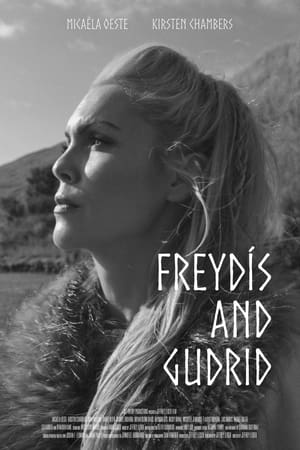
A group of merchants and vikings navigate dramatic events both within and without in this epic musical based on the Icelandic Vinland sagas. As secrets are exposed, two women (Freydís and Gudrid) have a reckoning.
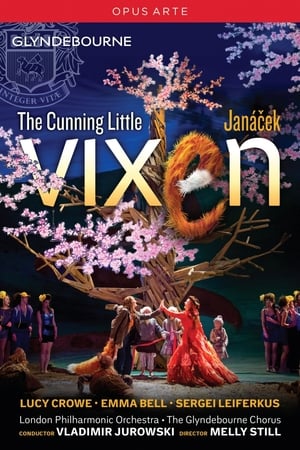
The tale of a quick-witted fox and her escape from confinement for a life in the forest.
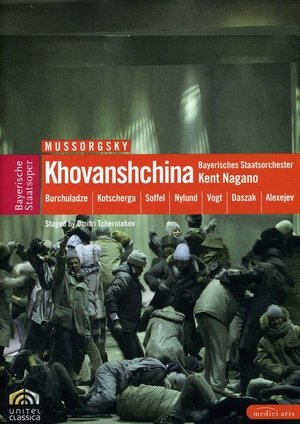
Kent Nagano superbly masters the challenges presented by this score, shapes the dynamics with subtle intensity, and casts the score in a mellow glow. As Marfa, the spurned lover of Ivan Khovansky‘s son Andrei, Doris Soffel unfolds such a rich palette of sonorities, from the pathos of the lower ranges to shaded discant heights, that “one is tempted to speak of a Russian mezzo”. The final chorus, which Mussorgsky did not compose, is played in the orchestrally transparent version of Igor Stravinsky – the third great Russian composer who contributed to making “Khovanshchina“ a timeless, gripping stage work. With his stripped-down sets and historicising costumes, director Dmitri Tcherniakov, one of the new voices of contemporary Russian theatre, builds a bridge to the political present. A lesson in history and music!
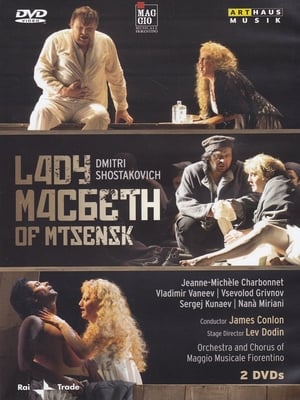
At first glance, the title of Shostakovich’s opera seems to speak for itself: Katherina, neglected and unhappy in her marriage, commits the most heinous crime just like the Shakespearian Lady Macbeth. But Nikolai Leskov’s short novel, which portrays Katherina as a monster, was only the starting point for Shostakovich to elicit understanding for an oppressed woman whose pursuit for self-determination is suppressed by society. Through combining satiric, grotesque and tragic elements in his music, Shostakovich succeeds in striking the balance between repulsion at Katherina’s immoral acts and sympathy for her. Violence, eroticism and the paralysing boredom of Russian society in the 19th century are the founding elements of this composition. The choir and orchestra of the Maggio Musicale Fiorentino conducted by James Conlon accompany tremendous soloists such as Jeanne-Michèle Charbonnet, Vladimir Vaneev and Vsevolod Grivnov in the original language in this live recording.
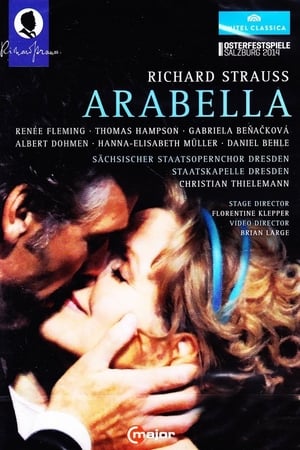
2014 marks a year of celebration recognizing the 150th birthday year of the German late-Romantic orchestral, operatic and lied master composer, Richard Strauss (1864-1949). Arabella (premiered 1933, Dresden) was the last of the half dozen Strauss works to feature a libretto by the great Austrian writer Hugo von Hofmannsthal. This production, from the most recent Salzburg Easter Festival is, after Capriccio, the second of three Richard Strauss operas C Major is releasing in honor of the composers birth, life and work. The star-laden cast includes soprano Renèe Fleming, baritone Thomas Hampson, Albert Dohmen (Covent Garden, Wiener Staatsoper, MET) and Gabriela Beaková (Wiener Staatsoper, Covent Garden). With Christian Thielemann and the Staatskapelle Dresden, the music of Richard Strauss is in the best of hands. (ORF) Thielemann gets the best out of the cast...especially Renée Fleming with her luxurious soprano FAZ
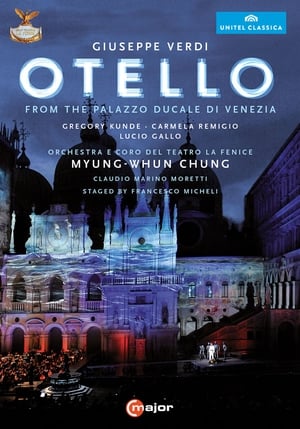
Rarely has a production of Verdi’s Otello been staged in such a prestigious location: the courtyard of the Palazzo Ducale in Venice! This special outdoor “event production” of the Teatro La Fenice takes place amidst genuine late-Gothic and Renaissance architecture highlighted by spectacular projections: “A set of singular fascination” (Il Corriere Musicale). Critics were full of praise for the musical performance, designating conductor Myung-Whun Chung as the “absolutely dominating force” of the performance (GB Opera). The lead role is sung by Gregory Kunde, who successfully interpreted both Verdi’s and Rossini’s Otello in one year, perhaps the first tenor ever to do so. He “reproduces every accent, every colour demanded by Verdi with sensibility and intelligence” (OperaClick).
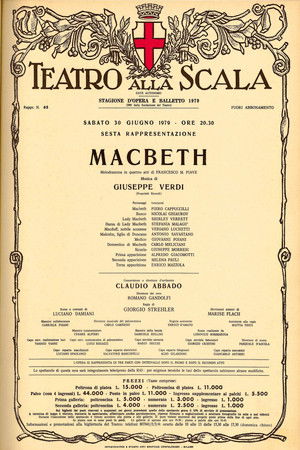
Piero Cappuccilli and Shirley Verrett lead Verdi’s sombre masterpiece, drawn from one of Shakespeare’s most celebrated tragedies. Filmed for television at Teatro alla Scala in 1979, Claudio Abbado conductes a night to remember.
Brazilian "singing film" (filme cantante) directed by Alberto Botelho, featuring a screen synchronization of the famous Italian tenor aria "Amor ti vieta" (composed by Umberto Giordano for his 1898 verismo opera Fedora) and performed by Enzo Bannino.
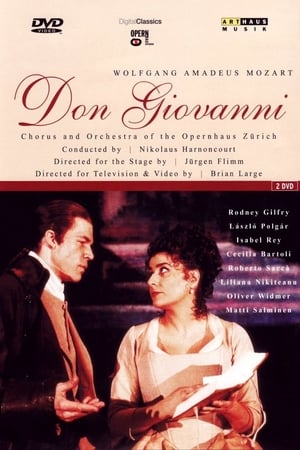
Live 2001 production from the Zurich Opera House of the classic Mozart/Da Ponte opera, with Nikolaus Harnoncourt conducting and directed for television and video by Brian Large.
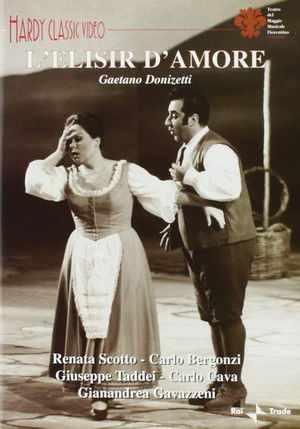
Released in 1967, the famous black-and-white film adaptation of Donizetti's opera, starring tenor Carlo Bergonzi and soprano Renata Scotto, alongside Giuseppe Taddei, is known for its charming performances and popular recordings. The film and associated recordings captured leading Italian singers in their prime, showcasing Donizetti's beloved work, famous for the tenor aria "Una furtiva lagrima". L'Elisir d'amore saw various productions and releases in 1967, including a RAI TV film in Italy, performances at Glyndebourne starting June 17, San Francisco Opera in October, and a World Record Club vinyl release in the UK, indicating it was a popular year for Donizetti's opera across different media
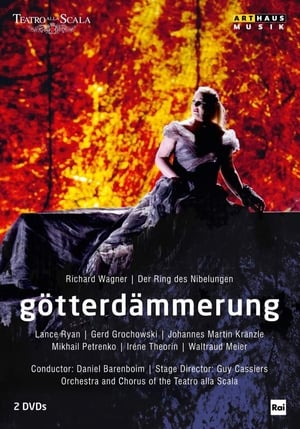
Götterdämmerung, the final instalment of Wagner’s Ring of the Nibelung, is a story of human passions. Two essentially benevolent creatures, involved with and possibly doomed by their traffic with the gods, find treachery and evil in the world of the humans, and are ruined by the dark side of humanity. Iréne Theorin, acclaimed worldwide for her portrayal of Wagner’s heroines, stars as Brünnhilde opposite Lance Ryan, who continues his radiant portrayal of the tragic hero Siegfried. The strong cast also includes Mikhail Petrenko as the dark antagonist Hagen and Johannes Martin Kränzle, who once again shines as his father Alberich. Waltraud Meier has a memorable appearance as Brünnhilde’s sister Waltraute. With this 2013 recording of Götterdämmerung, the musically and visually compelling Scala Ring Cycle by Daniel Barenboim and Guy Cassiers was completed and proved to be one of the highlights of the Richard Wagner bicentenary.
In Siegfried, the “Second Day” or third evening of the Ring Cycle, we meet the pivotal hero of the epic tale. The energetic drive from Die Walküre is pursued here while Siegfried finally recaptures the mighty ring from Fafner the Dragon and awakens Brünnhilde from her penal sleep on the great rock. Lance Ryan, having interpreted this role on the greatest stages of the world including the Bayreuth Festival, portrays the naïve hero. His antagonists are Peter Bronder, great and agile as Mime, Terje Stensvold, an experienced Wanderer and Johannes Martin Kränzle, who continues his mean and deceitful depiction of Alberich. The leading ladies are Nina Stemme, once again unrivalled as Brünnhilde and Anna Larsson, moving as the God-mother Erda.
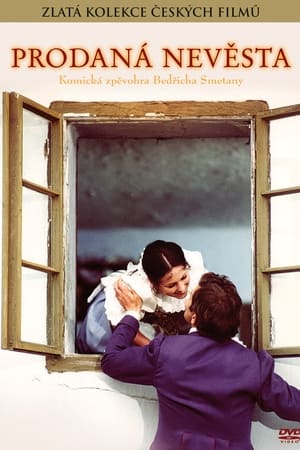
Set in a South Bohemian village, this faithful film version of Smetana’s opera follows farmer Krušina’s plan to marry his daughter Mařenka to wealthy Vašek. Mařenka loves Jeník, a stranger. Through matchmaking schemer Kecal’s plots and revealed identities, true love triumphs in a festive village wedding.
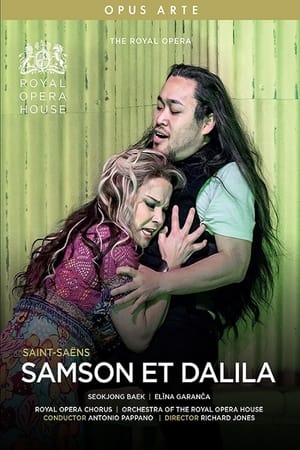
Pious restraint comes face to face with sensuous hedonism in Camille Saint-Saëns’s grand-opera retelling of the Bible story of Samson and Delilah. Multi-Olivier Award winning director Richard Jones returns to The Royal Opera to stage this spectacular fin-de-siècle masterpiece, not performed at Covent Garden since 2004. Elina Garanca stars as the Philistine Dalila, SeokJong Baek as the inspiring Jewish hero Samson and Antonio Pappano conducts the full forces of the Orchestra of the Royal Opera House. With superb singing in solos and duets of great intimacy and fervour, gorgeous music with thrilling orchestral interludes, and splendid choral numbers for the Royal Opera Chorus – this is a performance to remember.
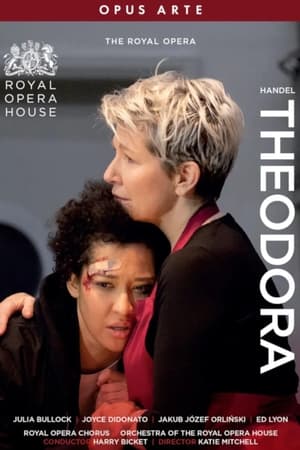
Julia Bullock, Joyce DiDonato and Jakub Jozef Orlinski star in Katie Mitchell’s thrilling new production of Handel’s Theodora in an alternative modern-day reality, Theodora, a religious fundamentalist, plots for the resistance against the Roman occupation. But when her secret plan to destroy the Roman embassy is discovered, she learns the true brutality of her oppressors. Harry Bicket conducts the Orchestra of the Royal Opera House
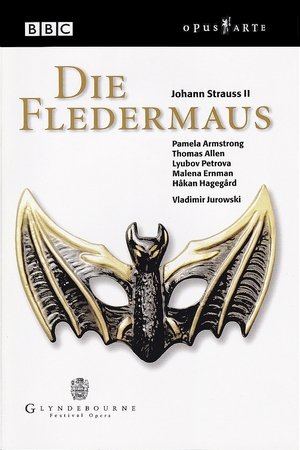
Glyndebourne's pulsating new production of the Waltz King's much-loved comic operetta. Its story centers on a magnificent masked ball, given by a Russian prince, that brings together all the main characters in various disguises. The three-act journey from boudoir to ballroom to jail provides ample opportunities for farce and humor, but also for genuine human emotion and a surprisingly realistic view of urban life.
Shortly before his death, Romitelli together with his friend Paolo Pachini and the poetess Kenka Lèkovich, resurrected the dream of a total scenic art (a furnace of sensations, they called it, an_ initiation rite_) in the manner of the Futurists: rhythms and gleams of light striking metals (for the video part), poems in iron and chrome singing of fusion with matter (Kenka Lekovich), acoustic/electric music highly amplified, filtered, spatialised, in as artificial a manner as possible. An Index of Metals bears vigorous witness to this determination to go beyond: sizzling orchestration, electric and psychedelic; a voice which plays on effects, murmurs with reverb, cackles into a megaphone, screams like a pop star; and an electric guitar score of a kind that no ‘serious’ composer has ever written, sliding across an infinite range of tones with a lightness of touch and blurring of contours.
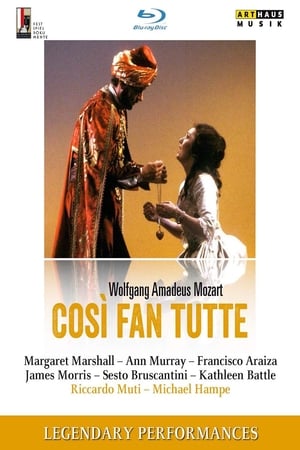
An excellent performance of this delightful opera. The principals are superb, especially the sisters. Bruscantini as Don Alfonso is past his prime, but he knows and understands the role inside out, so one does not even notice his vocal limitations. Araiza is in top form as Ferrando, and Morris makes virile Guglielmo. The only disappointment is Battle as Despina. Unlike her partners, she does not have feel for the Mozart ensemble, and her vocal mannerisms are totally unbecoming. How the producers allowed that to happen is a mystery. Muti's conducting is terrific, much better than on his La Scala video, where he is uninvolved.
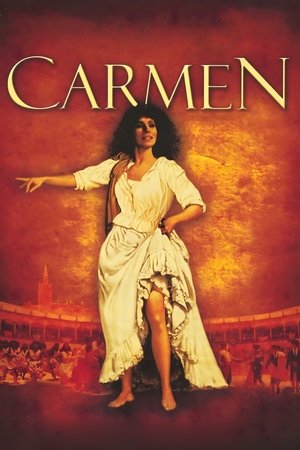
In the early 19th century, in Seville and the surrounding area, Carmen seduces the sergeant Don José, who deserts the army to be with her. But the beautiful gypsy falls in love with the bullfighter Escamillo, much to Don José’s despair.
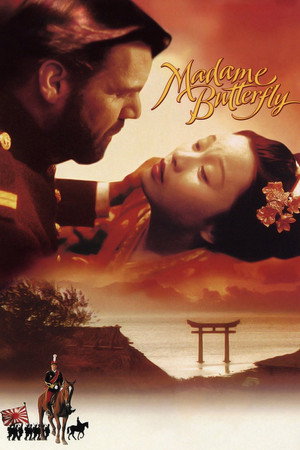
Cio-Cio-San, a young Japanese geisha, seeks to fulfill her dreams through marriage to an American naval officer. Her faith in their future is shattered by his empty vows and the loss she endures touches something deep within us all.