In the years before World War II, a tomboyish postulant at an Austrian abbey is hired as a governess in the home of a widowed naval captain with seven children and brings a new love of life and music into the home.
A compilation of four Mother Goose stories "photographed in three-dimensional animation" and unified by a prologue and an epilogue with Mother Goose herself magically setting up a projector to show the films. The familiar nursery rhymes are "Little Miss Muffet," "Old Mother Hubbard," "The Queen of Hearts," and "Humpty Dumpty." Preserved by the Academy Film Archive in 2004.
Stop-motion puppetry version of the classic fairy tale. Preserved by the Academy Film Archive in 2004.
A man who loves games and theatre invites his wife's lover to meet, setting up a battle of wits with potentially deadly results.
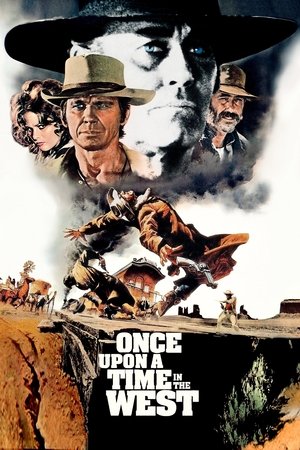
As the railroad builders advance unstoppably through the Arizona desert on their way to the sea, Jill arrives in the small town of Flagstone with the intention of starting a new life.
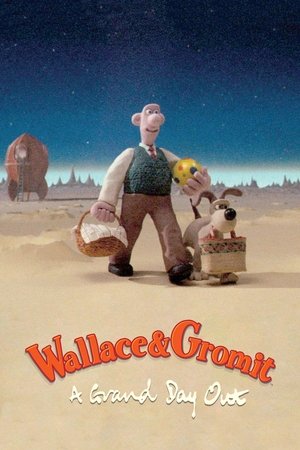
Wallace and Gromit have run out of cheese, and this provides an excellent excuse for the duo to take their holiday to the moon, where, as everyone knows, there is ample cheese.
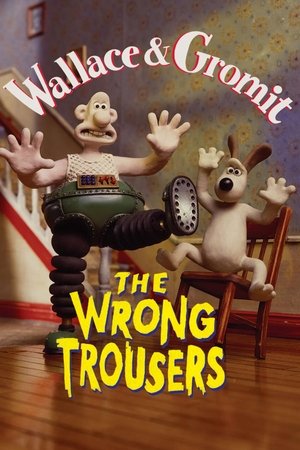
Wallace rents out Gromit's former bedroom to a penguin, who takes up an interest in the techno trousers created by Wallace. However, Gromit later learns that the penguin is a wanted criminal.
Wallace's whirlwind romance with the proprietor of the local wool shop puts his head in a spin, and Gromit is framed for sheep-rustling in a fiendish criminal plot.
When illegal card dealer and recovering heroin addict Frankie Machine gets out of prison, he decides to straighten up. Armed with nothing but an old drum set, Frankie tries to get honest work as a drummer. But when his former employer and his old drug dealer re-enter his life, Frankie finds it hard to stay clean and eventually finds himself succumbing to his old habits.
Four people recount different versions of the story of a man's murder and the rape of his wife.
Retired wealthy sea captain Jim McKay arrives in the Old West, where he becomes embroiled in a feud between his future father-in-law, Major Terrill, and the rough and lawless Hannasseys over a valuable patch of land.
Kris Kringle, seemingly the embodiment of Santa Claus, is asked to portray the jolly old fellow at Macy's following his performance in the Thanksgiving Day parade. His portrayal is so complete that many begin to question if he truly is Santa Claus, while others question his sanity.
Primary is a documentary film about the primary elections between John F. Kennedy and Hubert Humphrey in 1960. Primary is the first documentary to use light equipment in order to follow their subjects in a more intimate filmmaking style. This unconventional way of filming created a new look for documentary films where the camera’s lens was right in the middle of what ever drama was occurring. Preserved by the Academy Film Archive in partnership with The Film Foundation in 1998.
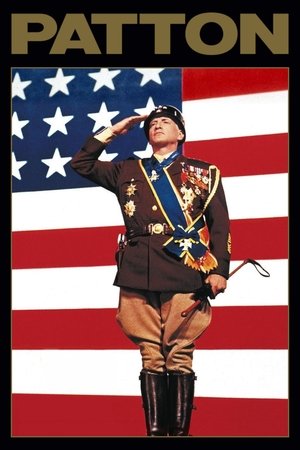
"Patton" tells the tale of General George S. Patton, famous tank commander of World War II. The film begins with Patton's career in North Africa and progresses through the invasion of Germany and the fall of the Third Reich. Side plots also speak of Patton's numerous faults such his temper and habit towards insubordination.
While filing for a divorce, beautiful ex-stripper Roslyn Taber ends up meeting aging cowboy-turned-gambler Gay Langland and former World War II aviator Guido Racanelli. The two men instantly become infatuated with Roslyn and, on a whim, the three decide to move into Guido's half-finished desert home together. When grizzled ex-rodeo rider Perce Howland arrives, the unlikely foursome strike up a business capturing wild horses.
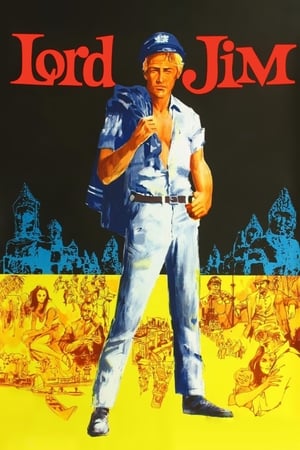
After being discredited as a coward, a 19th century seaman lives for only one purpose: to redeem himself. Preserved by the Academy Film Archive in partnership with Sony Pictures Entertainment in 2000.
Impoverished priest Harihar Ray leaves his rural Bengal village in search of work. His wife, Sarbojaya, looks after their rebellious daughter, Durga, and young son, Apu. The children enjoy the small pleasures of their difficult life.
The first Studies were synchronized with records (Fischinger made a total of 13 Studies all without sound). It was only with the introduction of sound, beginning with Study No 6 that the films did full justice to this musical principle. The play of the white lines, the arcs, and the upside-down U’s running hither and thither like ballet dancers was brought into perfect synchronization with the music, and thus the films offered an abstract illustration of the melodies. Study No 6 is certainly the best of his films in terms of forms. - Hans Scheugl and Ernst Schmidt, Jr. Preserved by the Academy Film Archive in 2001.
When The Hand of God creates Adam, he must learn the ways of the world, and can only hope for company.
Protective Coloration shows Fisher seated at a mottled table. He wears short-sleeved hospital garb, surgical green ‘scrubs’. Nose-clips block his nostrils while a mouth-guard that looks like fake lips covers his mouth. Over the course of 11 minutes he masks his face and covers his hands with bright gear in colours that accumulate to resemble those of the standard reference chart: he puts on orange eye-caps, then a yellow bathing cap; covering his nose and mouth and the gear already there, he dons a black gas mask; a silky black sleeping mask voids his already covered eyes, a cyan blue bathing cap caps the yellow; yellow rubber gloves snap on his hands and forearms; puts on cyan eye goggles, then struggles with yet another bathing cap, hazmat orange, over the other two. A silvery transparent shower cap tops the caps, itself topped by a plastic green helmet. Finally heavy-duty magenta gloves hide most of the yellow rubber. Preserved by the Academy Film Archive in 2008.