A young Prince Asoka works to perfect his skills in battle and also deals with family conflict. During a struggle with one of his step-brothers, his mother urges Asoka to escape to stay alive. While away, Asoka meets Kaurwaki and falls in love, but must use his skills as a warrior to protect her. A dangerous and heartbreaking web of conspiracy follows, which leads Asoka to embrace a Buddhist path.
The story of Shah Jahan...the love of his life...the life of his love...and his monument to love, the Taj Mahal.
It's 1947 and the borderlines between India and Pakistan are being drawn. A young girl bears witnesses to tragedy as her ayah is caught between the love of two men and the rising tide of political and religious violence.
After a group of friends graduate from Delhi University, they listlessly haunt their old campus, until a British filmmaker casts them in a film she's making about freedom fighters under British rule. Although the group is largely apolitical, the tragic death of a friend owing to local government corruption awakens their patriotism. Inspired by the freedom fighters they represent in the film, the friends collectively decide to avenge the killing.
In 1948, a cross-fire erupts at an isolated stretch of Indo-Pak border, leaving only two soldiers alive. One is an Indian soldier of Pakistani origin while the other happens to be a Pakistani soldier of Indian origin. An ironic story of pride and survival begins when - in an attempt to evade danger, they bump into each other. And amidst continuous exchange of bullets, altercations and murkier situations, it evolves into a journey of human connection with an unforeseeable end.
Based on the life of Sam Manekshaw, who was the Chief of the Army Staff of the Indian Army during the Indo-Pakistani War of 1971, and the first Indian Army officer to be promoted to the rank of Field Marshal.
An account of the gangster Maya Dolas and his gang which terrorized Mumbai City, and the ensuing standoff between Mumbai Police and the gang on 16 November 1991.
The film begins in 1857, when India was ruled by the British East India Company. Mangal Pandey is a sepoy, a soldier of Indian origin, in the army of the East India Company. Pandey is fighting in the Anglo-Afghan Wars and saves the life of his British commanding officer, William Gordon. Gordon is indebted to Pandey and a strong friendship develops between them, transcending both rank and race.
Based on true events that unfolded in 1975, the film chronicles incidents that took place under the leadership of Indira Gandhi, one of the most powerful women in Indian history.
Children of War is a movie based on the true events of the 1971 Genocide. Can we, in search of power, become animals? A genocide; neglected! The first use of rape as a weapon of war; undocumented! The lives of millions; unaccounted! The culprits; unpunished!
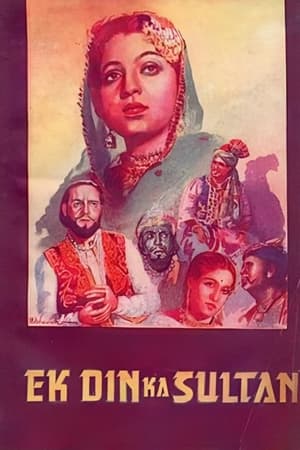
Set in the Ottoman Empire, it deals with the Caesar's (Pande) army and its skirmishes with the local Muslim rulers. The Sultan's (Asooji) son Ziyad (Kumar) is arrested by the Roman army. The Roman princess Rahil falls in love with him. A Muslim maid Leela (Sitara Devi) and the princess help him escape. Long chase scenes and fights follow, which ultimately lead to success for Ziyad and his people.
Chitralekha is a 1964 historical-philosophical Hindi film, directed by Kidar Sharma, starring Ashok Kumar, Meena Kumari and Pradeep Kumar. It was based on 1934 Hindi novel by the same name by Bhagwati Charan Verma about Bijgupta serving under the Maurya Empire and the king Chandragupta Maurya (340 BCE – 298 BCE) and his love for courtesan Chitralekha. Set in the back drop of the middle age society. The portrayal of the three tools wisdom, knowledge and power become superfluous in the absence of strength of character.
Shahjehan (a raw Rehman in one of his first releases) is approached by a Rajput chieftain, Jwala Singh, narrating the plight of his foster daughter, Ruhi (Ragini), who is blessed with unheard of beauty. This gives rise to an army of suitors, who indulge in violence to prevent her from getting married by scaring her to-be grooms. Her beauty, confined to four walls of Jwala's haveli becomes part of folklore, and street gossip, through the poetry of Sohail (Saigal) who accidentally catches her glimpse, and falls in love with her.
Based on a real-life historic court case, a bold journalist questions a revered leader's immoral behavior.
Shudra: The Rising is a Hindi language film with a storyline based on the caste system in ancient India, and more specifically the Hindu Varna system. It is directed by Sanjiv Jaiswal and dedicated to Bhim Rao Ambedkar. The film depicts the four basic units of the caste system - the Brahmins, Kshatriyas, Vaishyas and the Shudras. The film shows various rules imposed on the Shudras such as waking with a bell around their ankles and a long leaf behind their back,and a pot hanging around their neck.
Zubeidaa, an aspiring Muslim actress, marries a Hindu prince to become his second wife. Her tumultuous relationship with her husband, and her inner demons lead her to a decision which has fatal consequences for them all.
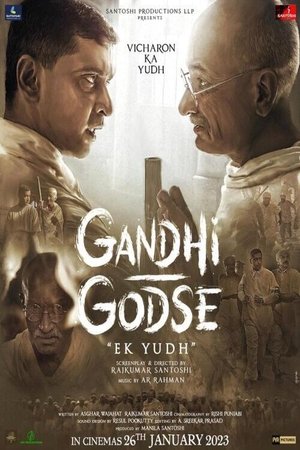
The assassination of Mahatma Gandhi made Nathuram Godse one of the most hated assassins in the history of India. The film depicts Godse's reason behind the extreme step.
Set in 1961 Goa, this is a story of a rich and influential Goan family and what happens to them over a period of time. The movie is narrated in past-tense by one of the friends of the family.
A biographical film chronicling the life of spiritual leader Gurudev Shri Sudarshan Lal Maharaj from his early advocacy for social reform to his final days, cementing his legacy of national unity and human Upliftment.
A Roman military commander falls in love with Ranjana, a devout Christian. The Roman Empire's atrocities toward the Christians prompt the commander to become a rebel soldier to protect the Christian community from the Roman Emperor.