Set to a classic Duke Ellington recording "Daybreak Express", this is a five-minute short of the soon-to-be-demolished Third Avenue elevated subway station in New York City.
A journey between hope and dystopia in a hallucinated Kinshasa, from the culture of the hair salon to futuristic solitary clubbing, from an urban parade to a dictator's sense of glory to a modern western in the style of Takeshi Kitano.
Mourning the death of his partner and collaborator Danièle Huillet, Straub finds tender mercy in music and nature. Out of the abyss, Kathleen Ferrier sings “The Farewell” from Gustav Mahler’s “The Song of the Earth”, (which the composer wrote in 1909 after the death of his daughter) and Heinrich Schütz’s Lament on the Death of His Wife. The landscape also provides solace: the mountain grove where Endymion pines for his beloved Artemis, “a wild thing, untouchable, mortal,” appears to embody the Japanese concept of ‘mono no aware’ — a wistful acceptance of the fleeting beauty of things.
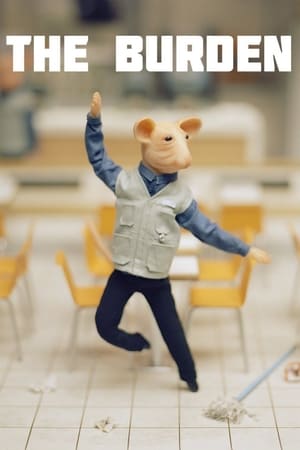
A bittersweet look at life’s many challenges, albeit as experienced by furry, feathered, and slimy creatures who sound and feel all too human.
Rehearsals for a fundraising gala become the arena for a struggle between two men; one, the gala director and the other, a richly talented but unstable rock drummer. As their battle for expression and control escalates against a relentless rhythmic backdrop, their public and private selves explosively collide.
A workman finds a singing frog in the cornerstone of an old building being demolished. But when he tries to cash in on his discovery, he finds the frog will sing only for him, and just croak for the talent agent and the audience in the theater he's spent his life savings on.
Elmer Fudd is again hunting rabbits - only this time it's an opera. Wagner's Siegfried with Elmer as the titular hero and Bugs as Brunnhilde. They sing, they dance, they eat the scenery.
“And, 'twixt the shadows and frights of nocturnal splendors, My beloved will secretly be hiding. Say what you will, say what you may.” The sound of a distant whistle and theorbo calls a sleeping singer through the empty streets of Stuttgart in a midnight journey to the opera house. ‘dei notturni splendori’ is an experimental opera film made for the Staatsoper Stuttgart in the early months of the Coronavirus pandemic lockdown. Anderson Matthew captures the singer Helene Schneiderman through a midnight dream with a hand-cranked kino camera in an ecstatic 35mm photo roman, in search for her own performance of the Tarquinio Merula madrigal Folle é ben chi se crede from 1638.
When the sour-sweet wind starts blowing again, the Whos retreat to their homes because they know the Grinch will soon be a'prowlin. Young Eukariah Who has to make a trip to the Euphemism (outhouse), when the wind blows him away to a confrontation with the gruesome Grinch. Eukariah decides that the Grinch must be stopped, so he faces his fears and confronts the Grinch and his spooks.
During a chicken picnic, Yellow Guy gets upset after Green Bird kills a butterfly. Yellow Guy then meets a butterfly that takes him on a journey to discover his concept of love.
Walt Disney enlisted former colleagues Hugh Harman and Rudy Ising to help create this underwater Silly Symphony. Ocean waves form merbabies who are summoned to an aquatic circus playground on the sea floor, where they interact with a parade of seahorses, starfish and other marine life, before disappearing into the surface from which they came.
Even as a young boy, Beethoven marched to the beat of a different drummer. Trained in the traditional music methods by his father, Beethoven was an accomplished pianist by the age of 12. But he yearned to try new sounds and persevered until audiences heard his music. By his early twenties, this persistent young man performed for Joseph Haydn, who compared him to the great Mozart. Sadly, Beethoven began to lose his hearing, but he threw himself even more deeply into his music, composing "Fur Elise," "Sonata Pathetique" and the dramatic "Fifth Symphony" years later, audience members heard what he could not and leapt to their feet in ecstatic appreciation for such passionate music. His creativity gave the world then, as it does today, music that stirs the soul. The video begins in 1827 with 30,000 people paying tribute to the great Beethoven in Vienna, Austria. Then the video switches to his life as a child...
The Cat in the Hat is all set for a lovely picnic, but the evil Grinch changes his plans by inventing a contraption that captures noise and makes it sound ferocious. The Cat has to save the world from the clutches of the Grinch and the only way to do it is to reach Grinch's soft spot.
A unique LaserDisc release. Billy is a 23-year-old Welshman from the South Wales Valleys. He is mentally and physically disabled, confined to a wheelchair and only able to work his upper body. Though he is conceived as mentally challenged, his disability has actually made him not only a genius, but also superhuman, as he also has the ability to literally hear radio waves throughout all frequencies without aid.
Donald and Daisy are walking when he is hit by a flowerpot. He's convinced he's a famous singer, and he croons divinely, but does not recognize Daisy. He in fact does become famous. Daisy is devastated by her inability to get over him and sees a psychiatrist. He tells her she has to choose between the world having Donald, or her getting him back. She picks herself, and drops another flowerpot, which restores him.
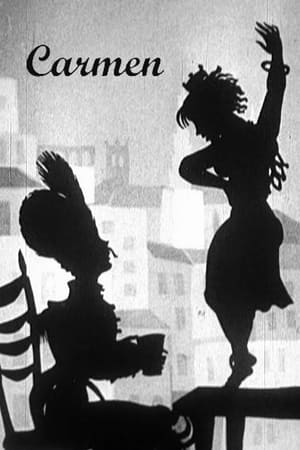
Tina, a singing Gypsy with a band of roving gypsies, is invited by Tom to come over to his mother's estate where a lawn party is in progress. She brings along her friends and a whole caravan of gypsies take over the green, telling fortunes, singing and dancing. Most of the comedy is supplied by the kleptomaniac butler, Bellingham, and his employer who humors his nutty ways...as good help seems to be hard to find.
With one coin to make a wish at the piazza fountain, a peasant girl encounters two competing street performers who'd prefer the coin find its way into their tip jars. The little girl, Tippy, is caught in the middle as a musical duel ensues between the one-man-bands.
Simmons, best-known for her photographs of miniature rooms populated by dolls and of oversized objects—such as a house, birthday cake, and pistol—balanced on female legs, both human and fake, brings these characters to life in a three-act mini-musical. The film is inspired by three distinct periods of Simmons’s photographic work: vintage hand puppets, ventriloquist dummies and walking objects enact tales of ambition, disappointment, love, loss, and regret. Working with composer Michael Rohaytn ("Personal Velocity") and cameraman Ed Lachman ("The Virgin Suicides" and "Far From Heaven"), Simmons’s puppets come to life in miniature domestic scenes that echo real life.
Amidst many distractions, Samantha struggles to find her voice recording a new song. She encounters a mysterious stranger who reminds her of why she loves to create music.
Oksana (played by Sofia Rotaru) is a young and beautiful Carpathian girl. On the "Donetsk-Verkhovyna" train she becomes acquainted with a young miner from Donetsk called Boris. The travellers fall in love, but are parted when they arrive at their destination. In the Carpathian mountains their paths diverge, but Boris (played by Vasyl Zinkevych, soloist of the instrumental band "Smerichka") discovers where she is staying. The couple meet again and rekindle their love. Their friends invite them to perform in a concert for vacationers at a mountain resort, where they sing about their feelings for each other.