Part film, part baptism, in BLACK MOTHER director Khalik Allah brings us on a spiritual journey through Jamaica. Soaking up its bustling metropolises and tranquil countryside, Allah introduces us to a succession of vividly rendered souls who call this island home. Their candid testimonies create a polyphonic symphony, set against a visual prayer of indelible portraiture. Thoroughly immersed between the sacred and profane, BLACK MOTHER channels rebellion and reverence into a deeply personal ode informed by Jamaica’s turbulent history but existing in the urgent present.
Peaches - artist, feminist, rock star. She has been challenging gender stereotypes for over 20 years and is on par with the icons of the pop and rock world. With exclusive private archive material and current footage of preparations and concerts of her 2022 jubilee tour “20 Years of Teaches of Peaches”, we learn how the Canadian Merrill Nisker became the internationally celebrated musician and electro-clash icon Peaches.
Clint Eastwood : la légende
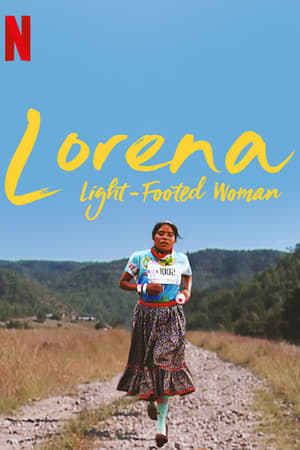
A young woman of the Tarahumara, well-known for their extraordinary long distance running abilities, wins ultramarathons seemingly out of nowhere despite running in sandals.
Sur les pas de Robespierre
Elijah Jamal Balbed grew up in Washington DC in the midst of one of its most difficult eras, as its identity was being tested. As the city changed around him, his budding career as a musician exposed him to the people and music providing a voice and an outlet to the people of DC. Now tasked with preserving and sharing that tradition, Balbed reflects on balancing that responsibility with creating a musical identity of his own.
The film approaches the work of the Greek artist Nikos Koniaris. The particular way in which the painter depicts human suffering is presented through a film - a hybrid of real recording and directed material. The grief, the sick body, is reflected in self portraits, portraits of dying strangers and paintings of dead models. The paintings, apart from his work, also express a different version of himself. All together contribute to the depiction of man as a "garment of pain".
Shere Hite’s 1976 bestselling book, The Hite Report, liberated the female orgasm by revealing the most private experiences of thousands of anonymous survey respondents. Her findings rocked the American establishment and presaged current conversations about gender, sexuality, and bodily autonomy. So how did Shere Hite disappear?
Fashion revolutionary Bethann Hardison looks back on her journey as a pioneering Black model, modeling agent, and activist, shining a light on an untold chapter in the fight for racial diversity.
While navigating daily discrimination, a filmmaker who inhabits and loves her unusual body searches the world for another person like her, and explores what it takes to love oneself fiercely despite the pervasiveness of ableism.
7-year-old Sasha has always known that she is a girl. Sasha’s family has recently accepted her gender identity, embracing their daughter for who she truly is while working to confront outdated norms and find affirmation in a small community of rural France.
In 2024, Abdelkrim Baba Aissa, aged 75, engages in a series of filmed interviews with Algerian journalist Thoria Smati. They address the chronology of the rich and committed career of this self-taught Algerian actor, director, producer and screenwriter, who made his debut on Algerian television as an assistant director then at ONCIC as a director in the years 70.
In this film, Paul Tomkowicz, Polish-born Canadian, talks about his job and his life in Canada. He compares his new life in the city of Winnipeg to the life he knew in Poland, marvelling at the freedom Canadians enjoy. In winter the rail-switches on streetcar tracks in Winnipeg froze and jammed with freezing mud and snow. Keeping them clean, whatever the weather, was the job of the switchman.
Jerry, an ordinary immigrant dad, retired in Orlando, is recruited to be an undercover agent for the Chinese police. Jerry’s family recreates the events on film and his three sons discover a darker truth. True crime meets spy thriller in this genre-bending docufiction hybrid about an immigrant’s search for the American dream. A Slamdance Film Festival Grand Jury and Audience Award winner.
With more than 70 films and 160 million cumulative tickets in France, Jean-Paul Belmondo is one of the essential stars of French cinema.
Albert Camus died at 46 years old on January 4, 1960, two years after his Nobel Prize in literature. Author of “L'Etranger”, one of the most widely read novels in the world, philosopher of the absurd and of revolt, resistant, journalist, playwright, Albert Camus had an extraordinary destiny. Child of the poor districts of Algiers, tuberculosis patient, orphan of father, son of an illiterate and deaf mother, he tore himself away from his condition thanks to his teacher. French from Algeria, he never ceased to fight for equality with the Arabs and the Kabyle, while fearing the Independence of the FLN. Founded on restored and colorized archives, and first-hand accounts, this documentary attempts to paint the portrait of Camus as he was.
Mariem, 53, a former estate agent, has been living at a shelter for several months. Surrounded by women in far more precarious circumstances than herself, she tries to regard her unprecedented social downfall as an immersion in real life. By the time she leaves, Mariem’s view of the world will have changed forever, enriched by all the women she has met along the way.
A Sense of Justice, immerses us In a law firm in this same city. There, we can find Christine Mengus and Nohra Boukara, specialized in the rights of foreigners, supported by Audrey Scarinoff and their co-workers.. Stories from their sad, appalling or tragicomic cases alternate with their daily legal work. And as we hear snatches of consultations involving illegal entry or departure, deportation orders, the right to reside or medical assistance, we become witnesses to predictable tragedies, to the administrative or social precariousness induced by such predicaments, and to whole lives depending on court rulings.
In this short documentary, five black women talk about their lives in rural and urban Canada between the 1920s and 1950s. What emerges is a unique history of Canada’s black people and the legacy of their community elders. Produced by the NFB’s iconic Studio D.
Achour is thirty. Night and day, he walks. Rebellious soul, he crisscrosses Alger and its neighborhoods, stays at friends' houses and often leaves the city to meet the nearby montain in Kabylia, his alter-ego. In this environment, marked by war and terrorism, his resistance continues, mobile and ascending. Algerian hardcore-punk musician, Achour once screamed his anger against the country's regime and sang "Anarchytecture". But the movement died down, friends went their separate ways. His Facebook wall became his notebook, his window open to the world. It represents a scream aimed towards the echo of the mountains, between virtual wall, infinite facades of large complexes and the strata of mineral cliffs. A scream comes back at us.