The third installment of the infamous "is it real or fake?" mondo series sets its sights primarily on serial killers, with lengthy reenactments of police investigations of bodies being found in dumpsters, and a staged courtroom sequence.
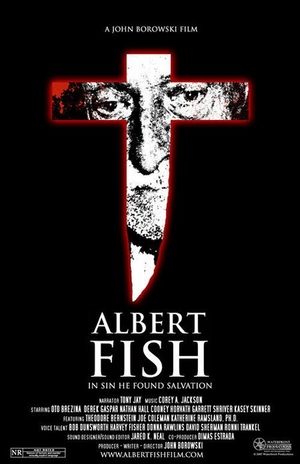
Albert Fish, the horrific true story of elderly cannibal, sadomasochist, and serial killer, who lured children to their deaths in Depression-era New York City. Distorting biblical tales, Albert Fish takes the themes of pain, torture, atonement and suffering literally as he preys on victims to torture and sacrifice.
New exclusive access and never before heard testimony gives a unique insight into the mind of America's most notorious serial killer, Ted Bundy. Breathtaking archive from the time and the voice of Bundy himself, reveals the monster inside the man.
Summaries "The John Wayne Gacy Murders: Life and Death in Chicago", Focuses on serial killer John Wayne Gacy's time in Chicago and includes information about Gacy's childhood, his career of crime in Waterloo, Iowa, and Gacy's becoming a celebrity in prison. Containing interviews with Chicago attorneys, news reporters, law enforcement officers, and history experts, the film illustrates what the atmosphere was like in Chicago when Gacy was murdering and ultimately apprehended. Gacy's time in prison as a celebrity serial killer is also explored in this groundbreaking film by Chicago native filmmaker John Borowski. —John Borowski
The incredible story of Bruno Lüdke (1908-44), the alleged worst mass murderer in German criminal history; or actually, a story of forged files and fake news that takes place during the darkest years of the Third Reich, when the principles of criminal justice, subjected to the yoke of a totalitarian system that is beginning to collapse, mean absolutely nothing.
Unpacking and questioning the evidence used to convict neonatal nurse Lucy Letby.
This documentary about serial killers and FBI Behavioral Sciences profilers features interviews with Ed Kemper and Ted Bundy as well as crime victims and law enforcement officials. The film includes some dramatic recreations.
The film follows the career of detective inspector Marianne Atzeroth-Freier through the Hamburg police force of the 80s and 90s. At the end of the 70s, Marianne is 30 years old and a single parent; she becomes one of Hamburg's first female police officers. Marianne is one of the first women ever to be promoted to the Hamburg homicide squad. The opposing forces in this male-dominated world are strong, she is not really taken seriously and is even bullied along the way, until she comes to the attention of the furrier Lutz R.. Against the considerable resistance of her superior, Marianne investigates in her spare time and makes a significant contribution to solving the case of the "acid barrel murderer".
A non-stop roller coaster ride through the scariest moments of the greatest terror films of all time.
In 1999, teen Rocío Wanninkhof is murdered. Her mother's ex-partner, Dolores Vázquez, is suspected. Did she do it? A second victim reveals the truth.
In the eyes of the law, former neonatal nurse Lucy Letby is one of Britain's worst ever serial killers, found guilty of the murder of seven babies and the attempted murder of many others. This documentary explores new questions that have emerged about the case, as well as meeting experts who hope to have it officially reviewed
Feature length documentary about the little known serial killer Robert Hansen, who killed for 12 years in the wilderness of Alaska before finally being caught in 1983. A compelling mixture of archive, actuality, interviews and a challenging drama shoot in Alaska brings his story to life.
An LA serial killer goes silent for decades – but he was just warming up.
When Lonnie Franklin Jr. was arrested in South Central Los Angeles in 2010 as the suspected murderer of a string of young black women, police hailed it as the culmination of 20 years of investigations. Four years later documentary filmmaker Nick Broomfield took his camera to the alleged killer’s neighborhood for another view.
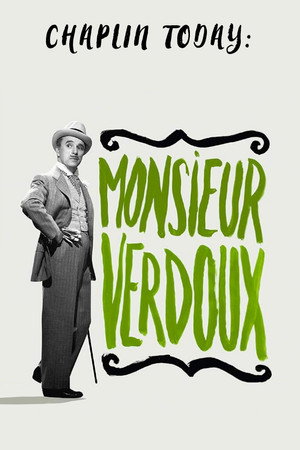
A short documentary in the Chaplin Today series about Chaplin's "Monsieur Verdoux." Includes an interview with Claude Chabrol, whose 1963 film "Landru" concerns the same serial killer that inspired Chaplin's film.
Eleven bodies are found dumped on Long Island between 2010 and 2011; journalists Alexis Linkletter and Billy Jensen investigate corruption at the highest level of the Suffolk County Police Department and why the case has never been solved.
This documentary examines a selection of real life serial killers and compares them to the fictional Hannibal Lecter.
Serial Killer Culture examines the reasons why artists and collectors are fascinated by serial killers.
During a three-month period in 1888, a knife-wielding serial killer murdered six women on the streets of Whitechapel. Their throats were cut and their bodies horribly mutilated. He was never caught and his identity remains one of the world's greatest crime mysteries. In the years that have passed since Jack the Ripper's killing spree, many high-profile suspects have been suggested, yet the fact remains that none of them can be placed at any of the crime scenes. Now, journalist Christer Holmgren believes that he has found a suspect who can not only be linked directly to one of the murders but also whose daily routine could be consistent with all the other deaths
In 1988, Chris Bryson was found running down a Kansas City street naked, beaten, and bloody wearing nothing but a dog collar and a leash. He told police about Bob Berdella, a local business man and how Berdella had caputed him, held him hostage, raped him, tortured him and photographed him over several days. Police later arrested Berdella and searched his home where they found several hundred polaroid photographs, a detailed torture log, envelopes of human teeth and a human skull. It was soon discovered that Berdella had murdered 6 young men in his home after drugging them and performing his sick acts of sexual torture. Some lived the horrors for only a few days, one for 6 weeks. After death Berdella would cut up the bodies with an electric chain saw and a bone knife, place the body parts in empty dog food bags for trash collection on Monday. Although he denied this, it is believed that Berdella used organs of the victims as in food dishes he would serve at his shop.