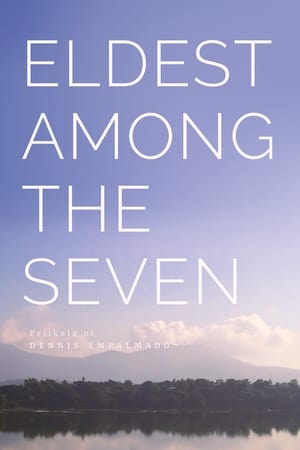
The tale of an activist’s journey during the turbulent years of Martial Law, until his capture in the mountains and the dark, nine years of imprisonment that followed, leading to his birth as a poet.
French actress Marion Cotillard travelled to the Philippines to meet with children and young people on climate change and what they want big-polluting governments to do about it. One of the girls she met is Marinel, a survivor of the Super Typhoon disaster in the Philippines in 2013, who is taking action on climate change in her own community. She participates in Plan International’s climate change adaptation projects and now teaches at youth camps to pass on everything she has learnt to the younger children. Marinel travelled to Paris with Plan International for the United Nations Framework Convention on Climate Change (UNFCCC) 21st Conference of the Parties (COP21) in December 2015.
A Philippine government plan to transform ancestral farmland into a tourist resort sparks a dramatic conflict when villagers actively resist the development. As peasants and fisherfolk organize to stop the golf courses and yacht marinas, their seaside community called Hacienda Looc becomes a violent flashpoint in a larger, national battle over land and revolution. THE GOLF WAR is a provocative portrait of one community's fight for survival against forces of economic 'development', contrasted with views of developers, bureaucrats, and golf boosters in the Philippines, including Tiger Woods.
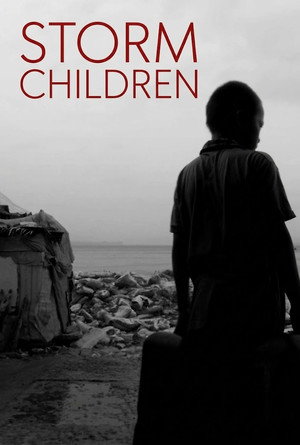
The Philippines is visited by an average of 20~28 strong typhoons and storms every year. It is the most storm-battered country in the world. Last year, Typhoon Haiyan, considered the strongest storm in history, struck the Philipines, leaving in its path apocalyptic devastation.
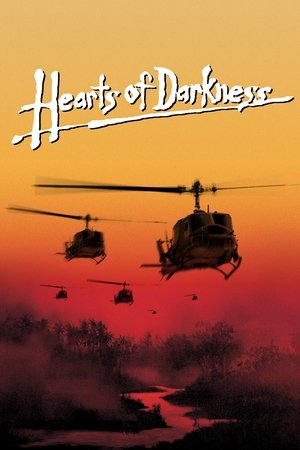
In 1975, soon after the end of the Vietnam War, Hoa Thi Le and Hue Nguyen Che fled the country on a small boat. After nine days at sea, they docked in the Philippines, where they were utilized as background extras for “Apocalypse Now.”
The planet’s busiest maternity hospital is located in one of its poorest and most populous countries: the Philippines. There, poor women face devastating consequences as their country struggles with reproductive health policy and the politics of conservative Catholic ideologies.
Two filmmakers take on a journey to explore the intricacies of the long-suffering Philippine agriculture, seeking for possible solutions as they figure out the factors causing the crisis.
In the north of the Philippines lies the area of Banaue, known for its rice cultivation. Roger lives here in a small village. Roger is thirteen and has five brothers and sisters. As the oldest, he is responsible for the daily firewood. To get this, Roger sets off into the mountains every other day. At seven in the morning, they start. A truck takes Roger and his four friends out into the steep, forested slopes above the rice terraces. With them on the back of the truck are the 'scooters', homemade wooden scooters with which the firewood is driven down to the valley. Once they reach the top, they cut down smaller logs, chop them up and pack their scooters full of them. After this strenuous work, the great fun begins. On bumpy paths and at breakneck speed, they make their way back to the village. Races and tricks are part of the fun, of course.
Growing up in Masbate Province in the Philippines, Jary is neglected and shunned since the moment of his birth for one reason-- his appearance. His older sister, Jessa protects Jary through his early years, then takes him in as a young teen, to raise him alongside her own two children in a fragile house on a hill. Jessa seeks out the medical care Jary has been denied since birth. And more, the support to begin his physical and emotional recovery. Every Day After is a 35-minute documentary film that provides a more nuanced look at the complexities of the healing process we don’t often see. And honors the invisible labor of a sister whose love and action make it possible for Jary to experience the everyday joys and struggles of growing up.
Produced by the Army Pictorial Service, Signal Corps, with the cooperation of the Army Air Forces and the United States Navy, and released by Warner Bros. for the War Activities Committee shortly after the surrender of Japan. Follow General Douglas MacArthur and his men from their exile from the Philippines in early 1942, through the signing of the instrument of surrender on the USS Missouri on September 1, 1945. Preserved by the Academy Film Archive in 2013.
A chronicle of the production problems — including bad weather, actors' health, war near the filming locations, and more — which plagued the filming of Apocalypse Now, increasing costs and nearly destroying the life and career of Francis Ford Coppola.
Documentary about the history of Philippine cinema.
Pinoi Rock & Rhythm sheds the spotlight on four obscure yet significant figures in contemporary Philippine Popular Culture. Rebel Disc Jockey Dante "Howlin" Dave David, Stills Photographer and former stuntman Mr. Johnny Albia, Elvis Presley devotee Mr. Chito Bertol and Pinoy Rock guitar icon Mr. Jun Lopito. The documentary unfolds lighthearted, candid and sometimes outrageous introspection from the four individuals on the ups and downbeats of their respective careers.
Meet Duewand Collier Jr.-Male, 68 years old, American Citizen, a child conceived in the backdrop of the Philippines-American Mutual Defense Treaty, born and raised with Catholic guilt. He has made peace with his past and now tells his story-a story of love.
Right in the heart of the South China Sea, the Philippines find themselves on the front line of the conflict between Beijing and Washington. As tension mounts between the two countries, we take an in-depth look at the situation in the archipelago.
The documentary serves as a tribute to National Artist for Cinema Gerardo de Leon in celebration of his Centennial Year. “Salamat sa Alaala.” is inspired by the music composed by the late film director when he was a teenager playing background music for silent movies in Manila theatres. The video opens up with a capsulated history of the birth of the Filipino movies followed by a series of shots of veteran actresses, the academe and the young generation of filmmakers affirming his unique qualities as a world-class film figure. Then we unravel his private life as a family man. The documentary is one way of thanking him for his lasting legacy in the art form he left behind.
When Jennifer Laude, a Filipina trans woman, is brutally murdered by a U.S. Marine, three women intimately invested in the case--an activist attorney, a transgender journalist and Jennifer's mother)--galvanize a political uprising, pursuing justice and taking on hardened histories of US imperialism.
Filmed in a village of the indigenous Mandaya people, located in a mountainous area of southeastern Mindanao, the country's second largest island, the documentary portrays the struggle of the Communist Party of the Philippines and its armed wing, the New People's Army, for the rights of indigenous Filipino peoples and the environment, which are constantly under threat from landowners, large logging companies and agribusiness.
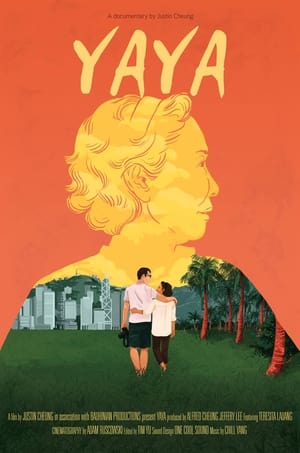
YAYA is a story about a filmmaker who explores the complex relationship between his family and the domestic worker who spent decades away from her family in the Philippines to raise his. This documentary is a tribute to all the domestic workers in Hong Kong, who has served as the backbone of Hong Kong's economy by unleashing a substantial female workforce into the economy and taken care of so many lives with love and care. You are all heroes in the hearts of the Hong Kong people. - Justin Cheung, the director
In the final decades of the 20th century, the Philippines was a country where low-budget exploitation-film producers were free to make nearly any kind of movie they wanted, any way they pleased. It was a country with extremely lax labor regulations and a very permissive attitude towards cultural expression. As a result, it became a hotbed for the production of cheapie movies. Their history and the genre itself are detailed in this breezy, nostalgic documentary.