In a futuristic city sharply divided between the rich and the poor, the son of the city's mastermind meets a prophet who predicts the coming of a savior to mediate their differences.
Francis, a young man, recalls in his memory the horrible experiences he and his fiancée Jane recently went through. Francis and his friend Alan visit The Cabinet of Dr. Caligari, an exhibit where the mysterious doctor shows the somnambulist Cesare, and awakens him for some moments from his death-like sleep.
A film with no protagonist revolving around being trapped inside and going toward the beauty of nature and freedom.
In 15th century France, a gypsy girl is framed for murder by the infatuated Chief Justice, and only the deformed bellringer of Notre Dame Cathedral can save her.
First installment of the Tense Moments with Great Authors series. Presumed lost.
How They Lie
The plot is the embodiment of everyday belief about the impact of a certain evil force on a person. The action develops in a peasant environment.
British adaptation of Trilby filmed in Kinemacolor. Presumed lost.
Danish adaptation of Trilby. Presumed lost, though a single still apparently depicting the novel's climax survives.
A shop girl finds herself disgraced after being pressured into drinking too much at a party and getting arrested for public drunkenness.
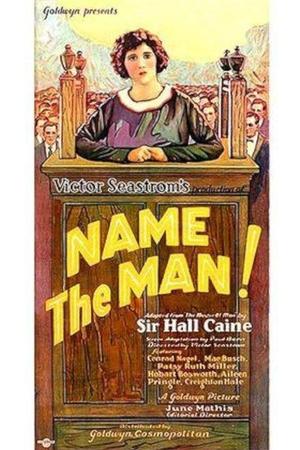
A bride who discovers during her wedding ceremony that her husband-to-be has fathered a child out of wedlock with another woman.
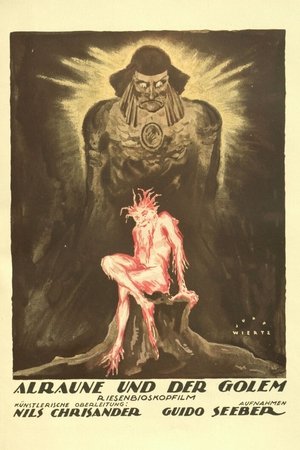
Just as Galeen and Wegener's Der Golem (1915) can be seen as a testament to early German film artistry, The Story of the Kelly Gang (1906) symbolizes both the birth of the Australian film industry and the emergence of an Australian cinema identity. Even more significantly, it heralds the emergence of the feature film format. However, only fragments of the original production of more than one hour are known to exist, preserved at the National Film and Sound Archive, Canberra; Efforts at reconstruction have made the film available to modern audiences.
A fisherman and a rising lawyer who grew up together as brothers fall in love with the same woman.
This pioneering documentary film depicts the lives of the indigenous Inuit people of Canada's northern Quebec region. Although the production contains some fictional elements, it vividly shows how its resourceful subjects survive in such a harsh climate, revealing how they construct their igloo homes and find food by hunting and fishing. The film also captures the beautiful, if unforgiving, frozen landscape of the Great White North, far removed from conventional civilization.
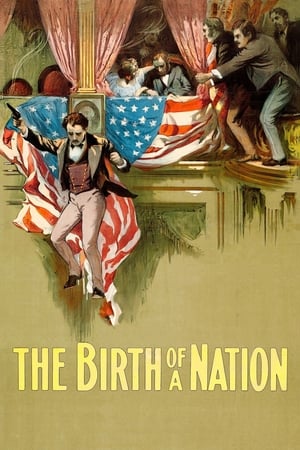
Two families, abolitionist Northerners the Stonemans and Southern landowners the Camerons, intertwine. When Confederate colonel Ben Cameron is captured in battle, nurse Elsie Stoneman petitions for his pardon. In Reconstruction-era South Carolina, Cameron founds the Ku Klux Klan, battling Elsie's congressman father and his African-American protégé, Silas Lynch.
Mark Reid, a young prospector, discovers gold in the Sierra foothills. He meets an old man known as "The Good Samaritan," who counsels him and welcomes him into his home. While he is away registering his claim, another prospector, Mike O'Hara, comes along, and, seeing no one around, takes possession of the gold mine. When Reid returns, the two engage in a struggle. As Reid is about to be overcome, an Indian slips a dagger into his hand. Reid is about to stab O'Hara when The Good Samaritan appears and stops the fight. Reid and the O'Hara set aside their differences and decide to become partners.
Old Captain Bill and his wife have an only son, whom they idolize. He loses all his money at gambling and drinking, and determines to do better in the city. After a short absence he writes his people that he has secured a good position, is saving money, and will be home before long. A year or two later he arrives in town and on his way to his home passes the old saloon he used to patronize. He cannot resist the temptation, and goes in. He falls in with a lot of bad fellows and is robbed. Ashamed to go home, he ships on board a sailing vessel.
A gangster falls for a blind violinist, only for his mobster rivals to kidnap her.
This is a poetic film set in the times of Lenin's NEP. A ballet dancer steals a brooch and gives it as a present to another dancer. This is a crime of passion. A mysterious black ball is after the heroine. She runs away from it and manages to give the brooch in an exquisite pirouette movement, as shiny as diamond facets. What gives a stone its dazzling luster are its polished facets. But the real gem is love, and it's much harder to get than any diamond in the world.
Else Riedel (Lissy Arna), locked out by her authoritarian father, seeks refuge with her boyfriend Hans. Complications threaten when Hans's roommate Max falls in love with her, but the situation is resolved: the three remain friends, and decide to form a music hall act. They want to ascend, but how? A way out beckons when a theatrical agent named Nevin enters Else’s life. He is played by Hubert von Meyerinck as a slick and oily villain, who oozes refinement; his experience behind bars is waved away with a silk scarf. He is cunning to the point of perfidiousness, but is not completely unsympathetic. He also embodies a new type - the scrounger.