Cecilie, Hildegunn and Merete have something in common. They are all adults and collect LEGO. This short documentary gives a glimpse into their passion, and the role the popular plastic bricks plays in their lives.
An short anti-cruise missile film created in collaboration with a group of filmmakers.
Featuring new, previously unseen footage documenting the bizarre and unsettling things that happened to filmmakers David Farrier and Dylan Reeve as Tickled premiered at film festivals and theaters in 2016. Lawsuits, private investigators, disrupted screenings and surprise appearances are just part of what they encounter along the way. Amidst new threats, the duo begins to answer questions that remained once the credits rolled on Tickled, including whether the disturbing behavior they uncovered will ever come to an end.
An animated documentary exploring how a mother's abusive relationship shaped the director's own experiences in boarding school.
Volcanoes erupt from the depths of the boiling earth to the surface of the celluloid film, to create a new abstract cinematographic language.
On the island of Tanna, a part of Vanuatu, an archipelago in Melanesia, strange rites are enacted and time passes slowly while the inhabitants await the return of the mysterious John.
In 1957, Charles and Ray designed the Solar Do-Nothing Machine for Alcoa, the Aluminum Company of America. True to the Eameses’ belief that toys are not as innocent as they appear, the machine was one of the first uses of solar power to produce electricity. In the 1990s, Eames Demetrios discovered unedited footage of the wonderful machine. He cut it together to produce a new film that shares a bit of its flavor for future generations to enjoy.
A young girl is cured of her epilepsy just as summer vacation is about to begin. During her last days with her classmates, she’ll come to experience life in a new way. Arranged as a series of elliptical tableaux, this haunting narrative from Luise Donschen (Casanova Gene) captures a simultaneous sense of discovery and disorientation as it proceeds from the confines of the classroom to a wider world of adolescent anxieties.
Rafaela, an 80-year-old woman, has a long conversation with her grandson, going over his path from childhood to old age. Now that she has been diagnosed with chronic breast cancer, faith is more present in her life than ever, which coexists with Rafaela's fear of death, and her grandson's fear of dying.
This documentary aims to register this unknown side of James Joyce: His Greek Notebooks. Trieste. Bloomsday, 2013. Dance in slow motion, accompanied by text. By deconstructing the body, we turn it into a memory: of the body, of life, of texts. The biographical references to Joyce and Mando Aravantinou, combined with the diagonal slicing of the image, cancel the realism of the landscape, including that of the Narrator’s space/study. As a culmination, Joyce’s letter “A request for a loan in Greek” functions as a timely denunciation. Various routes through cities, such as Trieste, London, New York, and Athens; languages such as Greek and English. In addition to the primal myth of Ulysses, there is another issue: Greek is “the language of the subject of Ulysses”
Chronicle of the Occupation.
Sarah is a debt collector who lives among the inhabitants of the village of Guimbal on the island of Panay. She wants to find the young man who appeared to her in a dream and goes to the island of Negros. Here, as she interacts with the inhabitants, Sarah continues her search, gathering memories of life and war, dreams, myths, legends, songs and stories that she takes part in and at times revolve around her. She is the daughter of an ancient mermaid, a revolutionary, a primordial element, a virgin who was kidnapped and hidden away from the sunlight. “The film is a retelling of fragments of the American occupation. Dialogue, shot in the Hiligaynon language, is not translated but used as a tonal guide and a tool for narration. Using unscripted scenes shot where the main character was asked to merely interact with the villagers, I discard dialogue and draw meaning from peoples’ faces, voices, and actions, weaving an entirely different story through the use of subtitles and inter-titles.”
From the coast of the Atlantic to that of the Mediterranean, the director meets women whose faces recount ruined hopes. Grief finds an element of painful meditation in the movement of the waves.
Basically an artist is also a terrorist, the protagonist thinks in an unguarded moment. And if he is a terrorist after all, then he might just as well be one. Not an instant product, but an experimental feature in which diary material is brought together to form an intriguing puzzle.
This investigation into the layers of mass incarceration and its shaping of the modern black American family is seen through the eyes of a single mother in New Orleans, Louisiana.
A documentary about some of Marvel's most famous characters.
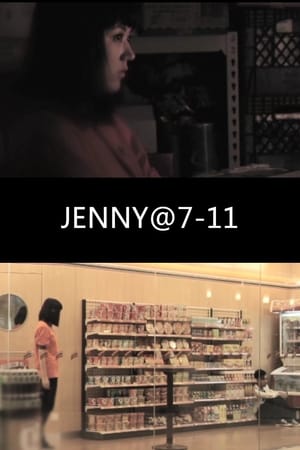
Emerging from a period of withdrawal, a social recluse or ‘hikikomori’ relates her inner experiences against the backdrop of an illuminated and restless urban environment that never sleeps.
A portrait of Jamaican-born artistic polymath Barbara Samuels. Featuring an account of her first generation, diasporic experience in Southend and London, and her discovery of hippiedom and the personal freedoms offered by entry into creative life.
An engagement with love and loss, presence and absence that become ritualised in need for recognition.
In Kitchen Beets, Bea Haut presents – with punchily sequential rhythm – an itemised domestic space, placing before her 16mm camera a succession of utensils that speak to the tactility of the artist’s own analogue practice.