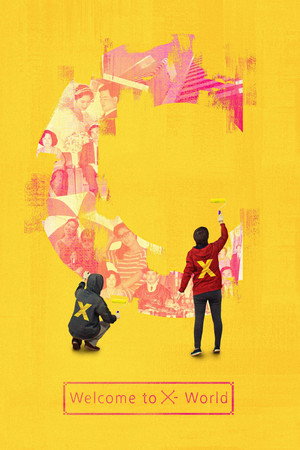
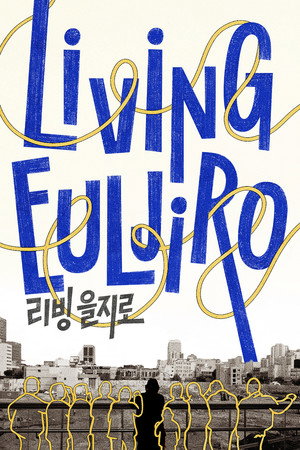
Three people live in Doosan Apartment in Guro-dong. Me, mom, and my grandfather. Even though it has been 12 years since dad died, we are still living under the same roof. I thought it was because of the financial situation that we could not move out of grandfather’s house. But when I found out that mom already had enough money to get a house, I became confused. Why didn’t mom move out from the “x-world” when she could? From a marriage that didn’t work out well, to a father-in-law with a temper. Why has she been enduring it, unchanging, for all the time I had witnessed her life to become a woman against marriage? One day when my anxiousness was at its peak, grandfather suggested that we live separately. Mom, reluctant to leave Guro-dong that she’d been living in for 20 years and her marriage life, will she be able to find herself and move out well?
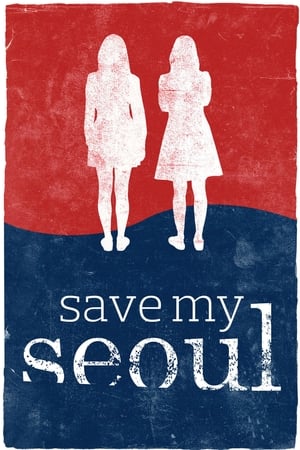
Eddie and Jason, two Korean-American brothers get in over their heads when they are called to Korea to make a short film on prostitution and sex-trafficking. Things get complicated when they meet Crystal and Esther, two prostitutes who reveal just how deep the problem goes and set off on a dangerous mission to capture the truth. With the use of hidden cameras and access to pimps, johns, and sex-workers, the filmmakers explore and unravel the complexity of the sex trade in Seoul. They learn that this problem is rooted in issues far deeper than exploited girls and lustful men. Instead, it's a consequence of a culture and government that condones and turns a blind eye to the biggest human injustice of our time.
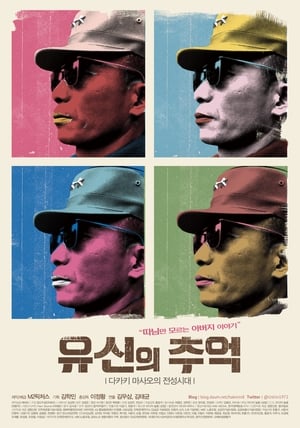
The film traces PARK Geun-hye's life back to the 1970s, when the leader-follower relationship began between PARK, who became the first lady of the Yushin regime, and CHOI Taemin, the leader of a pseudo-religion. It then examines the Sewol ferry incident, CHOI Soonsil Gate, candlelight rallies, and finally the impeachment.
August 2011, Seoul station was ‘reborn’ restoring the historical traces it once had. It was named as ‘Cultural Station 284’. To commemorate this very day, an opening exhibition was held, named as ‘COUNTDOWN’. However, among all the fine works of art alongside the exhibition, the best piece of art was not to be found. To be precise, that very piece of art was not available at that time. That work of art needed time to be established. After observing and speculating the abject moments of the restoration process, finally, it was completed.
Stars Know Everything
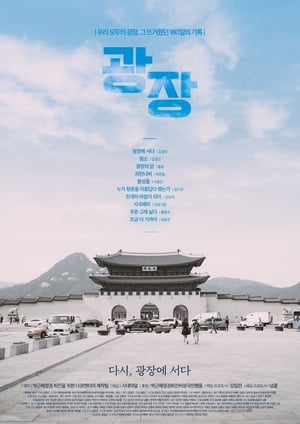
Project 1 _ Hong Hyung-sook The children who are enthusiastically painting and cutting a doll. What stories will be told at the Square? - Project 10 _ Kim Jeong-geun The janitorial worker from the Busan Subway Station, Kim Young-ja talks about how she hopes to see a clean world, just like how she cleans everywhere in the subway.
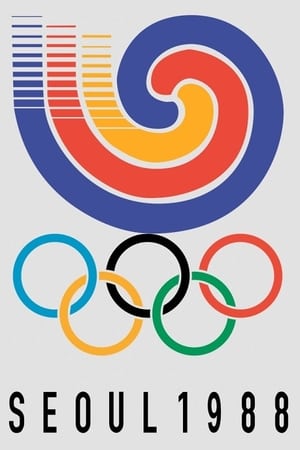
A documentary covering the 1988 Summer Olympic Games in Seoul.
My parents were real estate developers and dealers in the 1980s. They achieved the ‘middle class dream’ thanks to the development boom. However, the Asian financial crisis swept everything away.
I, a lesbian filmmaker, encounter people yelling at me to disappear from this world. It is a time of hatred in South Korea. LGBTQ people are the easy targets for hatred. In searching for what makes a marginalized life livable, I embark upon a journey. I encounter a double life of Lee Muk, a 70-year-old Korean “Mr. Pants” and precarious lives of a Japanese lesbian couple, Ten and Non, after 3/11. As an ever-growing number of citizens are becoming the targets of 'witch-hunting' in Korea, true faces of the haters slowly begin to unfold.
Maboul de Séoul
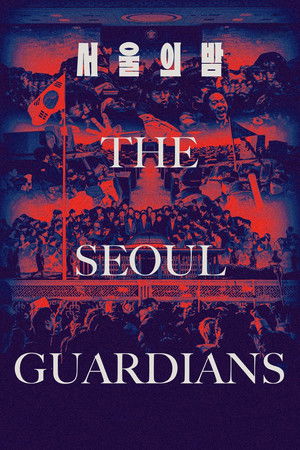
On December 3, 2024, in Seoul, the President of South Korea Yoon Sukyeol declares the martial law. Troops move toward the National Assembly to seize control. Meanwhile, citizens rush to the National Assembly to block the troops, while lawmakers break through police's barricades at the main gate, climb over the walls to attend the session that lifts the martial law.
Remembrance Of Yusin
Night falls on the city, and More′s splendid and daring show begins. More, a drag queen at a club in Itaewon, Seoul, is a transgender who wanted to become a ballerina. The audience cheers, but More is fed up with the gig he/she has been doing for 20 years. Around that time, he/she is cast for the "Stonewall Riots 50th Anniversary" performance in New York and finally get a chance to go on stage in toe shoes.
Someone constantly gains wealth and power from a community of race, of nation... Not only that, that someone tries to pass on that power and wealth to his descendants forever. Because of that, someone has to constantly maintain this community of race, of nation... Someone, therefore, caselessly recreates the prestigious values of this community, which exceeds the self... and, in the end, a forever self-reproducing circulating ring which comes from the lives and actions of those who have been brainwashed that they are part of this community from the womb...
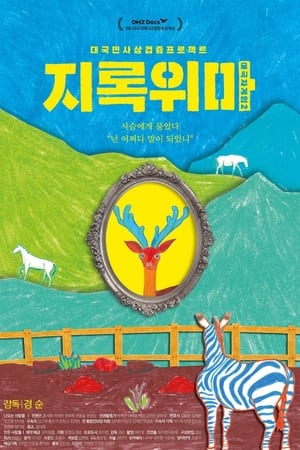
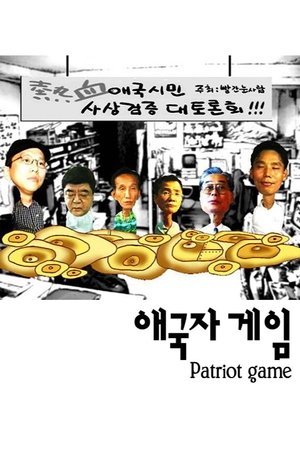
Patriot Game 2 - To Call a Deer a Horse
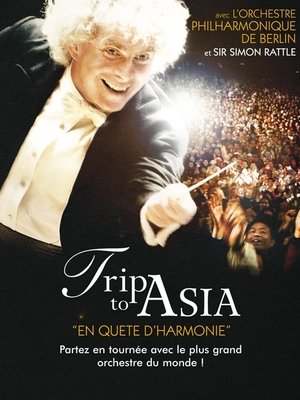
Journey with the musicians of the Berlin Philharmonic and their conductor Sir Simon Rattle on a breakneck concert tour of six metropolises across Asia: Beijing, Seoul, Shanghai, Hong Kong, Taipei and Tokyo. Their artistic triumph onstage belies a dynamic and dramatic life backstage. The orchestra is a closed society that observes its own laws and traditions, and in the words of one of its musicians is, “an island, a democratic microcosm – almost without precedent in the music world - whose social structure and cohesion is not only founded on a common love for music but also informed by competition, compulsion and the pressure to perform to a high pitch of excellence... .” Never before has the Berlin Philharmonic allowed such intimate and exclusive access into its private world.
The old musicians play in the shaded corner on the side of a stream under a bridge. Their music tells stories of their lives.
Over 98 days from August 20th to November 25th 2013, 2821 people from around the world sent 11,852 video featuring many different faces of Seoul. 154 were selected, edited, and made into a movie.
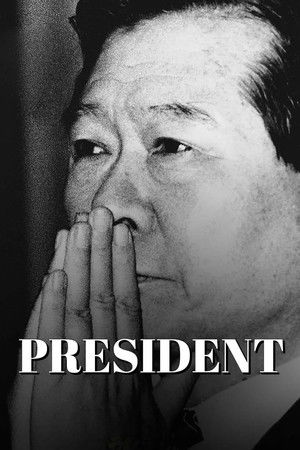
This documentary celebrates the life of former President Kim Dae-joong, who fought for democracy in South Korea and peace in the Korean Peninsula. It marks the 10th anniversary of his passing and covers his challenging journey, from his childhood on an island to his imprisonment, exile, near-death experiences, and ultimately becoming the president.
A special documentary produced for the 30th anniversary of the Seoul Olympics, 88/18 looks back at South Korea in the 1980s as the nation raced toward the Games. Through archival footage and reflection, the film examines how the 1988 Seoul Olympics brought profound changes that extended far beyond sport, reshaping Korean society itself.