The story of life on our planet by the man who has seen more of the natural world than any other. In more than 90 years, Attenborough has visited every continent on the globe, exploring the wild places of our planet and documenting the living world in all its variety and wonder. Addressing the biggest challenges facing life on our planet, the film offers a powerful message of hope for future generations.
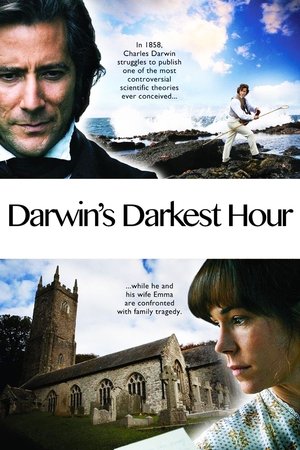
In 1858 Charles Darwin struggles to publish one of the most controversial scientific theories ever conceived, while he and his wife Emma confront family tragedy.
Documentary tells the story of Germany's origins from the Carboniferous period to the present day. It leads from the highest Alpine peaks to the rugged North Sea coasts - from the craters of the Eifel to the river labyrinth of the Spreewald. Back then - around 300 million years ago - giant dragonflies, for example, buzzed through dozens of meter-high fern forests. In the course of the Earth's history, however, we also encounter dying dinosaurs, meet rhinos and elephants on the Rhine and come across what is probably the first human in Heidelberg. Later, the Neanderthals appear and suddenly disappear again - for reasons that are still unknown. And finally, modern humans gradually spread and began to shape their environment.
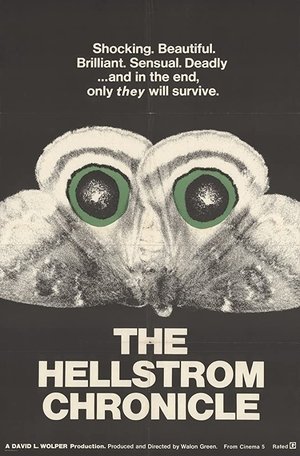
A scientist explains how the savagery and efficiency of the insect world could result in their taking over the world.
Darwin's great insight – that life has evolved over millions of years by natural selection – has been the cornerstone of all David Attenborough’s natural history series. In this documentary, he takes us on a deeply personal journey which reflects his own life and the way he came to understand Darwin’s theory.
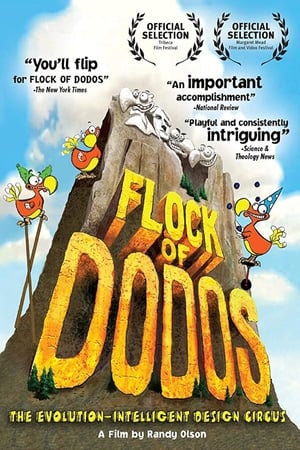
Pro-intelligent design scholars and scientists are often chastised, fired or denied tenured positions by those who believe in Darwin's theory of evolution.
Commentator-comic Bill Maher plays devil's advocate with religion as he talks to believers about their faith. Traveling around the world, Maher examines the tenets of Christianity, Judaism and Islam and raises questions about homosexuality, proof of Christ's existence, Jewish Sabbath laws, violent Muslim extremists.
T'Day
Bill Nye and Ken Ham debate whether creation is a viable model of origins in today's modern scientific era.
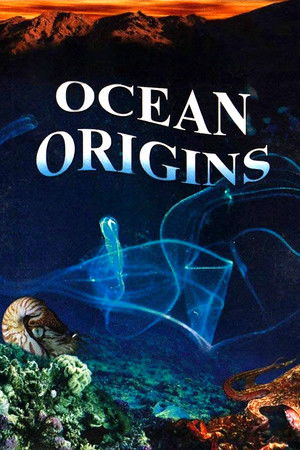
A documentary that explores the natural world of the sea, from the single-celled organism to more complex forms of life, OCEAN ORIGINS was originally filmed in the IMAX large format, which adds a crispness and clarity to the images. This documentary film seeks to examine the process of evolution by looking at the many creatures of the sea that can illustrate the way multi-cellular life emerged over the course of four billion years. OCEAN ORIGINS is a creative film that uses fascinating documentary footage to look at scientific theories and principles in an interesting manner
David Attenborough takes us on a guided tour through the secret world of plants, to see things no unaided eye could witness. Each episode in this six-part series focuses on one of the critical stages through which every plant must pass if it is to survive:- travelling, growing, and flowering; struggling with one another; creating alliances with other organisms both plant and animal; and evolving complex ways of surviving in the earth's most ferociously hostile environments.
Science Breakthroughs: Homo Naledi Discovered in 2013, new and puzzling finding of small-skulled fossils of Homo Naledi has scientists trying to understand whether Homo Sapiens lived at the same time as Homo Naledi, and how Homo Naledi communities may have lived.
A well-preserved mammoth carcass is found in the remote New Siberian Islands in the Arctic Ocean, opening up the possibility of a world-changing “Jurassic Park” moment in genetics.
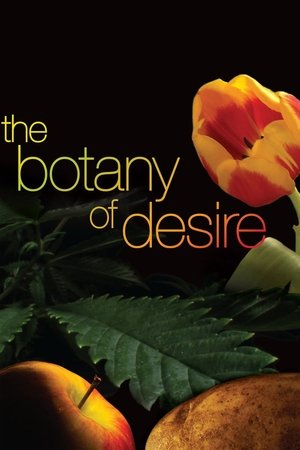
Featuring Michael Pollan and based on his best-selling book, this special takes viewers on an exploration of the human relationship with the plant world — seen from the plants' point of view. Narrated by Frances McDormand, the program shows how four familiar species — the apple, the tulip, marijuana and the potato — evolved to satisfy our yearnings for sweetness, beauty, intoxication.
Richard Dawkins in a 1980's television special based on his book The Blind Watchmaker.
A closer look at the science of Human evolution, and how much early humans might've contributed to the extinction of large mammals during the Ice Age.
In a search for clues about size, the documentary shows why the sun and planets are so large, why insects have shrunk in the course of evolution and how tall trees can actually grow. Fantastic thought experiments are visualized: animals grow many times their normal size and a man is shrunk to the size of an insect. The results of the unnatural reversal of size ratios have incredible consequences. What are the advantages and disadvantages? "Size matters" is a scientific documentary narrated with fictional scenes. Parallel worlds are created in which size appears in a completely new light, often in a different way than previously known. Modern, astonishing CGI sequences support internationally recognized scientists on a journey to both ends of the size scale and help to understand the world in its dimensions.
Unlocking the Mystery of Life represents a unique programming opportunity for local stations. Its broadcast release coincides with the 50th anniversary of one of the greatest scientific breakthroughs in history-James Watson and Francis Crick's discovery that the DNA molecule carries hereditary information in the form of a code that many scientists have likened to computer software or a written language. This discovery (announced on April 25,1953) sparked a scientific revolution. But it also left a fundamental question unanswered. Where did the information in DNA come from? How did the software in the cell arise? Unlocking the Mystery of Life explores these questions through the stories of a growing number of scientists who no longer believe that natural selection or chemistry, alone, can explain life's origin. Instead, they think that the microscopic world of the cell provides evidence of purpose and design in nature.
An African narrator tells the story of earth history, the birth of the universe and evolution of life. Beautiful imagery makes this movie documentary complete.
Earth teems with a staggering variety of animals, including 9,000 kinds of birds, 28,000 types of fish, and more than 350,000 species of beetles. What explains this explosion of living creatures—1.4 million different species discovered so far, with perhaps another 50 million to go? The source of life's endless forms was a profound mystery until Charles Darwin brought forth his revolutionary idea of natural selection. But Darwin's radical insights raised as many questions as they answered. What actually drives evolution and turns one species into another? To what degree do different animals rely on the same genetic toolkit? And how did we evolve?