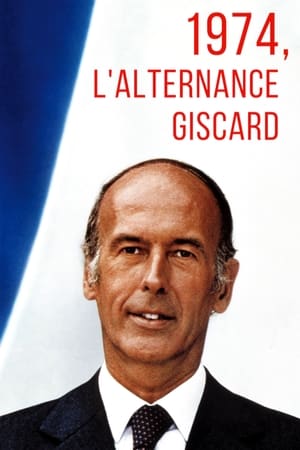
In May 1974, Valéry Giscard d'Estaing became the third President of the Fifth Republic. An alternation of power that did not speak its name opened the doors of power to a reforming president. Abortion, divorce by mutual consent, lowering the age of majority to 18 - in less than two years, the youngest President of the Republic - at the time - carried out reforms with a vengeance, without a united majority in Parliament, before failing in the economic sphere and losing the battle against unemployment. At the age of 90, the former President of the Republic has agreed to look back on these years and gives us a valuable account of his time in power.
A timeline of transformation, compiled from 8 years' worth of photos by and of transgender actress and filmmaker Robyn Adams.
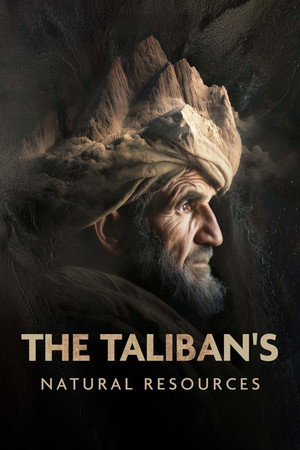
Since the Taliban returned to power in August 2021, Afghanistan has drawn growing international attention for its enormous reserves of rare earths and strategic minerals essential to the global energy transition. The country is believed to hold more than €1 trillion in resources, including copper, lithium, cobalt, iron, uranium, chromite, mercury, and rare earth elements, as well as valuable gemstones and gold. Often described as the “Saudi Arabia of minerals,” Afghanistan has become the focus of a geopolitical race for supplies. While Europe and the United States remain hesitant to engage with a regime accused of serious human rights abuses, countries such as China, Russia, Turkey, Qatar, Pakistan, and India are already positioning themselves in Kabul to secure access to these critical resources.
Here, For a While
In August 2022, a handful of creative activists went to the “lion's den” in Wolfsburg, the heart of the automotive industry, for two years. Their goal: to break up the automotive consensus - to open a window of opportunity through creative campaigns and colorful actions together with militant workers. Their goal was to reach the conversion of production to things we really need - and socialization - the factory for those who work in it. The film, with some action scenes and many interview passages, shows the effectiveness of direct action on social awareness. “It doesn't take many to make a difference,” the activists and workers are convinced. It's about thinking about the social and ecological issues together and acting accordingly.
Bambi was born Jean-Pierre Pruvot in a tiny Algerian village in 1935. Even as a child, she refused to meet the expectations of her extended family, choosing instead to find a way to become the woman she always knew herself to be. A Cabaret Carrousel de Paris performance in Algiers in the 1950s proved to be all the encouragement she needed to emigrate to the French capital, assume the stage name of ‘Bambi’ and lead the life she longed for on the music-hall stages.
The last person on Earth revisits their memories as they wander a lonely world
This is a time when we learn afresh that nothing lasts forever and that the variability is an integral part of everyday life. What is a river today does not mean that tomorrow will not become a sea. Life itself is one large metamorphosis, and the human being is its variable shape...
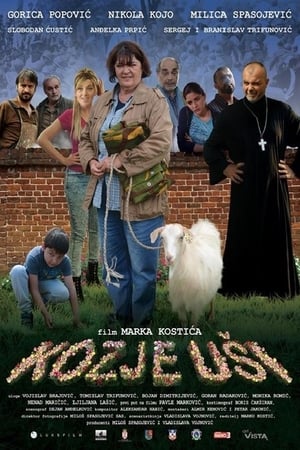
60 year old woman leaves urban life and goes to live in a village to take care of her grandchildren whose parents now live in America. There she faces lots of financial hardships as the family doesn't send any money, and tries her best to provide all for their happier childhood.
The hallway waits, but they're locked out.
Struggling with the move to Australia, a father concedes that he might not be the only one having a hard time with the transition.
Um Corpo que Transita
Emma was born female. As a teenager, she wanted to transition, i.e., change her gender. At age 14, with her parents' support, she was admitted to a hospital unit specializing in transgender care. At age 15, she began hormone treatment. On the eve of her 17th birthday, she underwent a double mastectomy. Now 20, Emma is returning to her birth gender by forging her own path. At a time when countries that are pioneers in gender transition for minors are changing their care policies, this film attempts to shed a nuanced light on the subject.
A bartender takes on the physical form of her imagined alter egos.
When Ocho, an Argentine poet on vacation in Barcelona, spots Javi from his balcony, the attraction is subtle but persistent. After a missed connection on the beach, a third chance encounter escalates to a seemingly random hookup. But are they part of each other’s histories, or maybe even destinies?
Divided into five parts, this film traces the long strike by workers at the Caravelair caravan factory in Trigniac, near Saint-Nazaire, led by the C.G.T. and C.F.D.T. unions. Shot in 1975, the film achieved the strange feat of being produced entirely by workers' producers - 15,000 of them paid in advance for their tickets - and of being amortized, and even made profitable, by being shown outside the commercial circuit alone.
A silent excavation of everyday objects gradually reveals the site as Auschwitz-Birkenau, turning archaeological work into a stark meditation on memory and loss.
The film consists primarily of degraded footage of landscapes shot from vehicles moving across the country; meanwhile, 537 computer-generated permutations of the film’s title appear like subtitles—the letters are scrambled over and over again, undermining the meaning of Pierre Trudeau's infamous motto.
Shot in Quebec, Canada, The Subterranean Blackness of Roots is a 16mm film triptych which uses several processes specific to analog cinema (hand processing, optical printing, photochemical alteration). The film seeks to show the sensory experience of the invisible life of stones, plants and the nature that surrounds us. It’s a dive into the heart of matter, the essence of the vegetal world and the nourishing earth.
Flucht vor Hitler - Die Wiener in China