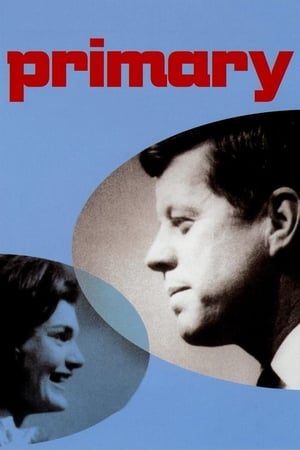
Primary is a documentary film about the primary elections between John F. Kennedy and Hubert Humphrey in 1960. Primary is the first documentary to use light equipment in order to follow their subjects in a more intimate filmmaking style. This unconventional way of filming created a new look for documentary films where the camera’s lens was right in the middle of what ever drama was occurring. Preserved by the Academy Film Archive in partnership with The Film Foundation in 1998.
Optical printing pioneer Pat O’Neill uses “his skills in special effects production to extrapolate metaphysical meaning from the ordinariness of industrialized culture” (Scott Stark). In O’Neill’s playful film, “trouble in the image” may take the form of a disturbing moment in a narrative, how-to instructions for creating an image, or pictures that break apart and lose their literal meaning. O'Neill: “The film [is] made up of dozens of performances dislodged from other contexts. These are often relocated into contemporary industrial landscapes, or interrupted by the chopping, shredding, or flattening of special-effects technology turned against itself. The reward is to be found in immersion within a space of complex and intricate formal relationships”. Preserved by the Academy Film Archive in 2016.
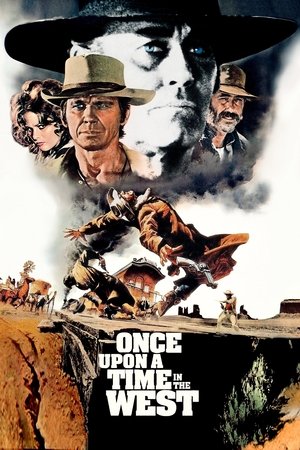
As the railroad builders advance unstoppably through the Arizona desert on their way to the sea, Jill arrives in the small town of Flagstone with the intention of starting a new life.
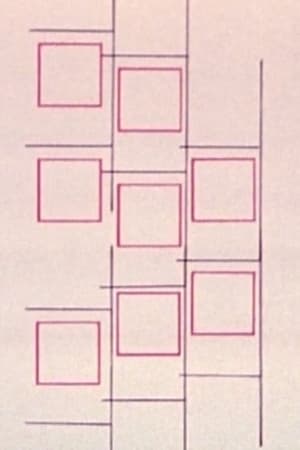
Begins as a whimsical piece with 'sheets' of lines running down the screen, progressing into more and more complex geometic patterns but without deviating from the basic precepts of 'dot and line' animation. Jazz piano on a lazy Sunday afternoon, and a spring color palette. -- Stephanie Sapienza. Preserved by the Academy Film Archive in 2001.
Gore's second solo film, DREAM OF THE SPHINX is highly representative of his fluid, expressive line work and characteristic traversals through space. Preserved by the Academy Film Archive in partnership with CalArts and iotaCenter in 2009.
A collaborative piece by Gore and Beckett, the film begins with one of Gore's characters composing a letter, to eventual mail it. Beckett's animation takes over at this point, transforming the envelope into a looping, cascading form that seems to be perpetually turning itself inside out. A brief Gore finale bookends the piece, which is one of only two extant examples of Gore's unique animation work. This film is usually appended to Gore's own Dream of the Sphinx. [Source: Mark Toscano] Preserved by the Academy Film Archive in partnership with CalArts in 2009.
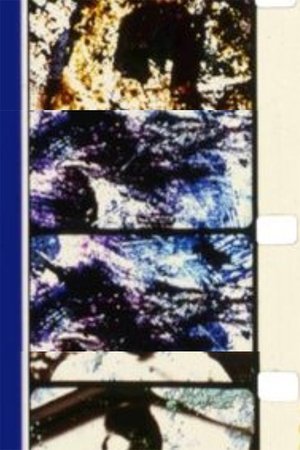
The hand-painting of this film is interrupted by, and interspersed with, a geometrically structured Mask of Death (one of those frightening human idea-shapes of dying) immediately caught-up in threads of streaming, polarized crystals of Light (elaborately step-printed, with simultaneous frame-to-frame dissolves and printer "pull-backs" creating an effect as if the room in which the film is being viewed was inhaling viscous strands of Life's chemical material). The blurred photo-image of a person appears briefly superimposed on these "streamings": then there is a short visual "exhale" of this "crystallized" light, as the screen appears to re-absorb its imagery and resolve itself into a pale violet scattering of dust, is it? ... a nebulae, perhaps – i. e., some semblance both earthly and cosmic and (as such) as enigmatic as "the face of God." Collaboration with Sam Bush.
Pure color forms glide across the screen to the music of a vamp in this abstract exercise produced by the world-famous creative photographer. Preserved by the Academy Film Archive in 2015.
An animated film drawn in india ink directly on 65 mm film. It was reduced optically to 35mm film with colour added. The story of the film concerns a rivalry between two simple stick figures characters for the championship in a unicycle race. Preserved by the Academy Film Archive in 2011.
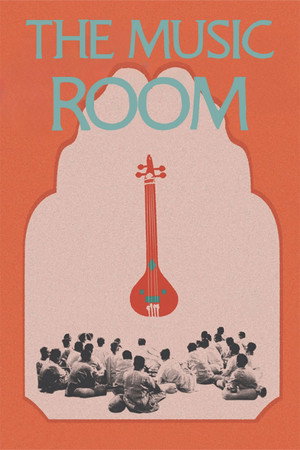
An aging, decadent landlord’s passion for music becomes the undoing of his legacy as he sacrifices his wealth in order to compete with the opulent music room of his younger, richer neighbour.
Documentary short explaining proper techniques for handling and disposal of incendiary bombs. Preserved by the Academy Film Archive, from the Academy War Film Collection, in 2009.
Documentary short about the government census of unemployed but employable workers. Preserved by the Academy Film Archive, Academy War Film Collection, in 2009.
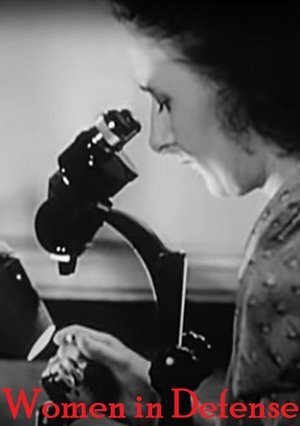
Short documentary extolling the virtues and necessity for women to participate in America's preparation for war, showing women working in scientific, industrial, and voluntary-services activities. Preserved by the Academy Film Archive in 2008.
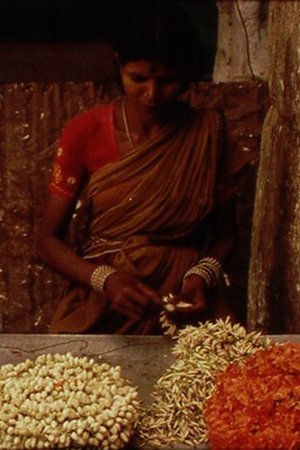
Impoverished priest Harihar Ray, dreaming of a better life for himself and his family, leaves his rural Bengal village in search of work. Alone, his wife, Sarbojaya, looks after her rebellious daughter, Durga, and her young son, Apu, as well as Harihar's elderly aunt Indir. The children enjoy the small pleasures of their difficult life, while their parents suffer the daily indignities heaped upon them.
Shot while LaPore was on a Fulbright Scholar Fellowship to Sri Lanka in 1993-1994. “I have made a film about travelling and living in a distant place which looks at aspects of daily life and where the war shadows the quotidian with a dark and rumbling step.”--LaPore. Preserved by the Academy Film Archive in 2014.

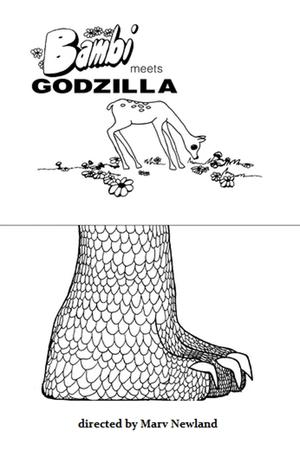
A deer, disillusioned by the consumerism that defines his life. A lizard, ostracized from society, forever wandering. A chance meeting in the middle of a field. Who will survive? And who will transcend existence? Preserved by the Academy Film Archive in 2009.
Beydler performs the ultimate SoCal shade-tipping, satirizing LA art-cool with comic pixillated effect. Preserved by the Academy Film Archive in 2016.
A kinetic film sketch designed to involve the viewers muscles. The rocky seaside cliffs near Stinson Beach, California, hold the wrecked carcass of a #52 pickup that is a rusting monument to Hot Leatherette. Preserved by the Academy Film Archive in 2005.
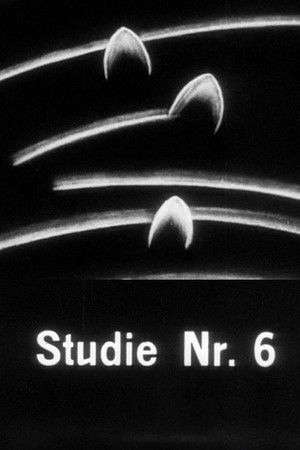
The first Studies were synchronized with records (Fischinger made a total of 13 Studies all without sound). It was only with the introduction of sound, beginning with Study No 6 that the films did full justice to this musical principle. The play of the white lines, the arcs, and the upside-down U’s running hither and thither like ballet dancers was brought into perfect synchronization with the music, and thus the films offered an abstract illustration of the melodies. Study No 6 is certainly the best of his films in terms of forms. - Hans Scheugl and Ernst Schmidt, Jr. Preserved by the Academy Film Archive in 2001.
In the 1970s, Californian artist Louis Hock created a number of studies in the effects of pure colour. The late 1960s saw the rise of the ‘colour field’ vogue which arose in abstract painting in reaction to the emphasis on individual expressive gestures in Abstract Expressionism. ‘Colour field’ artists like Mark Rothko and Barnett Newman sought to empty the image plane out into broad, flat areas of colour. With its humming bars of pure hues, Light Traps is like a moving ‘colour field’ painting – a ‘colour field’ film. Preserved by the Academy Film Archive in 2013.