An obituary for Victor Jara, the Chilean folksinger who was murdered in a football stadium by the military junta during the days of the September 1973 coup.
Delphine Seyrig reads passages from a Valerie Solanas’s SCUM manifesto.
Living in the shadow of Canadian sports legend Lionel Conacher (1900–1954), whose legacy spans five sports, is a daunting challenge for any relative. For great-grandchild Lionel IV, better known as Chas, that challenge extends beyond athletics into the realm of self-discovery. As a non-binary individual navigating identity in the 21st century, Chas explores both the weight of their family’s star-athlete lineage and the evolving landscape of queer identity in a documentary that bridges nostalgia with forward-looking reflection.
Andrea and Krisztina Marics are 28-year-old identical twins with a teaching degree that have lived together since birth. They work together at a touring circus, doing joint artistic performances. After a long circus tour abroad, Andrea leaves the close relationship and ends their work together. She feels that she can succeed on her own. Krisztina still lives and works in the circus but struggles to find her place there without Andrea. After the winter tour, Krisztina has to decide if she stays at home with her sister or continues the life of a wanderer.
A multimedia short created for the U.S. millennium celebrations, The Unfinished Journey reflects on America’s history and spirit through six chapters—immigration, war, culture, civil rights, and innovation. Commissioned by President Bill Clinton and premiered at the Lincoln Memorial on New Year’s Eve 1999, the film features an original orchestral score by John Williams titled American Journey.
Robert (not his real name), is a gay Zimbabwean man who fled to South Africa in the hopes of making this his home. What he found instead was abuse at the hands of other gay men, homophobia from Department of Home Affairs officials as well as the difficulties of navigating the Covid-19 pandemic as a sex worker living in a foreign country. In this short film, Robert speaks with candour about fleeing his homeland, his life in South Africa and his hopes for the future.
A 16 year old girl recalls the last moments of her summer vacation, spent with friends in the Laurentians north of Montreal. She reminisces about their talks on life, death, love, and God. Shot in direct cinema style, working from a script that left room for the teenagers to improvise and express their own thoughts, the film sought to capture the immediacy of the youths presence their bodies, their language, their environment.
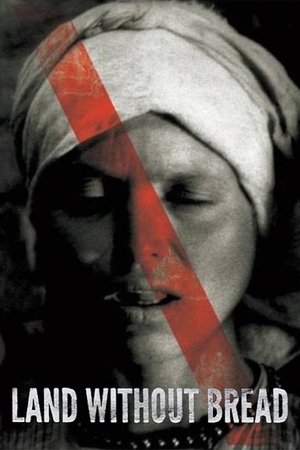
An exploration —manipulated and staged— of life in Las Hurdes, in the province of Cáceres, in Extremadura, Spain, as it was in 1932. Insalubrity, misery and lack of opportunities provoke the emigration of young people and the solitude of those who remain in the desolation of one of the poorest and least developed Spanish regions at that time.
The Bokelberg photographic collection brings to life the Paris of the Belle Époque (1871-1914), an exhibition of workshops and stores with extremely beautiful shop windows before which the owners and their employees proudly pose, hiding behind their eyes the secret history of a great era.
Hannas baby
The best known, "Weegee's New York" (1948), presents a surprisingly lyrical view of the city without a hint of crime or murder. Already this film gives evidence, here very restrained, of Weegee's interest in technical tricks: blur, speeded up or slowed-down film, a lens that makes the city's streets curve as if cars are driving over a rainbow. - The New York Times
A young teacher in Zurich in the 1950s falls in love with a transvestite star but is torn between his bourgeois existence and his commitment to homosexuality. He joins a gay organization that is eventually seen as the pioneer of gay emancipation in Europe.
A groundbreaking film that portrays the journey of Gigi Lazzarato, a fearless woman who began life as Gregory, posting fashion videos to YouTube from his bedroom, only to later come out as a transgender female. With never-before-seen personal footage, the film spotlights a family’s unwavering love for a child.
In the indigenous communities around the town of Juchitán, the world is not divided simply into males and females. The local Zapotec people have made room for a third category, which they call “muxes” - men who consider themselves women and live in a socially sanctioned limbo between the two genders.
An account of the journey that King Alfonso XIII of Spain made to the impoverished shire of Las Hurdes, in the province of Cáceres, in the region of Extremadura, in 1922.
Video art of sculpture is the real life story of Rumi (Mevlana) and Shams Tabrizi. Rumi and Shams are well known international poets of Persian language. One day, Rumi invites Shams Tabrizi to his house, Shams throws the book into the pool of water and Rumi is worried and Shams returns the book to Rumi without any trace of water. The lost half of the sculpture in the film is a representation of the same concept. "Sculpture" has won more than 69 International Awards, third place (semi-final) in called Flickers' Rhode Island International Film Festival (Academy Award ® Qualifying, BAFTA Qualifying, Canadian Screen Award Qualifying) , Winner of the 2025 Jury Award for Best Short Documentary – Toronto International Nollywood Film Festival (TINFF) – A Canadian Screen Award-Qualifying Festival , Crown Point International Film Festival(Chicago),(US),Gold Star Movie Awards (US),One-Reeler Short Film Competition (US),Accolade Competition (US), and many other events.
Itapoa - Un proyecto que camina
This is the story of my grandfather, Tiago Florit, who for 50 years was a film operator at the Teatre Principal de Maó, in Menorca. It is a review of his life, from his birth to his death, in a cinematographic key. A true love story to cinema.
She now lives many miles away from her mother, who is waiting to hear from her. It is a bittersweet, restless, nostalgic moment, and she remembers those vanished years.
A silent documentary film about the history and the architecture of the town of Erlangen in the Middle Franconia region in Bavaria, Germany.