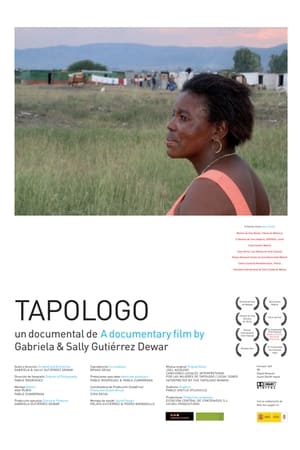
How do white South Africans deal with their fears of crime and violence? Like crocodiles, some survive without evolving, living with their fears. Others make fear their friend and evolve in ways you'd never imagine.
This is a country of gold, diamonds, and great natural wonders. An ancient land undergoing a dramatic political change. A place where wild animals and modern high-rise cities exist side-by-side, where great deserts contrast with lush farmlands. Visit Johannesburg a city built on gold, and Durban where spices of the East mingle with the influence of the Zulu people. View Cape Town from the summit of Table Mountain and fly over the dramatic Drakensburg Mountains. Take a photo safari at the Londolozi Game Reserve where elephants and lions roam freely in the African wilderness. Out of the conflicts of the past is emerging a new country, a land of amazing natural beauty; one of the world's best-kept secrets.
Bruce Brown's The Endless Summer is one of the first and most influential surf movies of all time. The film documents American surfers Mike Hynson and Robert August as they travel the world during California’s winter (which, back in 1965 was off-season for surfing) in search of the perfect wave and ultimately, an endless summer.
Pilot JP Schulze and filmmaker Louis Cole set off to circumnavigate the world in a single-engine, 1974 Cessna T210L airplane named Balloo. They had 90 days to complete the journey, and as they traveled they met people from many different cultures and asked them - is what divides us greater than what brings us together?
The Man Who Fell From The Sky is a Channel 4 documentary. It tells the fascinating story of two men who stowed away on a flight from South Africa to the UK in 2012. But what was their story, and what happened to the two men? The documentary is billed as a ‘stranger than fiction’ story, that features two men who made the ‘most extreme journey’ ever taken by humans. South Africans Themba Cabeka and Carlito Vale made the trip clinging onto the undercarriage of the plane. Together, they made the 11-hour, 5,639-miles trip braving -60C temperatures. The incredible journey made news around the world.
This FitzPatrick Traveltalk series short visit to St. Louis, Missouri starts with a brief history lesson. We then see several of the city's architectural landmarks and the many types of vessels that travel on the Mississippi River. Time is also spent at the zoological garden in Forest Park, where we see rhinoceros, giraffes, polar bears, giant pandas, and a group of trained elephants.
Lake Patzcuaro, located 230 miles west of Mexico City, is one of the highest and most picturesque bodies of water in Mexico. The heritage of the indigenous peoples of the area, the Tarascans, still prevails, such as the production of lacquer-ware handicrafts, and the means of hunting and fishing, the latter which uses nets shaped like large butterfly wings. Although most current day Tarascans are Roman Catholic, they have not totally abandoned their indigenous pagan gods. On Janitzio, one of the many islands in the lake, stands a large statue commemorating José María Morelos, a prominent figure in Mexican liberation and a great benefactor to the Tarascans. Janitzio is also the inspiration for many famous paintings. The town of Tzintzuntzan just inland from the lake's shore acts as the regional center for the market and for festivals.
Sexy supermodels Tyra Banks, Valeria Mazza, Kathy Ireland, Stacey Williams, Ingrid Seynhaeve, Rebecca Romijn, Angie Everhart, Manon von Gerkan and newcomer Georgianna Robertson hit South Africa for the 1996 Sports Illustrated Swimsuit Issue.
Beirut, Lebanon's capital has a long history of political and social unrest that still makes headlines today. Globe Trekker's Beirut City Guide captures the city in more optimistic days, two weeks before the latest outbreak of hostilities in Lebanon between Israeli and Hezbollah forces in July 2006. Globe Trekker Megan McCormick explores the neighborhoods of Basta, Solidere, Gemayze and the Hezbollah District and finds a city in the midst of regeneration. She gets a glimpse at Beirut's future when meeting up with a group of young Arabic hip hop artists, who are eager to live in peace and put the country's political troubles in the past.
Peter Gimbel and a team of photographers set out on an expedition to find and film, for the very first time, Carcharodon carcharias—the Great White Shark. The expedition lasted over nine months and took the team from Durban, South Africa, across the Indian Ocean, and finally to southern Australia.
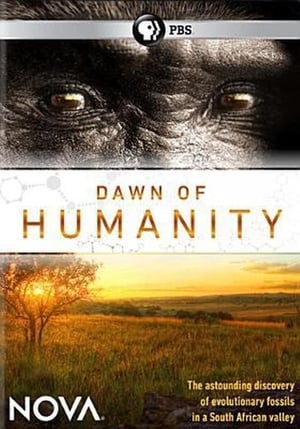
Nova and National Geographic present exclusive access to an astounding discovery of ancient fossil human ancestors.
The struggle to eradicate apartheid in South Africa has been chronicled over time, but no one has addressed the vital role music plays in this challenge. This documentary by Lee Hirsch recounts a fascinating and little-known part of South Africa's political history through archival footage, interviews and, of course, several mesmerizing musical performances.
A 1962 West German documentary film directed by Hermann Leitner and Rudolf Nussgruber.
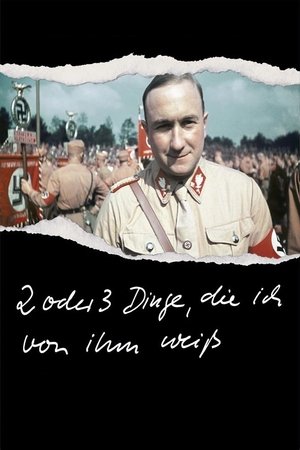
What would your family reminiscences about dad sound like if he had been an early supporter of Hitler’s, a leader of the notorious SA and the Third Reich’s minister in charge of Slovakia, including its Final Solution? Executed as a war criminal in 1947, Hanns Ludin left behind a grieving widow and six young children, the youngest of whom became a filmmaker. It's a fascinating, maddening, sometimes even humorous look at what the director calls "a typical German story." (Film Forum)
James A. FitzPatrick takes a look at colorful Guatemala.
The remote island of St. Helena, a British possession located in the south Atlantic, is perhaps best known as where Napoleon Bonaparte was exiled/imprisoned for the final six years of his life and where he died in 1821. His legacy on the island remains today, despite his body being disinterred and moved back to France in 1840. His home was at Longwood, one area of the island now ceded to the French in respect of its former resident. The island was discovered and named by the Portuguese in 1502. Until the British took over, many other European countries had or wanted possession of the island because of its location along natural trade routes. Jamestown is the island's only port, named after King James. With 4,000 inhabitants, St. Helena is self supporting, growing primarily potatoes and flax. However, its primary economic generator is the sale of the rare St. Helena postage stamp.
This short film takes the viewer to several towns and historical sites of rural Sweden.
This Traveltalk series short takes viewers on a tour of old New Mexico. Starting in Santa Fe, the oldest state capitol in the USA, the city existed long before European migration. It's unique architecture is its most prominent feature. There are several archaeological sites trying to date when Indians first settled in the area. Seven percent of the population are of Indian origin. Near Taos is the onetime home of Kit Carson whose grave is one of the sacred shrines of New Mexico. The Navajo live on their 14 million acre reservation and continue their traditional way of life.
This Traveltalk series short visit to Kentucky starts with a view of the Cumberland River, which flows for about 700 miles through the state. The first stop is Old Fort Harrod State Park, which has a replica of the original fort, the first permanent white settlement in the state. We then visit the grave sites of two of Kentucky's favorite sons, Henry Clay in Lexington and Daniel Boone in Frankfort. At My Old Kentucky Home State Park, we see the mansion and grounds that inspired composer Stephen Foster to write the song most associated with the state. We then visit three horse farms in the area of Lexington, the state's horse racing capital: Spindletop Farm; Faraway Farm, where we are introduced to Man o' War, the greatest racehorse of the 20th century; and Elmendorf Farm, where Man o' War's sire and dam, Fair Play and Mahuba, are buried.
This Traveltalk short visits southern Mexico.