This documentary-drama hybrid explores the dangerous human impact of social networking, with tech experts sounding the alarm on their own creations.
REVOLUTION OS tells the inside story of the hackers who rebelled against the proprietary software model and Microsoft to create GNU/Linux and the Open Source movement.
Focusing on the vulnerability of digital data, Digital Amnesia ponders the sustainability of modern artifacts that have no material state. Notable archivists share their perspectives on the Digital Age and whether it poses great promise or threat to the longevity of digital information and our collective memory.
This short documentary follows the fortunes of iconic car manufacturer Lotus. Once famous for its championship-winning race cars and iconic sports cars, Lotus has struggled to remain in profit. A new investor and managing director set out to build the first new Lotus road cars in over a decade: their final petrol-powered car Emira and their first pure electric British hypercar, the 2000bhp Evija.
With the most tech startups and venture capital per capita in the world, Israel has long been hailed as The Startup Nation. WIRED’s feature-length documentary looks beyond Tel Aviv’s vibrant, liberal tech epicenter to the wider Holy Land region – the Palestinian territories, where a parallel Startup Nation story is emerging in East Jerusalem, Nazareth, Ramallah and other parts of the West Bank, as well as in the Israeli cybersecurity hub of Be’er Sheva. And we will learn how the fertile innovation ecosystem of Silicon Wadi has evolved as a result of its unique political, geographical and cultural situation and explore the future challenges – and solutions – these nations are facing.
At Arcata, California, testing technology for landing planes in fog. Also: a high-tech barber shop in Westwood Village, California; manufacture of precision steel gauge blocks in Eskilstuna, Sweden.
Terror Mandelão addresses sound, technology, and the job market in the universe of baile funk in São Paulo's favelas. The film follows the journey of DJ K, one of the main DJs of Baile do Helipa, the street party of Heliópolis favela, and his friend Zero K, who got his first hit after 10 years as MC. Combining documentary, fictional elements, and visual experimentation, it portrays the ups and downs faced by young artists on the outskirts.
Peter Thiel. David Sacks. Elon Musk. Mark Zuckerberg. Jeff Bezos. These tech titans have pledged their loyalty to President Trump. But what do they really believe and what do they stand to gain? This unfiltered portrait, revealed by insiders, shows where American democracy is heading and how this handful of tech billionaires accumulated such unprecedented power and influence.
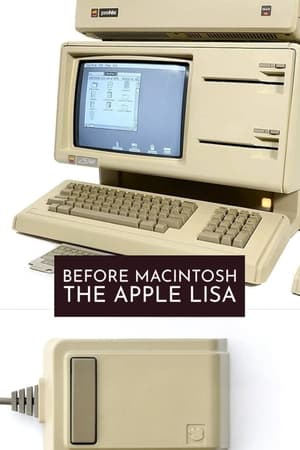
Explores the history, technology, people, stories and industry influence of this lesser-known personal computer. The film profiles important individuals involved in the creation of the computer, plus its life after cancellation, both as an entry-level Macintosh compatible and as a collectible. The work of Douglas Engelbart and his team, plus advances from the Xerox Palo Alto Research Center (PARC) with their Alto and Star workstations were the initial innovators of the Graphical User Interface (GUI), but the Apple Lisa stands as the clear foundation for what we all use today -- Macintosh -- Windows -- iOS -- Android.
On June 11th, 1997, Philippe Kahn created the first camera phone solution to share pictures instantly on public networks. The impetus for this invention was the birth of Kahn's daughter, when he jerry-rigged a mobile phone with a digital camera and sent photos in real time. In 2016 Time Magazine included Kahn's first camera phone photo in their list of the 100 most influential photos of all time.
Commissioned by the Festival of Britain to show the similarities and contrasts between 1851 and 1951, by means of the Great Exhibition and the Festival.
A team of scientists search for the lost island of Testerep in front of the Belgian coast, venturing into artificial landscapes and virtual realities.
LIKE is an IndieFlix Original documentary that explores the impact of social media on our lives and the effects of technology on the brain. The goal of the film is to inspire us to self-regulate. Social media is a tool and social platforms are a place to connect, share, and care … but is that what's really happening?
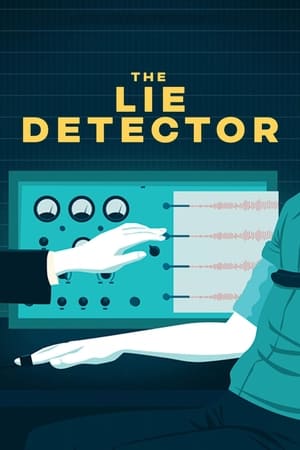
In the first decades of the 20th century, when life was being transformed by scientific innovations, researchers made a thrilling new claim: they could tell whether someone was lying by using a machine. Popularly known as the “lie detector,” the device transformed police work, seized headlines and was extolled in movies, TV and comics as an infallible crime-fighting tool. Husbands and wives tested each other’s fidelity. Corporations routinely tested employees’ honesty and government workers were tested for loyalty and “morals.” But the promise of the polygraph turned dark, and the lie detector too often became an apparatus of fear and intimidation. Written and directed by Rob Rapley and executive produced by Cameo George, The Lie Detector is a tale of good intentions, twisted morals and unintended consequences.
Tuer la mort ?
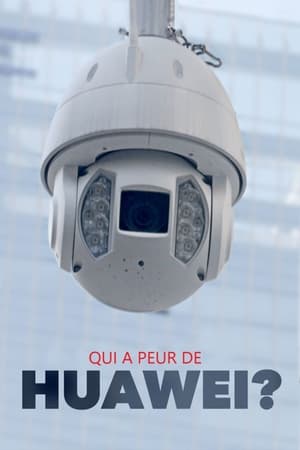
The Chinese company Huawei wants to expand 5G worldwide and is well advanced in the development of the technology. With the help of 5G, entire communities can function wirelessly, self-driving cars become possible and advanced medical care can be performed remotely in real time. However, many are worried that Huawei is incorporating backdoors that allow vast amounts of data to be collected and then used by China for espionage.
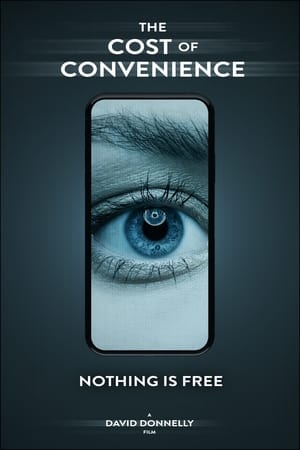
The Cost Of Convenience examines how internet platforms are impacting our mental health, restructuring our communities, threatening our democracy, and violating our human rights.
By observing the technological developments of artificial intelligence in several countries, this film sheds light on the advantages and limits of algorithms and their repercussions on the lives of citizens. Whether at the level of the State, the police, universities, or companies, artificial intelligences should be used as a tool, but very often become a substitute for the work of the individual. There are many abuses: manipulations, addictions, or centralization of power. What can governments and States do to best regulate these technological advances?
When the pandemic hit it highlighted how much Western countries rely on the chip industry. Today Europe, America and China are involved in an intense commercial struggle to dominate this sector that is so strategic for the future. From Taiwan to Shanghai, via Brussels and San Francisco, investigative journalist Nicolas Vescovacci went to meet the most influential players in this microchip war, which is redefining world geopolitics.
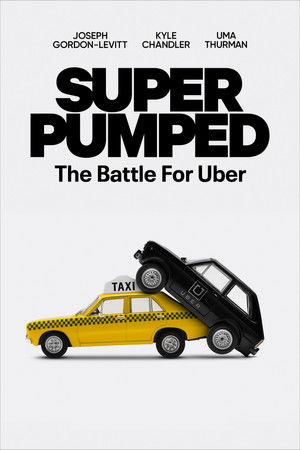
The roller-coaster ride of the upstart transportation company, embodying the highs and lows of Silicon Valley.