There were five Marines and one Navy Corpsman photographed raising the U.S. flag on Mt. Suribachi by Joe Rosenthal on February 23, 1945. This is the story of three of the six surviving servicemen - John 'Doc' Bradley, Pvt. Rene Gagnon and Pvt. Ira Hayes - who fought in the battle to take Iwo Jima from the Japanese.
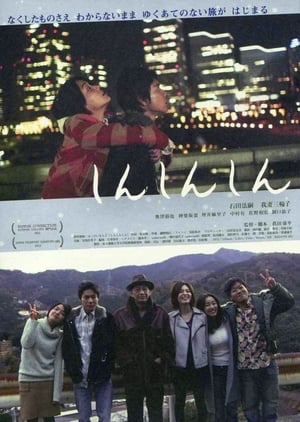
A family of four are the sole inhabitants of a small island, where they struggle each day to irrigate their crops.
Returning to their lord's castle, samurai warriors Washizu and Miki are waylaid by a spirit who predicts their futures. When the first part of the spirit's prophecy comes true, Washizu's scheming wife, Asaji, presses him to speed up the rest of the spirit's prophecy by murdering his lord and usurping his place. Director Akira Kurosawa's resetting of William Shakespeare's "Macbeth" in feudal Japan is one of his most acclaimed films.
Aspiring to an easy job as personal physician to a wealthy family, Noboru Yasumoto is disappointed when his first post after medical school takes him to a small country clinic under the gruff doctor Red Beard. Yasumoto rebels in numerous ways, but Red Beard proves a wise and patient teacher. He gradually introduces his student to the unglamorous side of the profession, ultimately assigning him to care for a prostitute rescued from a local brothel.
Kanji Watanabe is a middle-aged man who has worked in the same monotonous bureaucratic position for decades. Learning he has cancer, he starts to look for the meaning of his life.
Two New York cops get involved in a gang war between members of the Yakuza, the Japanese Mafia. They arrest one of their killers and are ordered to escort him back to Japan. However, in Japan he manages to escape, and as they try to track him down, they get deeper and deeper into the Japanese Mafia scene and they have to learn that they can only win by playing the game—the Japanese way.
In the future, the Japanese government captures a class of ninth-grade students and forces them to kill each other under the revolutionary "Battle Royale" act.
Chiba, looking gnarly, and acting as animalistic as ever, stars alongside Matsukata as violent gangsters battling their way through fight after bloody fight with rival yakuza on the streets of Okinawa.
In a dysfunctional family where the mother is a heroin addict and prostitute, beaten by her son, and the father is an ex-TV reporter, sleeping with his daughter and filming his son being beaten up, ‘Q’, a complete stranger enters the bizarre family, changing their lives for the better, finding a balance in their disturbing natures.
Ryotatsu, the wayward Priest blinded by Shinkai, the Wicked Priest, has his own story in this ultra-violent tale from the era of the Meiji Reconstruction. When a woman leaves her blind son at the Monastery, Ryotatsu is forced to teach the boy how to cope as a blind person in old Japan. When he takes the child with him on the road to find the boy's mother, they run afoul of not only yakuza gangsters, but some corrupt army officers have been trying to sway public opinion against the Satsuma rebels by posing as members of Saigo Takamori's group. It's a bloody mistake for them to underestimate the strength of the Blind Priest, and he'll make them pay with their lives!
Brash, loudmouthed and opportunistic, Kikujiro is the unlikely companion for Masao who is determined to see the mother he has never met. The two begin a series of adventures which soon turns out to be a whimsical journey of laughter and tears with a wide array of surprises and unique characters along the way.
After a major conflict, Kazuma Washio (Hitoshi Ozawa) becomes the 6th boss of Tendokai, Kanto’s largest yakuza group. Wakagashira Date (Hideo Nakano) and Kurata (Yoshiyuki Yamaguchi) secure casino rights from the government, but top officials are soon murdered, and Date is framed. The trail leads to Sanko-kai, a Kansai syndicate forming ties with a Korean underworld led by Myojin Akinari (Noboru Kaneko), brother of Washio’s old rival. Sanko-kai’s boss Onizuka (Hiroshi Fuse), who holds a grudge against Washio, launches a political and violent offensive. As Tendokai fights back to reclaim the casino rights, tragedy strikes—Okita (Yasukaze Motomiya) is targeted. Japan’s largest underworld war erupts again—what awaits at the end?
Marc Schrader, a rookie cop caught red-handed with drugs in a police raid of an illegal rave, joins a homicide investigation conducted by Chief Inspector Minks. The victim is a naked young woman with the skin stripped off her back, killed as she staggered into traffic. As Schrader and Minks investigate the murder, the case is complicated by a finger found in the stomach of the victim. Forensic examination proves the finger belongs to Nobert Günzel, who was previously convicted of rape and assault. The police raid Günzel’s residence, and discover a blood-stained table with restraints and bits of human flesh in his basement. They also find video equipment and preserved, tattooed skin from the victim’s back. Soon, they found dead bodies buried in the garden. Günzel then goes missing.
As sadomasochistic yakuza enforcer Kakihara searches for his missing boss he comes across Ichi, a repressed and psychotic killer who may be able to inflict levels of pain that Kakihara has only dreamed of.
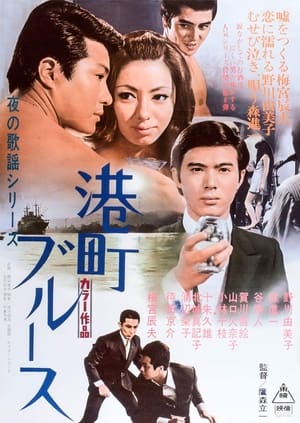
A year later, Mouri was demoted, and Saiga was expelled from the gang. Engetsu suddenly fell ill, and in Yokohama, where Engetsu's influence waned, drugs began to spread. Amid the unrest, Mouri and Saiga begin to confront each other.
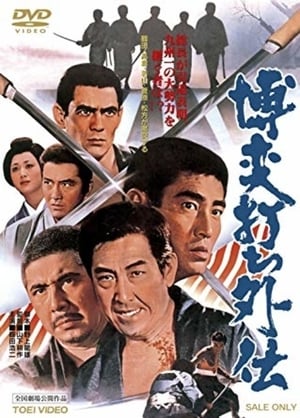
It is the third film in the Gokudo series. In this episode, set in 1937, the main character of the series gang leader Shimamura is drafted into the military and fight in China.
Four people recount different versions of the story of a man's murder and the rape of his wife.
Love is a business at Family Romance, a company that rents human stand-ins for any occasion. Founder Yuichi Ishii helps make his clients’ dreams come true. But when the mother of 12-year-old Mahiro hires Ishii to impersonate her missing father, the line between acting and reality threatens to blur.
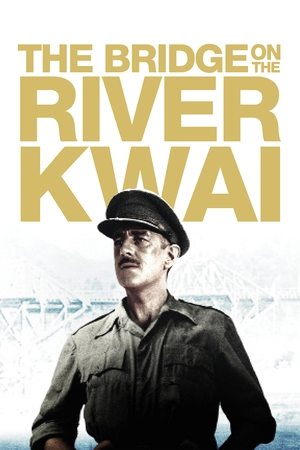
Nathan Algren is an American hired to instruct the Japanese army in the ways of modern warfare, which finds him learning to respect the samurai and the honorable principles that rule them. Pressed to destroy the samurai's way of life in the name of modernization and open trade, Algren decides to become an ultimate warrior himself and to fight for their right to exist.
In the years before World War II, a penniless Japanese child is torn from her family to work as a maid in a geisha house.