A distinguished military leader whose reign was touched by great scandal, shocking betrayals and rousing victories. A simple shepherd boy chosen to be king, under the watchful eyes of prophet Samuel.
From double BAFTA nominated Writer and Director John Walsh. Monarch is part fact, part fiction and unfolds around one night when the injured ruler arrives at a manor house closed for the season.
The story of an unruly class of bright, funny history students at a Yorkshire grammar school in pursuit of an undergraduate place at Oxford or Cambridge. Bounced between their maverick English master, a young and shrewd teacher hired to up their test scores, a grossly out-numbered history teacher, and a headmaster obsessed with results, the boys attempt to pass.
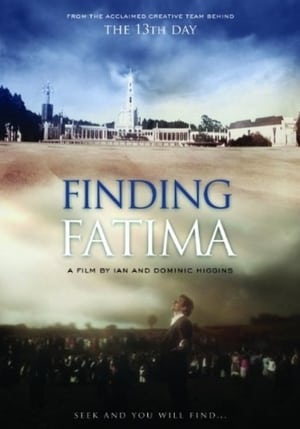
Explores the story of three children who claimed to have witnessed visitations of the Virgin Mary in Fatima, 1917. It shows the journey that they went on and how their courage and belief changed the face of Portugal.
A departing professor gathers his closest colleagues for an intimate farewell, but the night takes an unexpected turn when he shares a stunning secret about his past. As the conversation unfolds, skepticism and curiosity collide, challenging everything they thought they knew about history, science, and belief.
Beginning just after the bloody Sioux victory over General Custer at Little Big Horn, the story is told through two unique perspectives: Charles Eastman, a young, white-educated Sioux doctor held up as living proof of the alleged success of assimilation, and Sitting Bull the proud Lakota chief whose tribe won the American Indians’ last major victory at Little Big Horn.
A graduate student and obsessive runner in New York is drawn into a mysterious plot involving his brother, a member of the secretive Division.
In 208 A.D., in the final days of the Han Dynasty, shrewd Prime Minster Cao convinced the fickle Emperor Han the only way to unite all of China was to declare war on the kingdoms of Xu in the west and East Wu in the south. Thus began a military campaign of unprecedented scale. Left with no other hope for survival, the kingdoms of Xu and East Wu formed an unlikely alliance.
Aaron Eliyahu, a Jewish man, travels to a small village called Mala, Kerala in search of his Jewish heritage. On his journey, he befriends a Muslim man named Beerankunj. Unfortunately, Aaron meets with a fatal motor accident that lands him in a state of coma in a hermitage somewhere in North India. By the time he reaches Mala, he sees that his house has been converted into a post office and learns that his mother, Veronica, entrusted all her property with the panchayat before leaving for Israel. Unable to prove his own identity, Aaron is denied the rights to his own house. Since he is unable to provide any concrete evidence in the court of law, Aaron is thrown into the streets with only his true friend Beerankunj by his side. Karutha Joodhan reveals the unexpected happenings passing through the three generations of Aaron and Beerankunj.
The Prince of Guastalla falls in love with the young citizen Emilia Galotti, who is soon to marry Count Appiani. In order to win Emilia, the prince tries to send the count on an "honorable" journey on his behalf with the help of his chamberlain Marinelli. However, after the Count refuses this offer, Marinelli decides to have the wedding carriage robbed on his own initiative in order to have Emilia abducted to the Prince's nearby pleasure palace. But he has not thought of the prince's mistress, Countess Orsina, and Emilia's shaken father Odoardo, both of whom soon arrive at the castle, one to meet the prince, the other to look after his daughter...
During the 13th century, a small village fights for freedom in the frontier landscape of the Carpathian Mountains against Mongolian invaders.
A history of the French Revolution beginning from the decision of the king to convene the Etats-Generaux in 1789 in order to deal with France's debt problem. Part one spans the event until August 10, 1792 (when the King Louis XVI lost all authority and was imprisoned). Part two carries the story through the end of the terror in 1794.
The story of Salvador Puig Antich, one of the last political prisoners to be executed under Franco's Fascist State in 1974.
Sulan, who works in a factory in the summer of 1978, begins learning photos with other female workers from Seok-yoon, the owner of the photo studio across from the factory. Seok-yoon, who had been closed, began to open his heart to female workers, but began to feel uneasy about the female workers' labor movement.
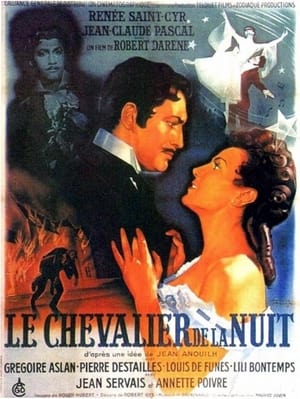
Paris, 1884. Bella Fontanges, a renowned ballerina, is married to Georges de Segar. But after just a few years together, the couple slowly sinks into weariness. Bella has forgotten what happiness used to taste like. Then a mysterious squire appears. Aware of the couple's faltering situation, he makes Bella and Georges a most astonishing proposal: he claims to be able to separate Good from Evil in Georges. Reluctant at first, the couple eventually agrees to play along. But it's not long before they realize that in Georges, it's Evil that has prevailed.
The legendary tale of the forty-seven samurai and their mission to avenge the death of their master.
This MGM Passing Parade series short presents how separate events led to the creation of three provisions - freedom of speech, freedom of the press, and prohibition of the infliction of cruel and unusual punishments - in the U.S. Constitution's Bill of Rights.
A dramatisation of the workers' protests in June 1976 in Radom, seen from the perspective of the local Secretary of the Polish United Workers' Party.
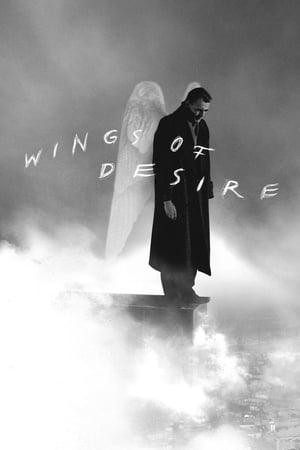
Two angels, Damiel and Cassiel, glide through the streets of Berlin, observing the bustling population, providing invisible rays of hope to the distressed but never interacting with them. When Damiel falls in love with lonely trapeze artist Marion, the angel longs to experience life in the physical world, and finds — with some words of wisdom from actor Peter Falk — that it might be possible for him to take human form.
A historical drama set in Roman Egypt, concerning philosopher Hypatia of Alexandria and her relationship with her slave Davus, who is torn between his love for her and the possibility of gaining his freedom by joining the rising tide of Christianity.