A clash of true oceanic titans sees fights in the remote battlefields of Ascension Island. Tuna are often faster, fitter and bigger than the sharks.
A routine drone survey turns deadly when Ryan Johnson, a marine biologist based in South Africa, films a humpback whale being attacked and strategically drowned by a Great white shark. This is a total perspective shift for the creature.
"Kon-Tiki" was the name of a wooden raft used by six Scandinavian scientists, led by Thor Heyerdahl, to make a 101-day journey from South America to the Polynesian Islands. The purpose of the expedition was to prove Heyerdal's theory that the Polynesian Islands were populated from the east- specifically Peru- rather than from the west (Asia) as had been the theory for hundreds of years. Heyerdahl made a study of the winds and tides in the Pacific, and by simulating conditions as closely as possible to those he theorized the Peruvians encountered, set out on the voyage.
See the world's first MRI scan of a great white shark as Ultimate Shark reveals the extreme engineering and predatory abilities of one of nature's most near perfect predators. Hear firsthand accounts of people who survived harrowing encounters, including a surfer who was bitten on the arm and leg, towed by the surfboard ankle strap and miraculously escaped only with minor injuries. National Geographic demystifies the true motives and power behind their behavior.
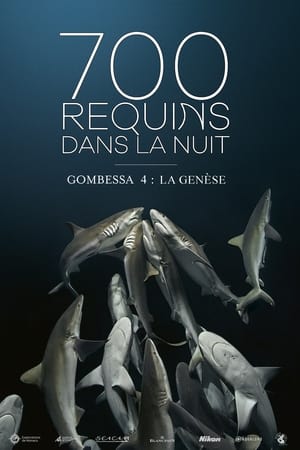
Originally, in 2014, Laurent Ballesta had just one precise objective: to unravel the mystery of groupers. To understand the issues involved in their collective reproduction. But although focused on the study of groupers, the real surprise came from the sharks. Never before had the team been confronted with such a density of grey reef sharks. The divers took up the challenge of counting them. Methodically, they repeated the operation many times to arrive at the impressive figure of 700 grey reef sharks. Each year, the team returned to the southern pass of Fakarava in French Polynesia. Until 2019, for the fourth expedition, "Gombessa 4" is the synthesis of precise and unique scientific protocols. The mission demonstrated that shark hunts are not anarchic, but rely in part on social organization within the horde, following in the footsteps of the 700 grey sharks in "700 sharks in the night (Gombessa 4, Genesis)".
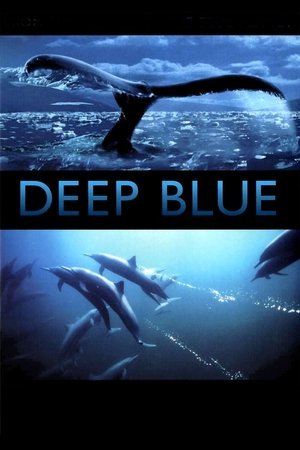
Deep Blue is a major documentary feature film shot by the BBC Natural History Unit. An epic cinematic rollercoaster ride for all ages, Deep Blue uses amazing footage to tell us the story of our oceans and the life they support.
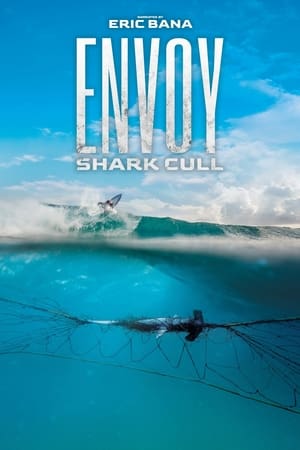
Envoy: Shark Cull is a fascinating, deeply moving documentary narrated by Eric Bana, which sheds light on the real story behind the coastal ‘shark safety’ programs in Queensland and New South Wales. The current methods of baited drum-lines and nets have not only been scientifically proven to be ineffective in protecting swimmers and surfers, leaving them at risk in the sea, but these outdated solutions continue to be allowed to negatively impact entire marine ecosystems—including the Great Barrier Reef. Follows some of the biggest names in ocean conservation, such as Sea Shepherd, Ocean Ramsey and Madison Stewart. We will join these experts as they explore and expose this scarcely understood topic. We will also learn the importance of sharks in our oceans while uncovering the longest marine cull in history.
Air Jaws claims new turf in South Africa. Dr. Neil Hammershlag and Enrico Gennari follow with brand new technology: a "drone-towed" seal decoy to study and capture the harrowing and dramatic battles between shark and seal.
A journey into the land of sharks. The old myth of swimming killing machines is put against the true nature of those rather peaceful hunters, whose evolution ended in biological perfection millions of years ago. We accompany expeditions of Dr. Eugenie Clark and Rodney Fox, who have studied sharks since the 1950's.
In Australia, sharks have recently been recorded with unusual prey-including other sharks. In order to figure out what has caused this shift in diet, Dr. Charlie Huvaneers and team head to shark infested waters to find out what's in the stomach of a great white - and why.
Researchers investigate whether orcas have begun hunting great white sharks off the coast of New Zealand.
A series of shark attacks that happened in the same patch of ocean, the remote islands of the Whitsunday in Australia.
The Man Killers
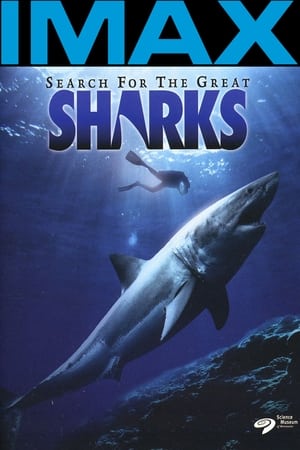
Peter Gimbel and a team of photographers set out on an expedition to find and film, for the very first time, Carcharodon carcharias—the Great White Shark. The expedition lasted over nine months and took the team from Durban, South Africa, across the Indian Ocean, and finally to southern Australia.
How one of the largest Bull Sharks ever caught off the quiet coast of Florida grew to become a giant of the ocean.
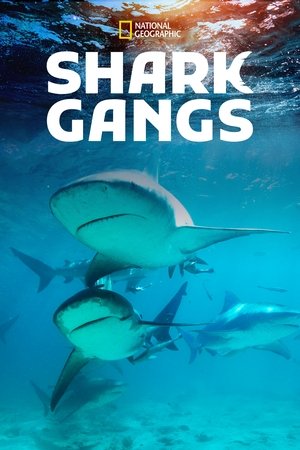
Scientists have discovered and investigate the reason behind the behavior of sharks swimming around in gangs even though they are viewed as solitary predators.
A team of explorers set out to explore the sea and land of the remote Pitcairn Islands
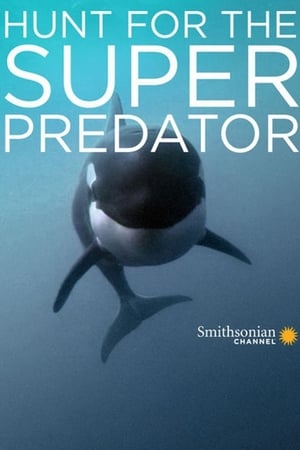
There's a mysterious predator lurking in the depths of Australia's wild Southern Ocean, a beast that savagely devoured a great white shark in front of cinematographer David Riggs 11 years ago. Riggs's obsession to find the killer leads him to an aquatic battle zone that's remained hidden until now. Here, killer whales, colossal squid and great white sharks face off in an underwater coliseum where only the fiercest creatures of the marine world survive.
Shark Tracker
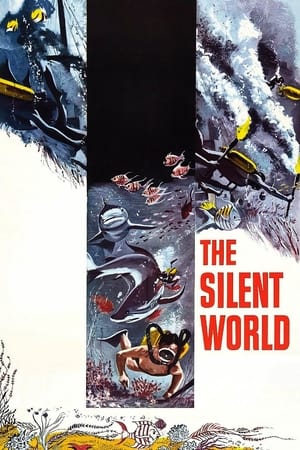
Join renowned explorer Jacques-Yves Cousteau as he investigates aquatic habitats worldwide, showcasing whales, sharks, and diverse marine life. The film highlights the brutal realities of nature while capturing the wonder of underwater exploration, as the team ventures into previously unseen ocean depths.