The remarkable story of Brazilian racing driver Ayrton Senna, charting his physical and spiritual achievements on the track and off, his quest for perfection, and the mythical status he has since attained, is the subject of Senna, a documentary feature that spans the racing legend's years as an F1 driver, from his opening season in 1984 to his untimely death a decade later.
Tally Brown, New York is a 1979 documentary film directed, written and produced by Rosa von Praunheim. The film is about the singing and acting career of Tally Brown, a classically trained opera and blues singer who was a star of underground films in New York City and a denizen of its underworld in the late 1960s. In this documentary, Praunheim relies on extensive interviews with Brown, as she recounts her collaboration with Andy Warhol, Taylor Mead and others, as well as her friendships with Holly Woodlawn, and Divine. Brown opens the film with a cover of David Bowie’s “Heroes” and concludes with “Rock ’n’ Roll Suicide.” The film captures not only Tally Brown’s career but also a particular New York milieu in the 1970s.
This portrait that goes against the grain depicts the Führer as a lazy, isolated leader, cut off from reality, incapable of governing without his "apostles". They are Hitler's essential ministers, advisers, rivals, courtiers. They hate each other, and the Führer puts them in competition, often to get the worst out of them. The portraits of Hermann Goering, Heinrich Himmler, Joseph Goebbels, Albert Speer but also Rudolf Hoess, the commandant of the Auschwitz-Birkenau camp, and Doctor Joseph Mengele trace the rivalries, hatreds and predations that punctuate the entire frightening epic of Nazism. This documentary is composed of a selection of archive images and testimonies from descendants and specialists of this period.
Jarmila Šuláková – královna lidové písně
A freewheeling portrait of Ken Kesey and the Merry Prankster’s fabled road trip across America in the legendary Magic Bus. In 1964, Ken Kesey, the famed author of “One Flew Over the Cuckoo’s Nest,” set off on a legendary, LSD-fuelled cross-country road trip to the New York World’s Fair. He was joined by “The Merry Band of Pranksters,” a renegade group of counterculture truth-seekers, including Neal Cassady, the American icon immortalized in Kerouac’s “On the Road,” and the driver and painter of the psychedelic Magic Bus.
Documentary about Charles Olson, exploring his life and the significance of Gloucester, Massachusetts.
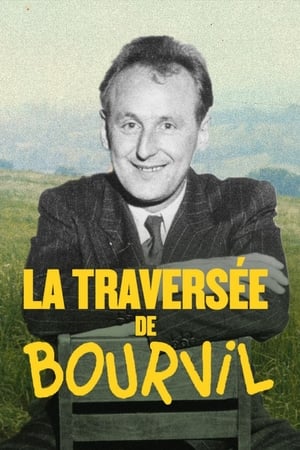
A TV documentary about the singing career of Jacques Brel, beginning with his childhood in Belgium.
I Am Evel Knievel features footage of Evels greatest jumps, including the seminal Snake River Canyon and Caesars Palace jumps. The film also showcases Knievels rise from a small town rebel in Butte, Montana, to a cultural icon whose rise to superstardom was built on nerves of steel and the ability to get up and do it again no matter the severity of the fall. He lived life like every day was his last, which led to a tumultuous life filled with stunts no man would ever dream of, encompassing meteoric success, wild hubris, egomaniacal mistakes, and ultimately redemption. The documentary combines original exclusive interviews with archival footage of this larger-than-life character to tell Knievels incredible story. Among those featured include Matthew McConaughey, Kid Rock, Michelle Rodriguez, Guy Fieri, Robbie Maddison and family members including sons Kelly and Robbie, and former wives Linda Knievel and Krystal Kennedy-Knievel.
NakaMats is an unlikely character made for the movies, an eccentric 80-year-old Japanese inventor responsible for 3,357 inventions, including the floppy disk. With his deadpan English and impeccable comic timing, he provides nonstop laughs— utterly nutty, but also a paean to the spirit of human invention.
A compilation that highlights works from the Three Stooges. It includes the shorts Brideless Groom, Sing a Song of Six Pants, and Malice in the Palace, also Ed Wynn's live TV Camel Comedy Caravan starring Shemp, Larry, and Moe.
The astonishing life-story of “Lili Marleen“ composer Norbert Schultze.
During her Christmas holidays with the royal family at the Sandringham estate in Norfolk, England, Diana decides to leave her marriage to Prince Charles.
Mae West achieved great acclaim in every entertainment medium that existed during her lifetime, spanning eight decades of the 20th century. A full-time actress at seven, a vaudevillian at 14, a dancing sensation at 25, a playwright at 33, a silver screen ingénue at 40, a Vegas nightclub act at 62, a recording artist at 73, a camp icon at 85 - West left no format unconquered. She possessed creative and economic powers unheard of for a female entertainer in the 1930s and still rare today. Though a comedian, West grappled with some of the more complex social issues of the 20th century, including race and class tensions, and imbued even her most salacious plotlines with commentary about gender conformity, societal restrictions and what she perceived as moral hypocrisy. Mae West: Dirty Blonde is the first major documentary film to explore West's life and career, as she "climbed the ladder of success wrong by wrong" to become a writer, performer and subversive agitator for social change.
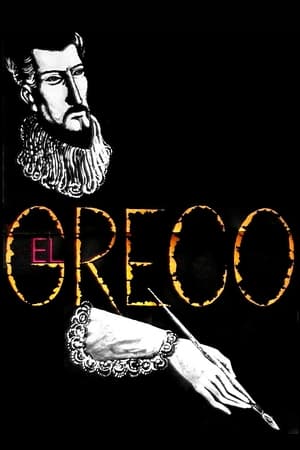
A poetic journey into the visual world of the legendary filmmaker and actor Orson Welles (1915-85) that reveals a new portrait of a unique genius, both of his life and of his monumental work: through his own eyes, drawn by his own hand, painted with his own brush.
A portrait of the life and work of the great Hungarian composer Béla Bartók, exploring both his music and his passionate interest in his country's folklore.
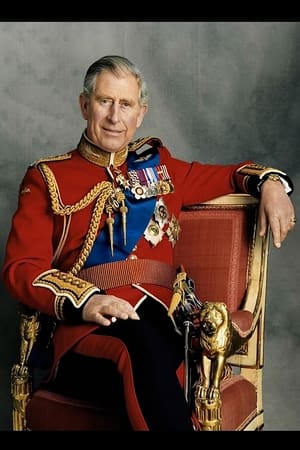
A look at the relationship between the future King and Queen.
Reveals an alternate history of the post-war world. This is a version of history where, in contrast to what we are all told, fascist ideology prevailed. The story of Klaus Barbie, Nazi torturer, American spy, tool of repressive right-wing regimes, is symbolic of the real relationship that the "Western" governments had with fascism and makes us see the world as it is today - and the politicians that inhabit it - in a different way.
As a child, Sicilian Placido Rizzotto saw his father imprisoned for a crime he didn't commit, and as a young man he fought in World War II, first as a soldier and then as an anti-fascist partisan. These events have left Placido with little taste for petty tyranny and with a desire to promote social justice. Upon his return home, he becomes increasingly aware that the Mafia has taken hold of his village, witnessing angry and frustrated as gangsters control local politics and take whatever they want from the people. Placido helps to form a trade union as a challenge to the Mafia's authority, and attempts to organize the villagers into a collective to grow crops in the fields taken by the Mafia.
Set before the Battle of Trafalgar, this is the story of relationship between Admiral Lord Nelson and Lady Hamilton during the Napoleonic Wars.
Built in 1942 by a maverick film preservationist, this small Los Angeles theater championed silent film at the very moment when the Hollywood studios across town were busily destroying their nitrate inventories. With hard chairs, phonograph-record accompaniments, and mostly original vintage prints, the dingy mom-and-pop operation was nonetheless a palace to the fanatical few who became its loyal audience.