Primary is a documentary film about the primary elections between John F. Kennedy and Hubert Humphrey in 1960. Primary is the first documentary to use light equipment in order to follow their subjects in a more intimate filmmaking style. This unconventional way of filming created a new look for documentary films where the camera’s lens was right in the middle of what ever drama was occurring. Preserved by the Academy Film Archive in partnership with The Film Foundation in 1998.
An ode to queer sex and drugs, boys shooting up and kissing. Preserved by the Academy Film Archive in 1998.
As the railroad builders advance unstoppably through the Arizona desert on their way to the sea, Jill arrives in the small town of Flagstone with the intention of starting a new life.
Study of posters and graffiti on the walls of Paris, using ellipses, brief shots and quick camera movements. Preserved by the Academy Film Archive in partnership with iotaCenter and National Film Preservation Foundation in 2000.
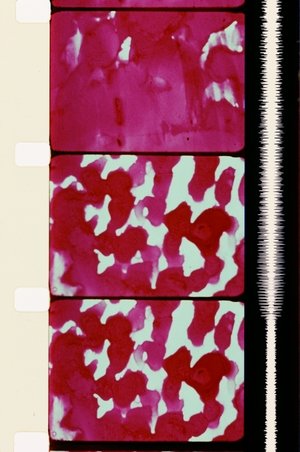
Rephotographed pornographic playing cards rhythmically intrude upon a piercing 5-beat score of different-sized black parallel lines, creating an almost indiscernible complexity, until the lined background ruptures and the sounds and visuals become scattered and disordered. The "girlie" cards break out onto saturated color fields and eventually find their way into the real world, aggressively flickering by against backgrounds of earth, concrete and other surfaces. Preserved by the Academy Film Archive in 2016.
Impoverished priest Harihar Ray, dreaming of a better life for himself and his family, leaves his rural Bengal village in search of work. Alone, his wife, Sarbojaya, looks after her rebellious daughter, Durga, and her young son, Apu, as well as Harihar's elderly aunt Indir. The children enjoy the small pleasures of their difficult life, while their parents suffer the daily indignities heaped upon them.
The first Studies were synchronized with records (Fischinger made a total of 13 Studies all without sound). It was only with the introduction of sound, beginning with Study No 6 that the films did full justice to this musical principle. The play of the white lines, the arcs, and the upside-down U’s running hither and thither like ballet dancers was brought into perfect synchronization with the music, and thus the films offered an abstract illustration of the melodies. Study No 6 is certainly the best of his films in terms of forms. - Hans Scheugl and Ernst Schmidt, Jr. Preserved by the Academy Film Archive in 2001.
Joe Gideon is at the top of the heap, one of the most successful directors and choreographers in musical theater. But he can feel his world slowly collapsing around him - his obsession with work has almost destroyed his personal life, and only his bottles of pills keep him going.
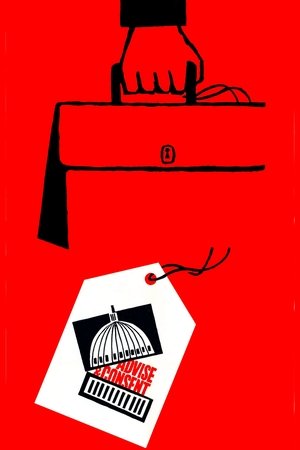
Proposed by the President of the United States to fill the post of Secretary of State, Robert Leffingwell appears before a Senate committee, chaired by the idealistic Senator Brig Anderson, which must decide whether he is the right person for the job.
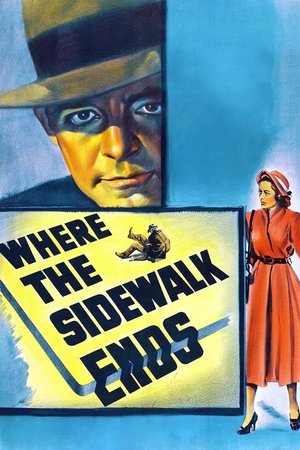
A police detective's violent nature keeps him from being a good cop.
"Color/form, light/shadow, flatness/depth, figuration/abstraction, landscape/paint, all collaging and colliding in an exploratory, arrhythmic, kinetic dance constructed a frame at a time by Fred Worden on his optical printer. This early film now reveals itself as a revelatory early warning sign of Worden's filmmaking to come, comprising ten minutes extrapolated from only four frames of source imagery." (Mark Toscano) Preserved by the Academy Film Archive in 2009.
This animated short focuses on the lives of three eccentric people living on a farm in the Ukrainian countryside. Told in a non-linear, stream of consciousness style, the film depicts the deceitful relationship between a master and his two servants. Preserved by the Academy Film Archive in 2007.
Whether at the stage of conceptualization or "editing", the blending and multiple impression of the images were done in-camera. In this sense, I think I have found ways to strengthen the evolution of the camera as a creative instrument. The whole film is one scene without any dark moments. In AUTUMN SPECTRUM, movement is the dominant element, while nostalgia is the real theme of the film.
According to the director, "Gyromorphosis strives to bring into actuality the inherent kinetic qualities seen in the construction-sculpture of Constant Nieuwenhuys of Amsterdam. To realize this aim I have put into motion, one by one, pieces of this sculpture and, with colored lighting, filmed them in various detail, overlaying the images on the film as they appear and disappear. In this way, I have hoped to produce sensations of acceleration and suspension which are suggested to me by the sculpture itself."
A Korean War vet returns to his job as a railroad engineer and becomes involved in a sordid affair with a co-worker's wife following a murder on a train.
Animated short film. Preserved by the Academy Film Archive in 2009.
Hud Bannon is a ruthless young man who tarnishes everything and everyone he touches. Hud represents the perfect embodiment of alienated youth, out for kicks with no regard for the consequences. There is bitter conflict between the callous Hud and his stern and highly principled father, Homer. Hud's nephew Lon admires Hud's cheating ways, though he soon becomes too aware of Hud's reckless amorality to bear him anymore. In the world of the takers and the taken, Hud is a winner. He's a cheat, but, he explains, "I always say the law was meant to be interpreted in a lenient manner."
This short focuses on the job of the costume designer in the production of motion pictures. The costume designer must design clothing that is correct for the film historically and geographically, and must be appropriate for the mood of the individual scene. We see famed costume designer Edith Head at work on a production. The Costume Designer was part of The Industry Film Project, a twelve-part series produced by the film studios and the Academy. Each series episode was produced to inform the public on a specific facet of the motion picture industry. Preserved by the Academy Film Archive in 2012.

Musing on the past and the present, on roads not taken and the road I was already on. For Jeanine Hayden and her son Jeff, wherever you are. Preserved by the Academy Film Archive in 2012.
Two detectives clash over the hunt for a burlesque dancer’s killer in Los Angeles’ Japanese district.