German artist Kurt Barnert has escaped East Germany and now lives in West Germany, but is tormented by his childhood under the Nazis and the GDR regime.
A young academy soldier, Maciek Chelmicki, is ordered to shoot the secretary of the KW PPR. A coincidence causes him to kill someone else. Meeting face to face with his victim, he gets a shock. He faces the necessity of repeating the assassination. He meets Krystyna, a girl working as a barmaid in the restaurant of the "Monopol" hotel. His affection for her makes him even more aware of the senselessness of killing at the end of the war. Loyalty to the oath he took, and thus the obligation to obey the order, tips the scales.
Both a visit to a very peculiar exhibition at the Bundeswehr Military History Museum in Dresden, Germany, as well as an unprejudiced look at the artistic depiction of violence throughout history and the ways in which that depiction has been gendered.
After World War II, many young French women became housewives, convinced that devoting themselves entirely to caring for their families was a noble mission and a means of personal fulfillment.
A soldier and member of the Dutch resistance investigates stolen art in the wake of the Second World War, including a Vermeer sold to the Nazis by a flamboyant forger.
A story of a family that after WWII moved to the south of Slovakia and acquired a prosperous butcher business left behind by a Hungarian emigrant. From the previous owner, the family also inherited a self-assured, greedy assistant who does not like to observe any firm moral principles. He assists the family in gaining wealth but in the long run, he causes the family's moral dissolution. In his most successful feature film, director Zoro Záhon combined a complex drama with excellent acting performances, especially that of Hungarian actor Gábor Koncz in the lead role.
The lives of 7 friends in a small Czech town from 1945 to some time after 1958.
Ondrej lives on a farm outside a small town with his family. One day a group of men arrive at the family's house and the harmonious life they've led so far changes drastically for the worse.
The security forces, loyal to the people, uncover the conspiracy. At the center of the intrigue is an average actor who suddenly becomes dizzy from unexpected praise. It takes the young man a long time to wake up from his dreams, to understand how he has been abused.
In postwar Germany, a displaced Czech boy, separated from his family during wartime, is befriended by an American GI while the boy's mother desperately searches for him.
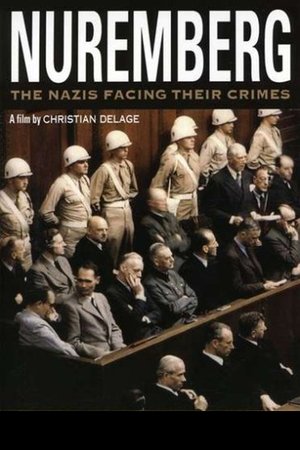
One journalist described it as a chance "to see justice catch up with evil." On November 20, 1945, the twenty-two surviving representatives of the Nazi elite stood before an international military tribunal at the Palace of Justice in Nuremberg, Germany; they were charged with the systematic murder of millions of people. The ensuing trial pitted U.S. chief prosecutor and Supreme Court judge Robert Jackson against Hermann Göring, the former head of the Nazi air force, whom Adolf Hitler had once named to be his successor. Jackson hoped that the trial would make a statement that crimes against humanity would never again go unpunished. Proving the guilt of the defendants, however, was more difficult than Jackson anticipated. This American Experience production draws upon rare archival material and eyewitness accounts to recreate the dramatic tribunal that defines trial procedure for state criminals to this day.
During WWII, industrialist Joe Keller commits a crime and frames his business partner Herbert Deever. Years later, his sin comes back to haunt him when his son plans to marry Deever's daughter.
A war veteran suffering from amnesia, returns to Los Angeles from a San Francisco veterans hospital hoping to learn who he is and discovers his criminal past.
The documentary of the Nuremberg War Trials of 21 Nazi dignitaries held after World War II.
For the first time, survivors talk about life after the camps. How does one return to a life that was interrupted with such violence? How does one reconstruct oneself when all or most of one’s family were butchered? How does one resume studies and earn a living in a society that had cast you out a few years earlier?
Der Nürnberger Prozess
In 1947 Prague, Holocaust survivor Dita lives in a hostel for orphans, acting as a protective mentor to a younger girl while failing to fix her own shattered life. Unable to form lasting bonds or find a place in a society that has moved on, she drifts through emotional isolation.
Mit der Straßenbahn durch Dresden - Linie 12
Nazi POWs suspected of heinous acts are locked up in a Soviet women's prison run by vengeful female guards. To weed out the guilty, the innocent must pay. Can supposed enemies turn into great loves? Based on a true post-World War II story, this drama stars Thomas Kretschmann, John Malkovich and Vera Farmiga in a bitter game of cat and mouse and a battle between hate and humanity, mercy and revenge.
In November 1947, Wieslawa Pajdak was arrested for her activities in the anti-communist underground and sent to prison on Rakowiecka Street. A few days later, Jerzy Smiechowski was placed in the next cell. One night, they begin talking through the wall via Morse code. Although it's hard to believe, this is how they met and fell in love. They got engaged through a wall. Seven years later, they married in prison, where they met for the first time. They lived together for fifty years.