An isolated lake, where an old monk lives in a small floating temple. The monk has a young boy living with him, learning to become a monk. We watch as seasons and years pass by.
An exploration —manipulated and staged— of life in Las Hurdes, in the province of Cáceres, in Extremadura, Spain, as it was in 1932. Insalubrity, misery and lack of opportunities provoke the emigration of young people and the solitude of those who remain in the desolation of one of the poorest and least developed Spanish regions at that time.
A family portrait in which the director profiles his grandmother, Odette Robert. Eustache includes in the film the conditions of its production — he is seated at the table with her, pours her some whiskey, speaks with the camera operator, manipulates the clapboard at the head and tail of the reels, and even takes a phone call. Robert, who was seventy-one, speaks rapidly and tells the story of her life, starting from her early childhood in villages in the Bordeaux region of France. A shorter version of the film ("Odette Robert") was edited in 1980 to be broadcast on television on TF1. The complete film only gained exposure in 2002, when it was salvaged by Boris Eustache, Thierry Lounas, João Bénard da Costa, Jean-Marie Straub, and Pedro Costa.
In the spotlight of global media coverage, the first transgender woman ever to perform as Don Giovanni in a professional opera, makes her historic debut in one of the reddest states in the U.S.
James Lake (Raymond St. Jacques) is an escaped black convict imprisoned for a murder he didn't commit. Leslie Whitlock (Kevin McCarthy) offers James money to kill his wife, Ellen (Dana Wynter). He declines and tries to look up his old flame Lily (Barbara McNair), but discovers his own brother is now married to the sultry nightclub singer. James returns to Leslie, and the trio travel towards a mountain retreat. James and Ellen escape and try to find the murderer who had framed James years before.
À corps perdus
Architecture student Bruna wants to renovate the convent located in the center of Piazza Magione in Palermo. This means dealing with the joys and contradictions of a square that is above all a community: there are the people who live in the buildings around it, there are young people who gather there, and there is also an association that takes care of the place and the events that are organized there. From a situation of apparent simplicity, Bruna, however, gets lost in the unsolvable enigma of bureaucracies and in the tension of an ambivalent risk: would a renovation be valorisation or denaturalization?
Marzena Sowa is a quintessential contemporary European: independent, aware of how the world works—or should work—and single. After her mother’s death, she is consumed by longing and sets off for her distant homeland, a Polish village where her beloved aunt Niuszka—an embodiment of joie de vivre and peace with herself—lived her entire life under the heavy weight of patriarchy. The film becomes a collision of social models, resolved with an open ending.
Two college students, one white and one black, share a ride home from college. When their car breaks down in a small town in Idaho, they unsuspectingly stumble upon a white supremacist group and must fight for their lives.
The Forgotten Voices of the Mekong
A feature length documentary shot in Iceland on mediums and the relationship between humans and invisible beings such as elves ghosts, angels, water monsters and extra-terrestrials. The film is a journey to the frontiers of life questioning the scope of our existence. Are we alone in the universe? If life exists in other dimensions, it's worth knowing more.
Between the risk of nuclear war with India, the rise of Islamists and the military, and the precarious situation of its youth, Pakistan is suffering from growing instability. This in-depth documentary takes stock of the situation, while delving into the country's history to better understand current issues.
On a Saturday night in the "City of Love", two sworn enemies are united in their hatred for someone they despise even more than each other: a gay man.
AMERICAN SONS is a provocative examination of how racism shapes the lives of Asian American men. A simple but compelling performance piece featuring four of the country's best Asian American actors, AMERICAN SONS is a challenging exploration of how prejudice, bigotry and violence twists and demeans individual lives.
Based on the real life story of Parinya Charoenphol, a Muaythai boxer who underwent a sex change operation to become a woman.
The life and work of stage designer ADOLPHE APPIA, originator of the most profound agitations in contemporary theatre. Through the dynamic alternation of animated drawings and choreographies specially conceived for the film, we discover the steps of his artistic evolution.
Roger Boussinot directed this episode of the French television show Italiques, which features an overview of the art and career of Fantastic Planet illustrator Roland Topor. It aired on August 8, 1974.
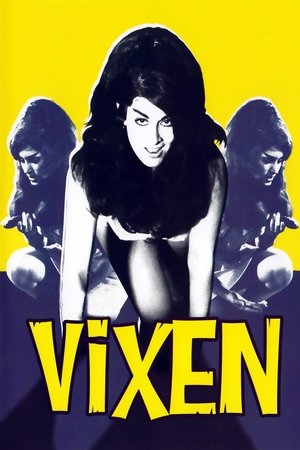
In a Canadian mountain resort, Vixen Palmer resides with her naive pilot husband Tom. While he's away flying in tourists, she sleeps with practically everybody including a husband and his wife, and even her biker brother. However, the only one she won't bed is her brother's friend... who is Black.
Georges Lajoie is a Parisian café owner. As every summer, Georges, his wife Ginette and grown-up son Léon go on holiday to Loulou's campsite, where they meet up with the Schumacher family (whose father is a bailiff) and the Colin family (who sells bras in the markets). This year, their peace is slightly disturbed by the proximity of a construction site where foreign workers are employed. Xenophobic comments are made. One evening at the ball, a fight breaks out between Lajoie, Albert Schumacher and two algerian immigrant workers...
A short film following a day in the life of an Asian American woman as she attempts to get by during the height of the pandemic while beginning to encounter the growing hostility facing her community.