This documentary is a vision of the Spanish civil war seen by the children of that time: sometimes as a game and other times as a dangerous adventure. A mixture of fascination and fear that was captured forever in the form of drawings.
"Operation Nikolai" is a documentary about the kidnapping and murder of Andreu Nin by Stalin's political police during the Spanish Civil War.
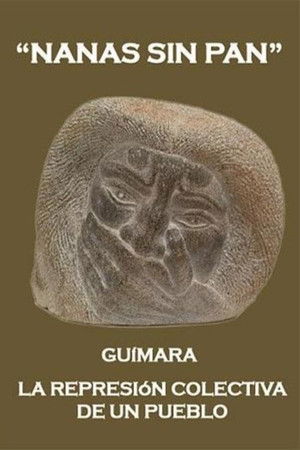
The military uprising of 1936 tried to eradicate all traces of the social transformation that had brought the Republic. There were villages like Guímara, in the Valley of Fornela (León), whose almost unanimous support to the Republic supposed a hard and systematic repression. This isolated village, of about 85 neighbors, suffered one of the most painful forms of punishment: deportation of adults to concentration camps, separating them from their minor children. In this documentary it is told the chronicle of this terrible repression that sought to subdue and subjugate the population through fear, trying to destroy family ties, solidarity networks between the people and personal and collective subsistence economy. The memory of lullabies from their mothers was the echo that reached their children from the forced exile who lived their elders.
Documentary about the anarchist general Antonio Ortiz.
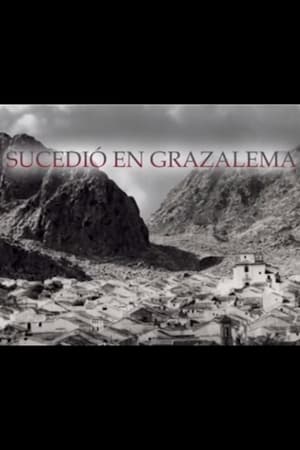
Narration of one of the most lacerating events in the history of this municipality in the Sierra de Cádiz: the murder of 15 neighbors, without trial or formation of any cause. Some of these victims had fled in September 1936 but ended up returning to the municipality, probably in February 1937. It was on that date that the town's Falangists arrested them and executed them, and not as previously thought in the summer of 1936. Several survivors and relatives of those massacres narrate what the arrests of the women and the shootings were like. They also talk about the exhumation of the bodies of these 15 women, where for many years family and friends have brought flowers.
Félix Costa, an anarchist militant who has lived in exile since the end of the Civil War, discovers that the Administration has left him for dead and decides to return to Spain. As he tours the place where they say he was shot dead, he reflects on the validity of his struggle and the fact that he has fallen into oblivion.
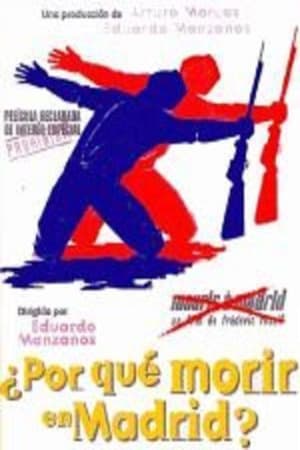
¿Por qué morir en Madrid?
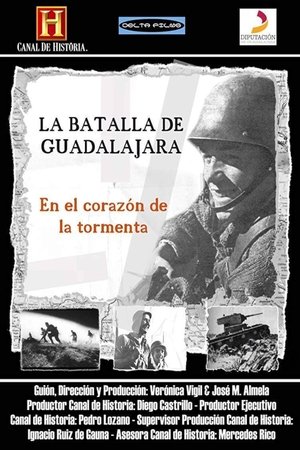
Documentary about the battle of Guadalajara which took place in March 1937 during the Spanish Civil War and was the last major victory of the Republican Army.
Documentary about the last days, death and subsequent search for the remains of Federico García Lorca.
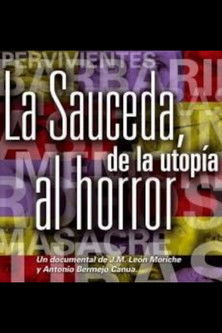
Documentary filmed between September 2012 and March 2013. It tells the story of a valley in the mountains that extends through the north of the provinces of Cádiz and Málaga, the last Republican bastion in the area when Franco's troops already occupied all of them. the nearby regions. La Sauceda was bombed and the town destroyed forever by the air force and four columns of Franco's army. The survivors were locked up in the Marrufo farmhouse, in the municipality of Jerez de la Frontera, where five or six people were shot every day. With the testimonies of the interviewees, everything that happened in those months from the summer of 1936 to the winter of 1937 is reconstructed and the work carried out by the Forum and the Association since 2011 to locate the mass graves is also narrated, in which in the summer of In 2012, the bodies of 28 people were exhumed.
The Asturian Valentín Vega is considered one of the most relevant photographers of the last century. He knew how to portray all the essential elements of daily life like no one else and at the same time exercise a devastating display of social criticism. After spending three years in prison for his political affiliation and managing to establish himself as a street photographer, he would continue to offer an unusual image of reality and daily life from the 1940s onwards.
A pro-Republican propaganda documentary made during the Spanish Civil War. It reports on the demonstration held in Barcelona on December 27, 1937 to commemorate the capture of Teruel by the Republican forces.
A documentary about the history and the urban development of the city of Erlangen in northern Bavaria, Germany.
A retired teacher investigates the shadowy history of his rural Missouri community, including the origins of a looming structure known as the Rockpile.
In 1928, Lady Heath became the first person to fly solo from Cape Town to London. Eighty-five years later, Tracey Curtis-Taylor set out in a vintage biplane to fly that adventure again. Following Tracey as she retraces the journey, The Aviatrix is more than just a film about the rapture of flying – it’s a story about living life on your own terms and having the courage and determination to realise your greatest dreams.
Biography of the comrade Helios Gómez (1905-1956), painter and draftsman, gypsy and Sevillian, anarchist militant first and then communist.
Goazen gudari danok is a documentary that recounts the battle of San Miguel and its importance for the creation of the Basque Government.
Documentary about the participation of the International Brigades in February 1937 in containing the advance of the rebel troops after the fall of Malaga.
The film, which shows the Battle of the Ebro and the last days of the Spanish Civil War, is an unpublished story by Patricio Azcárate (London, 1920- Alicante, 2018), son of the ambassador of the Second Republic in London, Pablo de Azcárate. Patricio Azcárate participated as a volunteer in the Ebro where, due to his knowledge of languages, he was assigned to the General Staff and served as a translator with the brigade members.
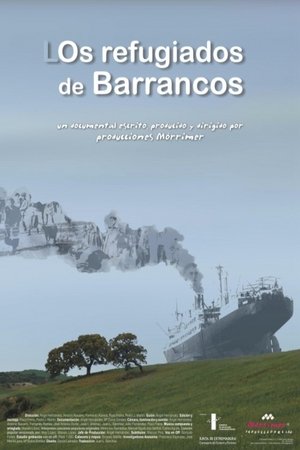
September 1936. The last republican towns located next to Portugal are conquered by General Franco's troops. As in Badajoz and other towns, the repression they unleash is brutal. The support of the Portuguese dictator Salazar for the coup plotters does not make it advisable to flee to Portugal, but for many it is the only way out. In this way, hundreds of people decide to cross the border, closely pursued by the rebels. The usual procedure of the Portuguese authorities is to hand them over to their Francoist allies. However, thanks to the humanitarian intervention of the Portuguese lieutenant António Augusto de Seixas, two refugee camps were created next to the town of Barrancos to house and protect this group of Spaniards.