A history of the French Revolution beginning from the decision of the king to convene the Etats-Generaux in 1789 in order to deal with France's debt problem. Part one spans the event until August 10, 1792 (when the King Louis XVI lost all authority and was imprisoned). Part two carries the story through the end of the terror in 1794.
The Castro revolution was just consolidating its power when, in 1961, over 100,000 students were sent from their schools into the countryside to teach the peasants there how to read. Coinciding with the Bay of Pigs invasion, in this docudrama, 15-year-old Mario (Salvador Wood) has come to a tiny village in the Zapata swamps and gradually wins the villagers over to his task. At the same time, he receives an education in the realities of rural life from the hard-working peasants.
As beautiful and sleek as it is deadly, 52 Blocks merits special conservation efforts as the United States' only existing native martial culture, as it is indeed, the jazz of the martial arts world. Across the African diaspora, there are manifestations of African-derived warrior-dances, capoeira in brazil, mani in Cuba, ladja in Martinique, pinge in Haiti- yet the US offshoot has remained esoteric, because it was suppressed throughout slavery, Reconstruction and Jim Crow and then obscured in the criminal justice system. The history, interviews and training of the martial arts style that created Breakdance and boxing greats like Mike Tyson.
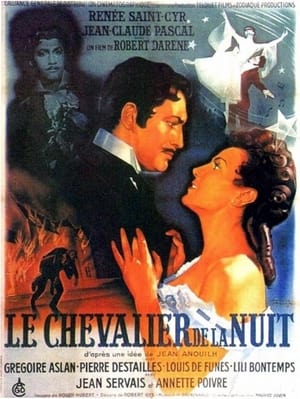
Paris, 1884. Bella Fontanges, a renowned ballerina, is married to Georges de Segar. But after just a few years together, the couple slowly sinks into weariness. Bella has forgotten what happiness used to taste like. Then a mysterious squire appears. Aware of the couple's faltering situation, he makes Bella and Georges a most astonishing proposal: he claims to be able to separate Good from Evil in Georges. Reluctant at first, the couple eventually agrees to play along. But it's not long before they realize that in Georges, it's Evil that has prevailed.
Bewildered, Don Camillo learns that Peppone intends to stand for parliament. Determined to thwart his ambitions, the good priest, ignoring the recommendations of the Lord, decides to campaign against him.
After fierce Roman commander Marcus Vinicius becomes infatuated with beautiful Christian hostage Lygia, he begins to question the tyrannical leadership of the despotic emperor Nero.
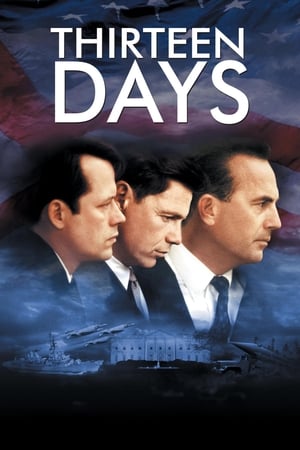
The story of the Cuban Missile Crisis in 1962—the nuclear standoff with the USSR sparked by the discovery by the Americans of missile bases established on the Soviet-allied island of Cuba.
The impact of Marx on the 20th century has been all-pervasive and world-wide. This program looks at the man, at the roots of his philosophy, at the causes and explanations of his philosophical development, and at its most direct outcome: the failed Soviet Union.
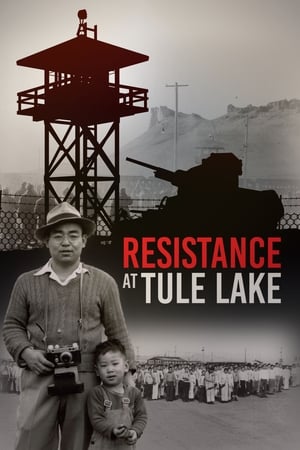
The long-suppressed story of 12,000 Japanese Americans who dared to resist the U.S. government's program of mass incarceration during World War II. Branded as 'disloyals' and re-imprisoned at Tule Lake Segregation Center, they continued to protest in the face of militarized violence, and thousands renounced their U.S. citizenship. Giving voice to experiences that have been marginalized for over 70 years, this documentary challenges the nationalist, one-sided ideal of wartime 'loyalty.'
In 208 A.D., in the final days of the Han Dynasty, shrewd Prime Minster Cao convinced the fickle Emperor Han the only way to unite all of China was to declare war on the kingdoms of Xu in the west and East Wu in the south. Thus began a military campaign of unprecedented scale. Left with no other hope for survival, the kingdoms of Xu and East Wu formed an unlikely alliance.
After the death of the paranoid emperor Tiberius, Caligula, his heir, seizes power and plunges the empire into a bloody spiral of madness and depravity.
Dr Janina Ramirez travels across glaciers and through the lava fields of Iceland to find out about one of the most compelling of the great Viking stories - the Laxdaela Saga. This hour-long film explores how the unique literary achievements of the Saga writers were possible at a time of such immense cultural, political and religious upheaval.
Extranjeros de sí mismos
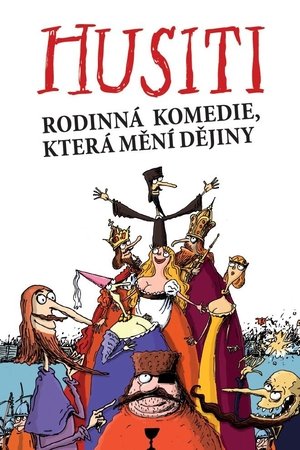
What if the events in a key era in our history were actually completely different than what our history textbooks try to tell us? What if Master Jan Hus didn't even get warm in Constance, let alone burn up? What if Jan Zizka had more than one healthy eye? This animated comedy from director Pavel Koutský playfully breaks the myths about the Hussite era as the pedestal of history is occupied not by preachers and military leaders but by two unbelievable scatterbrains, who become the heroes of their time against their will.
A group of soldiers are sentenced for the murders of key political figures in the night of October 19th, 1921, in the streets of Lisbon. But the names of the conspirators remain unknown. Berta Maia, a widow of the 1910 revolution hero Carlos da Maia, will fight for the truth…
Beginning just after the bloody Sioux victory over General Custer at Little Big Horn, the story is told through two unique perspectives: Charles Eastman, a young, white-educated Sioux doctor held up as living proof of the alleged success of assimilation, and Sitting Bull the proud Lakota chief whose tribe won the American Indians’ last major victory at Little Big Horn.
Using historically-accurate, battle-filled re-enactments and interviews with expert historians and noted authors, this two-part documentary series brings to vivid life the captivating true stories behind Britain's bloody civil wars.
The Goodyear blimp has been an aerial ambassador for the Goodyear tire and rubber company for over 90 years. Join the Spirit of America, one of the last GZ-20 airships of the world. Follow the crew who care for her as she makes the final flights into the history books of aviation and marks the end of Goodyears history of designing and manufacturing their own airships.
The story of the kidnapping of 16-year-old John Paul Getty III and the desperate attempt by his devoted mother to convince his billionaire grandfather Jean Paul Getty to pay the ransom.
Professor Saul David uses the BBC archive to chart the history of the world's most destructive war, by chronicling how the story of the battle has changed. As new information has come to light, and forgotten stories are remembered, the history of World War Two evolves. The BBC has followed that evolution, and this programme examines the most important stories, and how our understanding of them has been re-defined since the war ended over 70 years ago.