Over the past 50 years, thousands of exquisitely painted Maya vases, almost all looted from tombs, have flooded into public and private collections. These amazing works of art, filled with humor and mystery, have opened an extraordinary window on the Maya past. But the race to unearth these treasures has destroyed temples and palaces, culminating in the takeover of entire ancient cities by looter armies. OUT OF THE MAYA TOMBS (formerly titled DANCE OF THE MAIZE GOD) enters the world of the vases to explore the royal life and rich mythology of the Maya, as well as the tangled issues involved in the collection and study of Maya art. The story is told by villagers, looters, archaeologists, scholars, dealers and curators. For each, these vases have a radically different value and meaning.
Professional, native and antiquarian researchers combine to investigate the archaeological history and modern legacy of Eastern Native civilization near Turners Falls, Massachusetts. They uncover possible evidence of a vast astronomical construct that covered a large area of what is now the northeastern United States.
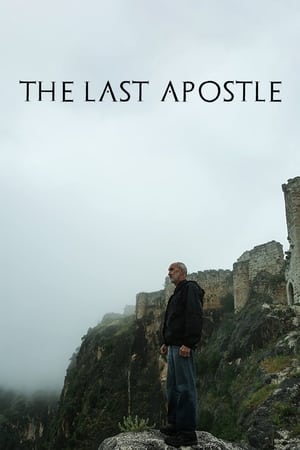
Dr. Mark Fairchild, world-renowned archaeologist, traces the hidden years of Saint Paul's life in the mountainous Turkish countryside of Rough Cilicia.
Over the last 40 years, China has been transformed out of all recognition. The scale of its growth and the sheer speed of change has been astonishing. The country has seen the largest lifting of people out of poverty that has ever taken place in human history. How did an impoverished and backward communist country become an engine of global capitalism? What lies ahead for this economic behemoth?
This historical drama tells the story of Qin Shihuang, who unified China's vast territory and declared himself emperor in 221 B.C. During his reign, he introduced sweeping reforms, built a vast network of roads and connected the Great Wall of China. From the grandiose inner sanctum of Emperor Qin's royal palace, to fierce battles with feudal kings, this film re-creates the glory and the terror of the Qin Dynasty, including footage of Qin's life-sized terra cotta army, constructed 2,200 years ago for his tomb.
Oslofilm: Austr i Oslo
The location of the sanctuary of Artemis at Amarynthos has long remained one of the last great archaeological enigmas of Ancient Greece. This vast Artemision is mentioned in several ancient texts, which even go so far as to specify the distance that separates the sanctuary from the ancient city of Eretria. But despite the efforts of numerous scientific expeditions since the end of the 19th century, no trace of the sanctuary or its temple has ever been found. In the 1960s, a young archaeologist - Denis Knoepfler - set out in search of the lost temple of Artemis. His investigations soon led him into the hinterland of the island of Euboea, well beyond the limits of previous expeditions. It would take five decades of searching, unshakeable faith and moving tons of earth to finally unravel the mystery. In 2017, a tenacious Swiss-Greek team of archaeologists formally identified the sanctuary of Artemis, where Denis Knoepfler had predicted it lay buried.
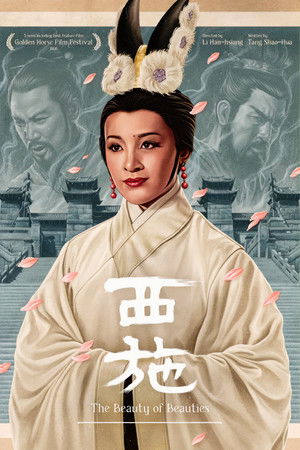
Hsi Shih: The Beauty of Beauties was one of the most ambitious films made in the Taiwan film industry in the 1960s. After leaving The Shaw Brothers studio in Hong Kong and moving to Taiwan, filmmaker Li Han-hsiang mounted this historical epic. Told through the story of Xishi (Hsi Shih), one of the 'Four Great Beauties' of Chinese history, the film portrays the war between two Chinese Kingdoms during the Warring States Period (475-221 B.C). After the kingdom of Yue is defeated by the kingdom of Wu, King Goujian of Yue takes pains to prepare for his revenge and rebuild his country. Knowing that King Fucha of Wu is lewd and lustful, he offers Xisi to the court of Wu to serve as Fucha’s concubine, with Fucha unaware that she is also a spy. She uses her charm to draw Fucha away from his office and governance, while King Goujian rallies his forces together to attempt to reclaim his lands.
12.000 Anos de História - Arqueologia e Pré História do RS
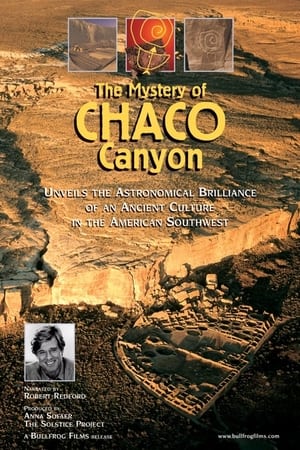
Chaco Canyon, located in northwest New Mexico, is perhaps the only site in the world constructed in an elaborate pattern that mirrors the yearly cycle of the sun and the 19-year cycle of the moon. How did an ancient civilization, with no known written language, arrange its buildings into a virtual celestial calendar, spanning an area roughly the size of Ireland?
With exclusive access to research conducted by University College London and the Terracotta Army Museum, this documentary uncovers new secrets of China's fabled warriors. The discovery of China's famous Terracotta Army in 1974 captured the imagination of the world. But that first dig only revealed a fraction of this enormous and extraordinary treasure. Since then, scientists have resumed work on the site, and their research has turned up a series of new discoveries about the warriors and the people who made them over two millennia ago.
Explore the origins of the Celts, uncovering their culture through preserved salt mines, ancient artifacts, and the mystery of a 2,400-year-old tomb.
Nana Xu travels to the place built by her father as a prisoner during the Cultural Revolution: first a work camp, later a prison, fruit farm and treatment centre. Conversations with last remaining witnesses, where home is still shaped by a repressed past.
Land Of The Pyramids: Discover The Secrets Of Ancient Egypt
About 4 000 years ago, Assyrian merchants established a commercial settlement in the ancient city of Kaneš, within Central Anatolia. They came from Aššur, north of Mesopotamia. We have come to understand their history through their writings on clay tablets that have stood the test of time: more than 22 500 cuneiform tablets have been unearthed from the archaeological site of Kültepe. How did these Mesopotamian clay tablets arrived in Anatolia and what do they tell us? The voice of Tarām-Kūbi, an Assyrian woman who corresponded with her brother and her husband in Kaneš, takes us back in time.
Presented by the British Museum this is the story of the most famous army in the world. A triumph of early mass production and craftmanship, they were dreamt up by a man whose face we will never know; a figure who remains a more shadowy presence than that of his constructed warriors. And yet, Qin Shihuangdi was one of the greatest military leaders in history. Based on the latest research and including location photography at key sites in China, this film sheds new light on the achievements, ambitions and legacy of this enigmatic and intriguing ruler - an emperor who wished to reign for all eternity.
A research on prehistoric Petroglyphs of Arasbaran area in Azerbaijan province of Iran, and the megaliths of Pirazmian area as signs of a lost civilization.
Ancient pharaoh Akhenaten was almost lost to history. Canadian archaeologist Donald Redford, who uncovered the foundation of one of the pharaoh’s many temples, attempts to finally piece together this great Egyptian ruler’s enigmatic story.
Marshal Zhang Xueliang, Commander of the North Eastern Army, grows progressively disillusioned by Kuomintang leader Chiang Kai-shek's policy to engage the Chinese Communist Party rather than fight the Japanese invaders which are occupying Manchuria. Despite numerous pleas, Chiang does not budge. After discussing with fellow general Yang Hucheng, the two take events into their own hands and place Chiang Kai-shek under arrest on December 12, 1936, forcing Chiang into a coalition with the CCP.
Thanks to new excavations in Mauritius and Madagascar, as well as archival and museum research in France, Spain, England and Canada, a group of international scholars paint a new portrait of the world of piracy in the Indian Ocean.