Nice looking Travelogue takes us to the Northeast corner of Wyoming as we visit Yellowstone National Park.
After a quarter-century of political denial and social stigma, of stunning scientific breakthroughs, bitter policy battles and inadequate prevention campaigns, HIV/AIDS continues to spread rapidly throughout much of the world. Through interviews with AIDS researchers, world leaders, activists, and patients, FRONTLINE investigates the science, politics, and human cost of this fateful disease and asks: What are the lessons of the past, and what can be done to stop AIDS?
Juskatla weaves together perspectives of the people who live on the islands of Haida Gwaii-an archipelago on Canada's Northwest coast, and the ancestral territories of the Haida Nation. From industrial loggers who harvest trees from ancient forests, to Sphenia Jones, a Haida matriarch who bears an intimate knowledge of her People's territories, Juskatla meditates on the divergent ways of being that shape the islands and its people.
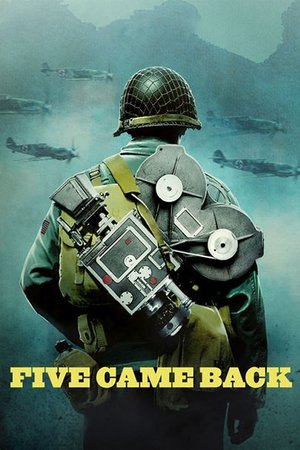
The extraordinary story of how Hollywood changed World War II – and how World War II changed Hollywood, through the interwoven experiences of five legendary filmmakers who went to war to serve their country and bring the truth to the American people: John Ford, William Wyler, John Huston, Frank Capra, and George Stevens. Based on Mark Harris’ best-selling book, “Five Came Back: A Story of Hollywood and the Second World War.”
This inspiring documentary chronicles the extraordinary life of Ruby Duncan, an activist who fights the welfare system and becomes a White House advisor.
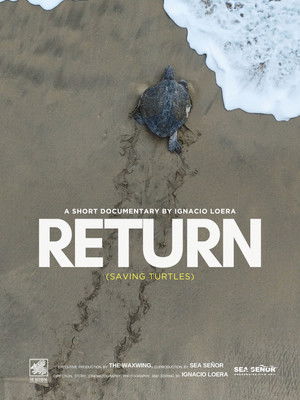
RETURN follows the efforts of a family of former sea-turtle–egg poachers, now dedicated protectors, leading VIVEMAR — a community-based organization in Oaxaca, Mexico. Through their work, they safeguard one of the world’s most endangered sea turtle species during its nesting season along the Mexican coast.
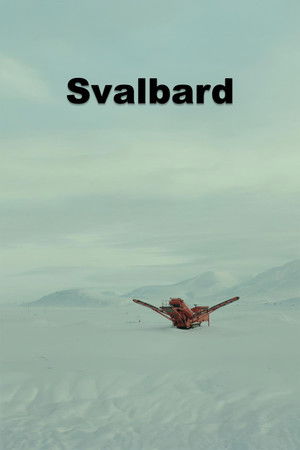
Svalbard is a norwegian archipelago in the Arctic Ocean where the world's northernmost city is situated. It is a place where the underground, terrestrial and spatial universes blend into each other starting from a coal mine up to Venus.
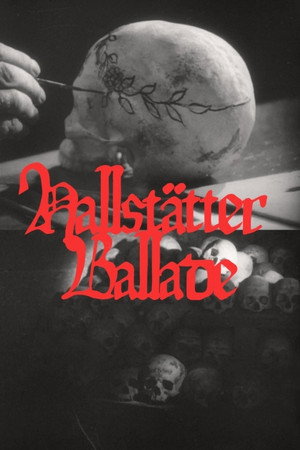
Hallstätter Ballade refers to a celebrated 1961 Austrian documentary short film directed by István Szőts. The film is best known for poetically capturing the unique, centuries-old Alpine tradition of skull painting (Totenkult) in the village of Hallstatt.
A married woman reflects on her painful past and wonders what she would say to her 15-year-old self if they ever met a quiet conversation between innocence and experience.
A Deep Dive into the life of Stephen Zivkovic, the owner of the last DVD rental store in Adelaide.
The winter pond sleeps, life beneath the surface has ceased. The rays of the frosty sun penetrate the ice crust, and fishermen release oxygen into the depths of the water through holes in the ice. Commissioned by the Ministry of Agriculture, this photograph reveals the beauty and richness of Czech ponds, and depicts the life of carp, from spawning and hatching, to harvesting.
Poor pedestrian, horse drawn carts, wagons and bus travel across bridge at Sunderland, Tyne and Wear.
What do you call an Indian woman who's funny in 20th Century Britain? A British performer? A Black comedienne? An enigma? This humorous and comedic documentary, brings the laughs and dreams of four Indian women cabaret performers while posing the questions: What is comedy and who defines it? Is it culturally specific, or can anyone enjoy the joke? Who makes it into the mainstream and why? Does comedy always have to come from a white perspective in Britain to be taken seriously? What -- ultimately, do you call a funny Indian woman?
The film opens with general views and shows building works and Sherpas loading up. Scenes of threshing and a campsite, with Sherpas and huts. A settlement is then shown, including people weaving. Scenes of walking in towards the mountains and climbing in the foothills. More threshing scenes and the film ends with shots of the mountains and village.
Gerald Thompson's record of the 1938 Oxford University Cayman Islands Expedition. The first natural history survey of all three islands (Grand Cayman, Little Cayman and Cayman Brac) reports were written about the flora, fauna, geology and wetlands.
As one of his generation's quintessential Mad Men, television commercial director Joe Sedelmaier's work was iconic, dynamic, and instantly recognizable--some twenty to thirty years later, people are still wondering 'Where's the beef?” He turned the advertising world on its brain-damaged head by casting offbeat non-actors in still-unforgettable spots. His brilliant, frequently hysterical commercials for Wendy's, Alaska Airlines, Federal Express and others were snappy slices of cultural quirk that tapped into the Cold War-fearing, corporate workaholic zeitgeist of the '70s and '80s with a sense of humor that cracked billions of smiles, sold billions of burgers, and sped up the default rhythm of time-based media.
A prospective wish is announced at the very beginning: "Imagine a land without ownership". Ownership? Since when? How? Where? With which implications? This is what Marwa Arsanios endeavours to discover in the fourth part of her meticulous ongoing project whose generic title is Who Is Afraid of Ideology? After documenting feminist experiments of community autonomy in Lebanon, Kurdistan and Syria (Who Is Afraid of Ideology? I&II, FID 2019), Marwa Arsanios ventures a hypothesis in the form of speculative fiction, from a remote piece of land in Lebanon, a cut in a stone quarry. In this small piece of land, a few sidekicks make that postulate, and slowly share stories of domination and exploitation. This land has a complicated administrative, legal, geological and biological history. (Nicolas Feodoroff - FIDMarseille)
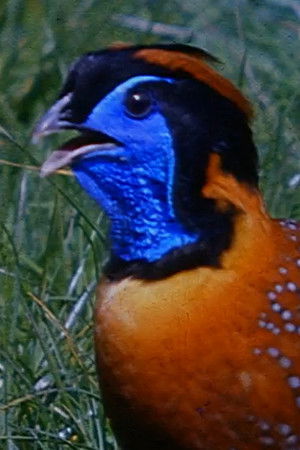
The Bornean Tree Partridge, Chinese Bamboo Partridge, and Indian Peafowl are some of the most colourful, most beautiful, and rarest species of pheasant in the world. Native to Asia, they can be found at The Ornamental Pheasant Trust at Norfolk Wildlife Park, Great Witchingham where the Trust’s devoted founder Philip Wayre has set up a breeding programme to save several species threatened with extinction.
Captured during the early days of production, this unreleased film offers a glimpse into its rehearsal sessions — an intimate icebreaking moment where the cast come together through song and rhythmic clapping.
The lives of Jaipong dancers who persistently uphold tradition amidst economic pressures and changing times. Through their moving bodies and distinctive voices in traditional performing arts, these women dance not only for the stage but also to survive. Their voices, whether vocal expressions, soft utterances, or sinden singing, serve as the living spirit and "voice" that sustain and preserve their cultural heritage. An intimate portrait of resilience, steadfastness, and the voice in traditional arts that is gradually being marginalized.