From different perspectives, the viewer sees the appearance of the newly built Reichsautobahnen: Pictures from the lowlands, the Swabian Alb and many other places.
Since the Russian invasion of Ukraine, many Russians have started having dreams about their president and sharing them on social media. More than a thousand dreams about Putin have now been recorded and posted on public platforms. In Dreams About Putin, a selection of these dreams have been brought to life using Unreal Engine, a 3D graphics program for creating scenes for computer games. In this exciting experiment with form, the animations are complemented by rare archival footage of the Russian president. The dreams are related by a narrator, and their “translation” into 3D scenes is not literal; likewise, the archival footage has been lightly edited. The result is sometimes dryly comic, sometimes absurdist, sometimes disturbing, and sometimes even hopeful. A series of bizarre but therefore oddly familiar nightmares as a vision of Putin’s Russia.
A documentary film which portrays the dramatic chain of events leading to the invasion of the Arab armies to Israel after the Israeli declaration of independence. The film includes original pictures from the war filmed by both sides, and documentation of the leaders of the Arab forces and the Yishuv in the crucial moments of Israel's "War of Independence".
Working men and women leave through the main gate of the Lumière factory in Lyon, France. Filmed on 22 March 1895, it is often referred to as the first real motion picture ever made, although Louis Le Prince's 1888 Roundhay Garden Scene pre-dated it by seven years. Three separate versions of this film exist, which differ from one another in numerous ways. The first version features a carriage drawn by one horse, while in the second version the carriage is drawn by two horses, and there is no carriage at all in the third version. The clothing style is also different between the three versions, demonstrating the different seasons in which each was filmed. This film was made in the 35 mm format with an aspect ratio of 1.33:1, and at a speed of 16 frames per second. At that rate, the 17 meters of film length provided a duration of 46 seconds, holding a total of 800 frames.
A critique of several aesthetically unpleasant architectural elements in American cities and suburbs of the 20th century.
A day in the life of the truck driver Tom.
An American family visits a concentration camp in Germany. At the museum, the father makes the acquaintance of an older man who questions his prejudices.
Unemployment at an early age and the problems that arise from it.
'Coffea arábiga' was sponsored as a propaganda documentary to show how to sow coffee around Havana. In fact, Guillén Landrián made a film critical of Castro, exhibited but banned as soon as the coffee plan collapsed.
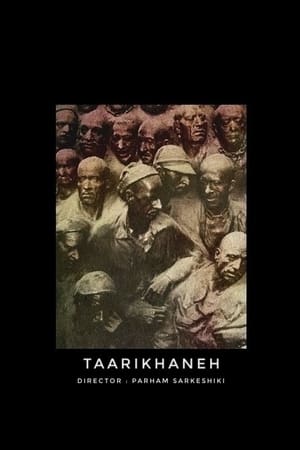
Kunst in Stein
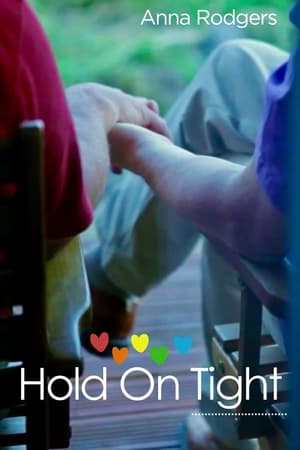
Edith and Eddie, ages 96 and 95, are America's oldest interracial newlyweds. Their unusual and idyllic love story is threatened by a family feud that triggers a devastating abuse of the legal guardianship system.
A short documentary film captures the public’s fleeting feelings about the world’s future and potential ending. Capturing the beauty and fragility of the planet on 16 mm film, allows to navigate in an uncertain world seen through the eyes of people living in all corners of the UK. Whispers of global warming, shadows of greed, and echos of wars—we listen to the pulse of humanity for answers. Where are we headed? Who shapes our fate? Is the end near? In the silence of uncertainty, we ponder: is there an answer, or do we find solace in this mystery?
The history and importance of radio astronomy is examined.
Three former victims of incest relationships with their fathers speak openly about their experiences, their feelings and their psychological adjustment.
Ed Kimble, a structural ironworker, is followed during his workday building a skyscraper.
The comparative quality of workmanship in American car factories compared to foreign car manufacturers is examined.
The Junk King (Vince Hannemann) gives valuable insight regarding his art and the Cathedral of Junk in Austin, TX.
In this tape, Ko Nakajima and Video Earth Tokyo interview a homeless man. The subject is initially angry and frustrated, but gradually opens up and shares stories about his life. Under A Bridge was later broadcast on cable television.
Puentes de Salud is a volunteer-run clinic that provides free medical care to undocumented immigrants in south Philadelphia. Here, doctors and nurses work for free to serve people who would otherwise fall through the cracks. Clinica de Migrantes, a potent film by Maxim Pozdorovkin, follows the workers and patients of Puentes through months of routine care and growth. Along the way, the film puts a face to the millions of people who exist on the margins of society: people displaced from their homelands, separated from their families, unfamiliar with the customs, unable to obtain health insurance and terrified to come forward to seek medical help. Along with revealing these patient stories, Clinica is also a look at the heroic doctors and nurses who work pro bono to ensure these people receive care, offering a deeply moving look at the limitless potential of humanity.
The celebrated DVD that's included with Minnesota's North Shore book is now available for individual purchase. Craig Blacklock has captured on video some of the most amazing sights that the North Shore has to offer. Each scene is set to the music of Ryan Rapsys (with additional music by Peter Mayer). Turn the music off to hear the North Shore's ambient sounds. Minnesota's North Shore DVD is ideal for background entertainment and makes a perfect gift.