A low budget, comedic documentary following a young man trying to take a deeper look into water, its purpose, and how we, as a society have chosen to use it.
From the unique vantage point of 200 miles above Earth's surface, we see how natural forces - volcanoes, earthquakes and hurricanes - affect our world, and how a powerful new force - humankind - has begun to alter the face of the planet. From Amazon rain forests to Serengeti grasslands, Blue Planet inspires a new appreciation of life on Earth, our only home.
From polar bears in the arctic tundra to black bears in the Northern Rockies, you'll see some of the most spectacular footage ever shot of these enterprising omnivores. Catch salmon with a group of hungry grizzlies on the McNeil River in Alaska. Crawl inside a den with a mother black bear and her cubs. Learn about the challenges facing each of these species as their habitat diminishes.
Go to the Big Island and hover above erupting craters at Hawaii Volcanoes National Park, watch flowing orange lava ooze across charred rock and steam billow from the Pu'u 'O'o Vent. Glide over Maui's Haleakala National Park and discover the diversity of Hawaiian landscapes. Island hop to Lanai for spectacular beaches. Visit Pearl Harbor from above and the memorial sites before exploring the rest of Oahu. Narrated by Tom Skerritt
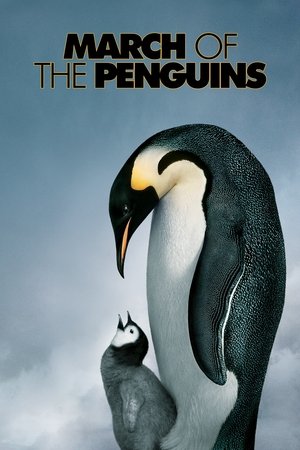
Every year, thousands of Antarctica's emperor penguins make an astonishing journey to breed their young. They walk, marching day and night in single file 70 miles into the darkest, driest and coldest continent on Earth. This amazing, true-life tale is touched with humour and alive with thrills. Breathtaking photography captures the transcendent beauty and staggering drama of devoted parent penguins who, in the fierce polar winter, take turns guarding their egg and trekking to the ocean in search of food. Predators hunt them, storms lash them. But the safety of their adorable chicks makes it all worthwhile. So follow the leader... to adventure!!
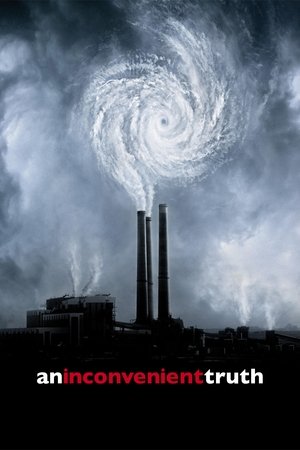
A documentary on Al Gore's campaign to make the issue of global warming a recognized problem worldwide.
Life on the road in India, showing the traffic, people and animals.
Once facing extinction, Asia's last wild lions live dangerously close to India's villages.
Embark with conservation ecologist Chris Morgan on a great challenge: to find and film the Siberian tiger.
ITV Naturalist Nigel Marven stars in this drama-documentary in which he explores his own back garden, in all its intricate detail. Shrunk to the size of an ant, he and his two companions - technical assistant Laura Green (Sarah Matravers) and driver Doug Kruger (Robin Lawrence) - embark on a mission to cross Nigel's back garden in just 24 hours. Along the way they meet some of the many thousands of creatures that fight for survival every day in these urban jungles .
In Africa there is a fable that explains the creation of the tides. When a hyaena challenged a mudskipper to a drinking contest to decide who should own the shore, the god Mungu tilted the earth so the sea flowed inland, and neither could win.
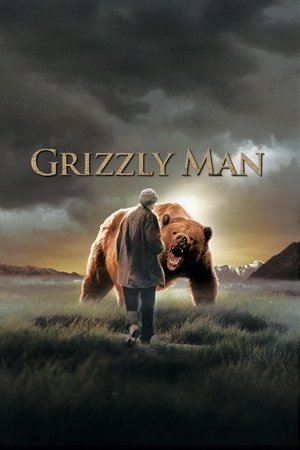
Follows the story of "Grizzly Man" Timothy Treadwell and what the thirteen summers in a National Park in Alaska were like in his attempt to protect the grizzly bears. The film is full of unique images and a look into the spirit of a man who sacrificed himself for nature.
Lake Tanganyika is an 'Ocean' in Africa. Millions of years ago it was colonized by a little fish called 'Cichlid'. Otters, crocodiles, cobras and cormorants all hunt the fish in clear water. How the Cichlid survived and evolved is an incredible story for, millions of years later, there are over 200 new species - all found only in Lake Tanganyika. Incredibly, they have evolved to look like coral reef fish. There are cichlid equivalents of tuna, snapper, gobies and goatfish. They have evolved bizarre methods of breeding with mouth-incubation, lekking and, unique amongst fish, there is even a cuckoo. Despite all their specialization over millions of years, if an opportunity presents itself, the little fish can behave like their unspecialized ancestor. In the climax of the film, they bang together to feast on a hatch of sardine fry. This is the story of how one little fish has conquered a lake.
Sir David Attenborough narrates a documentary about the Kea, the world's only alpine parrot. Playful and destructive, it attacks cars, starts landslides and terrorises New Zealand ski resorts but behind the bad behaviour there's a sharp mind at work. David tries to play chess with a kea and discovers how its cheeky character is the key to its survival.
We follow a team of scientists on a gruelling expedition into a remote rainforest in Mozambique. They're hoping to prove that Mount Mabu's animals and insects are unique and in need of official protection.
Four top predators are compared, each champion in a type of environment, with key adaptations. On the ground, the cheetah outruns prey (approached in masterly stealth) and enemies. In the air, the peregrine falcon is a flight and diving machine. In sweet water, the Nile crocodile survives since the Dino age, without natural enemies, with several amazing metabolism stunts. Lurking under water, it snaps blindly at migrating wildebeest, then waits underground. In the oceans, the equally ancient shark, notably the great white, migrates seasonally to find abundant prey, such as young seals around South Africa.
Mackinac Island, Michigan, is a tiny island in the center of the Great Lakes. Besides being a world favorite "Horse Drawn" and "Victorian Era" summer destination, the island holds another treasure few have ever seen: its wild, magical and beautiful winters. The 72-minute film Ice Bridge follows islanders' unique and quirky lifestyle throughout an entire year while tracing the formation of the spectacular phenomenon known as the "ice bridge" (a three-mile span of ice that allows islanders to cross to the mainland).
Exploring the private lives of sharks as they hunt, rest, clean and reproduce.
Trees talk, know family ties and care for their young? Is this too fantastic to be true? German forester Peter Wohlleben and scientist Suzanne Simard have been observing and investigating the communication between trees over decades. And their findings are most astounding.
This film, three years in the making, The remote forests of Kalkalpen National Park in Austria, the largest area of wilderness in the European Alps, have been left untouched by humans for nearly a quarter of a century in order to return to their natural, primeval state. The landscape regenerates itself in dramatic cycles of growth and decay, and this bold hands-off method of conservation yields salient results: the lynx, absent from the area for 115 years, has returned.