Yuki's family is nearly wiped out before she is born due to the machinations of a band of criminals. These criminals kidnap and brutalize her mother but leave her alive. Later her mother ends up in prison with only revenge to keep her alive. She creates an instrument for this revenge by purposefully getting pregnant. Yuki never knows the love of a family but only killing and revenge.
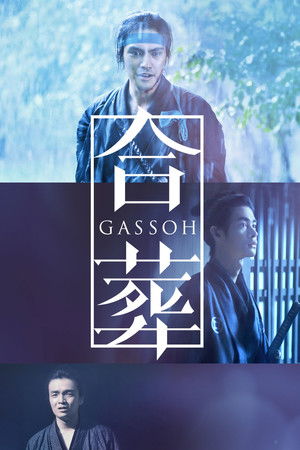
In the dawn of the Meiji period, the Gokumonjou, an inescapable prison, has been established in the middle of an enormous lake to counter the soaring crime rates the new era has brought. Serving as the ferrymen are the famous Kumou brothers: the eccentric family head, Tenka; the reckless but noble second son, Soramaru; and the guileless youngest, Chuutarou. In spite of their grim work, the three lead relatively peaceful lives in the ever-cloudy town of Oumi, together with their housekeeper, Shirasu Kinjou. But buried in the long history of Oumi is the legend of the terrifying "Orochi," a serpentine beast that awakens every three hundred years in a human vessel. Unbeknownst to Soramaru and Chuutarou, the actual job of the Kumou family is to seal the Orochi away before it fully revives—or the world will be plunged into destruction. Amid the monster's next resurrection, the Kumou family must find the resolve to keep laughing under the clouds.
A young girl named Oshin is sent to work for another family, because of her own family's financial condition. Nevertheless, the young girl lives strongly.
It was a tumultuous time. In the early Meiji period, there was the first photographer in Japan who lived a heroic life. What fascinated him with photography was a photograph of a naked woman.
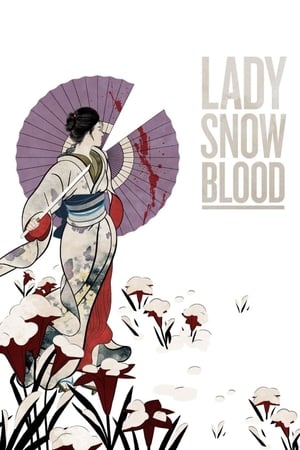
Lady Snowblood is caught by the police and sentenced to death for her crimes. As she is sent to the gallows she is rescued by the secret police who offer her a deal to assassinate some revolutionaries.
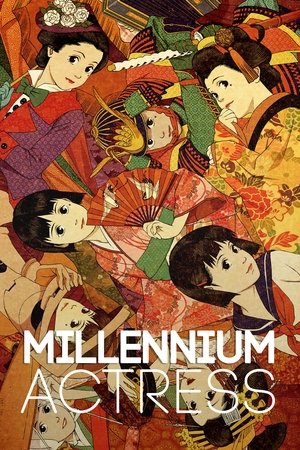
Documentary filmmaker Genya Tachibana has tracked down the legendary actress Chiyoko Fujiwara, who mysteriously vanished at the height of her career. When he presents her with a key she had lost and thought was gone forever, the filmmaker could not have imagined that it would not only unlock the long-held secrets of Chiyoko’s life... but also his own.
Toichi is a boatman who ferries the villagers to a town on the other side of the river. Besides rowing a boat for the villagers all day long, he barely communicates with anyone except Genzo, a young neighbour. Upstream, a large bridge is being constructed. Everyone is excited, but Toichi has mixed feelings about it. One day, Toichi meets a mysterious girl. Having no family and no place to go, Toichi lets her stay with him, but this encounter starts to bring about changes to Toichi's life.
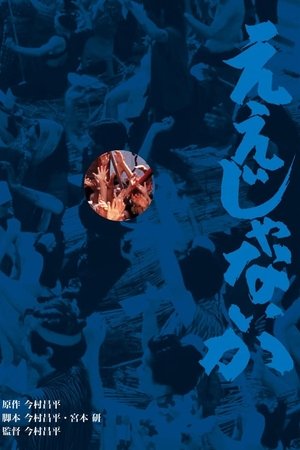
The film depicts carnivalesque atmosphere summed up by the cry "Ei ja nai ka" ("Why not?") in Japan in 1867 and 1868 in the days leading to the Meiji Restoration. It examines the effects of the political and social upheaval of the time, and culminates in a revelrous march on the Tokyo Imperial Palace, which turns into a massacre. Characteristically, Imamura focuses not on the leaders of the country, but on characters in the lower classes and on the fringes of society.
A poor rickshaw driver finds himself helping a young woman and her son after the woman's husband dies suddenly.
When his mother's untimely death quickly follows his father's, a doctor begins to believe a killer may be targeting him and his amnesiac wife.
At the beginning of the Meiji era, Sayoko, the daughter of a large banker in Tokyo, comes to Sotobo's villa for the first time in eight years, guided by her student, Yasu. In fact, Yasu is the son of Keizo Naya, the keeper of this villa. His father and older sister, Kyoko, live quietly in this place, where people rarely visit, like recluses. Sayoko, who grew up sickly and full of selfishness, treats Yasu, who has feelings for her, like a slave, blindfolds him, makes him help her change clothes, and makes him imitate Sansuke in the bathroom.
After more than 200 years of Isolation, Japan is ready for a modern samurai who isn't afraid to use guns and embrace the outside world.
Kenji, the eldest son of Masajiro, a wealthy moneylender, refuses to work in the family business and becomes obsessed with farming, jewelry and religion.
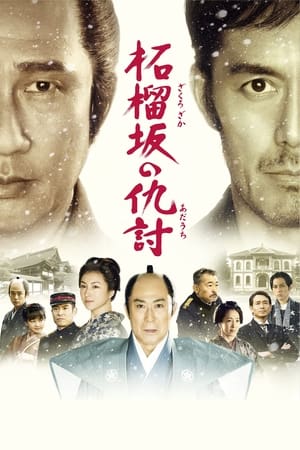
At Sakurada Gate in 1860, the shogun’s chief minister and his retinue of bodyguards are ambushed and annihilated. Bearing the responsibility and shame for this failure is Shimura Kingo, master swordsman and chief of the guard. Forbidden to take his own life in atonement, he is instead tasked with hunting down the remaining assassins; however, fate intervenes and now only one is left. Devoted to his late lord and his duty, he relentlessly pursues the sole remaining assassin for the next thirteen years. But times are changing in Japan and the way of the sword has become outlawed. What does this mean for Kingo?
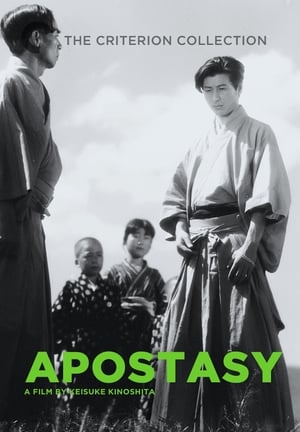
At the strong insistence of his father, Ushimatsu Segawa conceals his origins from a “buraku” area of low-class “untouchables,” leaving his hometown to serve as an elementary school teacher where he excels and is loved by his students. But he constantly struggles with the secret of his low-birth status and is disturbed by all of the discrimination levelled upon his class. It prevents him from pursuing a romance with Shiho, whom he meets at the temple where he resides, but who descends from a samurai family.
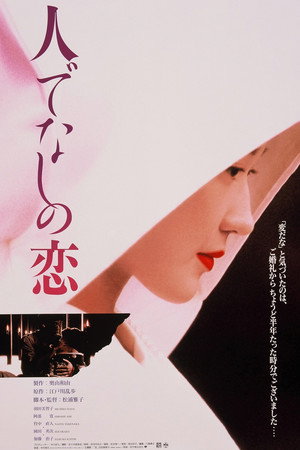
In a small Japanese village at the end of the 19th century, a rickshaw driver's wife takes on a much younger lover and the two conspire to murder him.
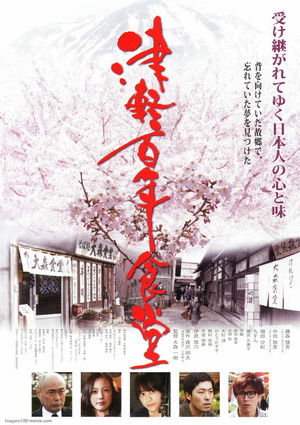
Tsugaru
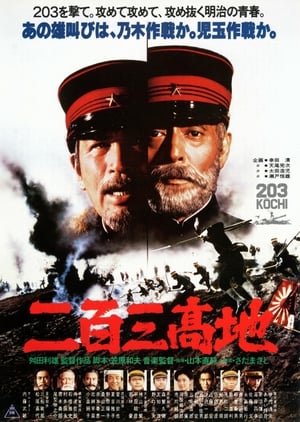
Depicts the bloody siege of the fortress of Port Arthur, one of the most strongly fortified positions in the world, during the Russo-Japanese War of (1904 - 1905). In the story dominated the character Lt Takeshi Kogyo (Teruhiko Aoi), teachers, and a reserve officer who became commander of the platoon and later company. At the same time monitors the conduct of the army commander general Nogi (Tatsuya Nakadai), which was commissioned of the emperor Matsuhito (Toshirô Mifune) to the conquest of the fort.
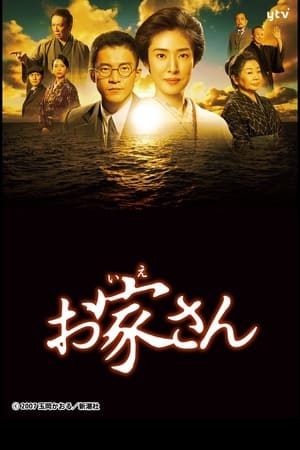
Traces the rise of the company Suzuki Shoten from the 1880's to 1919. After the death of her husband, Yoni Suzuki and her general manager built the company from a small sugar importer into Japan's largest trading and manufacturing company.
In the year 1868, three young men join the elite Shogitai division of the Shogunate. The Shogitai fights to the end and opposes the dismantling of the feudal military dictatorship known as the Bakufu system.