Speed - the obsession of the modern world - is determining what people should eat and how. Traditional foods are at risk of disappearing forever. An international eco-gastronomic movement known as Slow Food champions the protection of traditional culture, the environment and biodiversity while encouraging regional production, food education and pleasure. For these passionate and dedicated food lovers, sustainability, community and lifestyle are as important as seasonality, quality and taste.
Airbus : la techno des géants du ciel
Close and daily, sometimes comical but often tragic, sleepiness takes an important place in our lives. Suddenly falling asleep, sometimes with their eyes still open, affects more than 10% of the population. The leading cause of fatal accidents on motorways, drowsiness is also prevalent in the world of work. A silent, irrepressible phenomenon... a flaw in a system of performance, speed, reactivity. So what is happening in our brain? Can we control the conditions of sleepiness? By working on sleep and especially on the functioning of wakefulness, researchers are trying to understand the biological and environmental mechanisms that keep humans at the peak of their abilities. After a clear technological improvement, it turns out that man, having become an expert and process controller, finds it very difficult to focus his attention over time.
Artificial intelligence is taking on different roles in the filmmaking space. The questions we must ask ourselves are: what are the pros and cons of this advancement? How can we work with it, and what power do we have as human beings in the face of this technology?
Superspeicher: Power auf Dauer?
A team of scientists search for the lost island of Testerep in front of the Belgian coast, venturing into artificial landscapes and virtual realities.
Perseverance, une année sur Mars
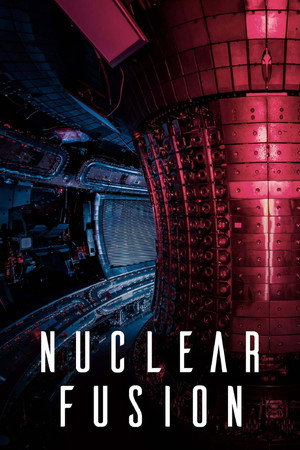
In October 2023, a European research team succeeded in generating an enormous amount of energy from very little fuel. A success that fusion research had been working towards for around 70 years. Now the competition for a fusion reactor has been reignited. What role can electricity from nuclear fusion play in the future?
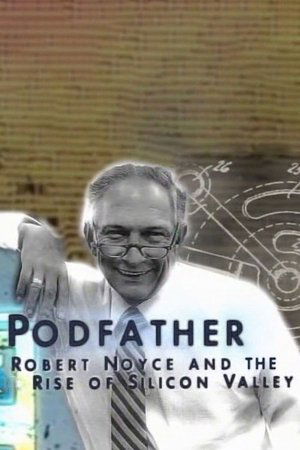
Documentary telling the story of silicon chip inventor Robert Noyce, godfather of today's digital world. Re-living the heady days of Silicon Valley's seminal start-ups, the film tells how Noyce also founded Intel, the company responsible for more than 80 per cent of the microprocessors in personal computers.
A scientific expedition travels to an alternative Earth in hope of finding a new home for humanity, which has destroyed its own planet. But is it even possible to escape old patterns?
A dinosaur-obsessed teen and his filmmaker father travel the world interviewing paleontologists about the latest discoveries, tracking down the crew of Jurassic Park, digging up 150-million-year-old bones, and meeting dino fanatics of all walks of life.
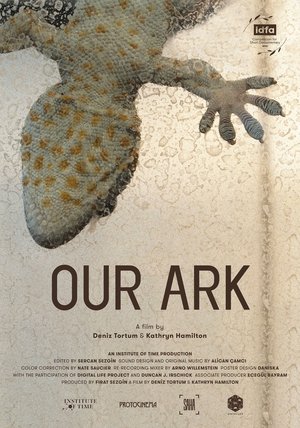
OUR ARK is an essay film on our efforts to create a virtual replica of the real world.
Le Rafale : Avion secret défense
Monaco, l'extension de tous les défis
Avions de chasse : Une technologie XXL
Dr. Heinz Haber, a noted scientist in the field of atomic energy, hosts this look at the possibility of an exciting new power source. He starts by comparing atomic energy to a genie in a bottle, both of which capable of doing both good and evil, and it is up to humankind to develop safe controls over this largely unexplored science.
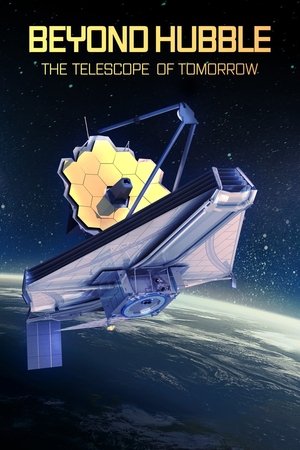
Following engineers and scientists on a groundbreaking mission as they build, test and launch the James Webb Space Telescope, the most powerful observatory ever constructed, and discovers the astonishing cosmological mysteries it will investigate.
Hubble: The Greatest Show in the Universe
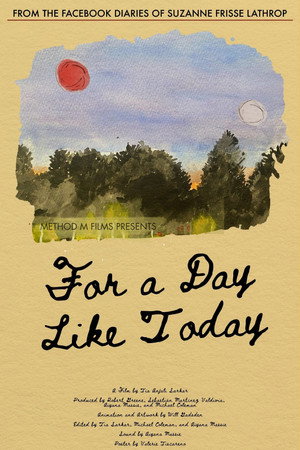
Following the death of her husband, Dan, in November of 2010, Suzanne Frisse Lathrop converts her Facebook into a public diary, housing her grief in magical and unexpected ways. A ritual throughout her week, Suzanne photographs the sky and shares photos containing strange spherical aberrations which she calls "orbs." For A Day Like Today confronts American attitudes surrounding grief all the while inviting audiences to reflect on how and where they see those they have lost.
Photo sequence of the rare transit of Venus over the face of the Sun, one of the first chronophotographic sequences. In 1873, P.J.C. Janssen, or Pierre Jules César Janssen, invented the Photographic Revolver, which captured a series of images in a row. The device, automatic, produced images in a row without human intervention, being used to serve as photographic evidence of the passage of Venus before the Sun, in 1874.