Adapting to her new home in Melbourne, Vietnam War immigrant Hanh (9 years old) mistakes the cunningness of her new “friends” as an act of kindness, forcing her to come to terms with the reality of human betrayal through the loving and tender guide of her family - especially her father, Quan.
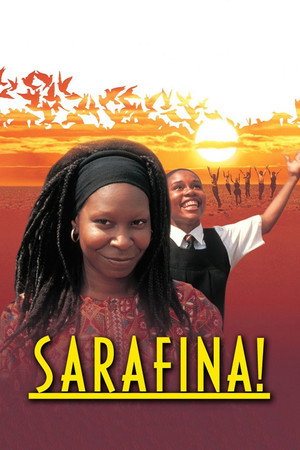
Two women, black and white, in 1955 Montgomery Alabama, must decide what they are going to do in response to the famous bus boycott led by Martin Luther King.
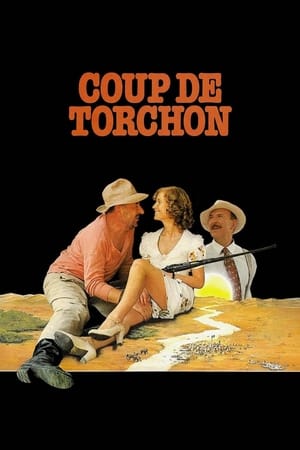
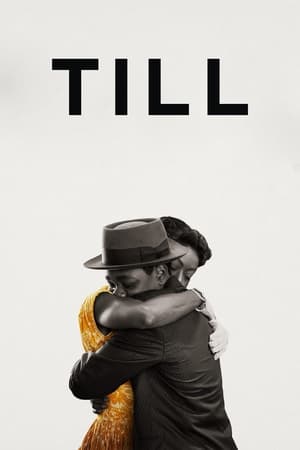
Joe Grant, a light-skinned African American, heads to a small Southern town to investigate the lynching death of his brother. He draws the attention of a gorgeous heiress whom he learns may have been involved in the killing.
A dream becomes a nightmare: Shortly after the Iranian doctor Murath Tehrani and his German wife Claudia moved into a chic villa on the outskirts of Leipzig, threatening couple flutter into the house and Claudia is harassed by anonymous callers with xenophobic slogans. First, the woman tries to hide the threat from her husband. But not even the police can help her. Suddenly, every stranger approaching the house appears as a threat. Psychological pressure is also increasing the pressure on the harmonious marriage of the young couple. But Murath and Claudia are unwilling to be driven out of their homes by aggressive racists.
Teenager Ebba has no idea who or where her real mother is. In India, she and her friend Camilla go in search of her.
Lucas Thompson is sentenced to community service, entailing him to deliver food parcels to the elderly where he finds himself on the doorstep of dementia sufferer; Arthur Miller.
The film follows three boys as they play and interact, revealing a familiar dynamic: teasing, bullying, and testing each other’s limits. We see them overcome their fears.
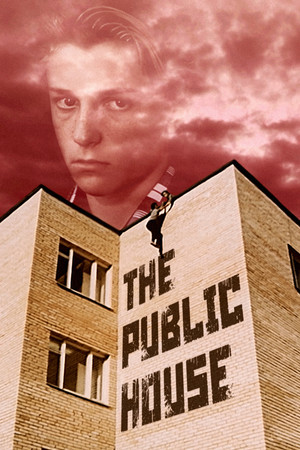
The story kicks off on Hartcliffe council estate in Bristol during the early 1980s. It follows Steven Knight, a working-class boy who has his motorbike stolen the day he buys it. Teaming up with his scoundrel friends he desperately tries to track it down before it's gone for good.
Two social workers reach breaking point with the heartless welfare system which treats destitute children as criminals. Reaching out to these children means entering into the world of drain kids, pinball parlour pimps, graffiti gangs, the 14-year-old dealers and their 12-year-old customers. It's an exhausting and sometimes dangerous occupation but they care about the kids with a passion and the successes make it all worthwhile.
5 years old Yang spends an afternoon with his mother on a shopping trip. When he throws a tantrum after feeling neglected, she decides to punish him by walking away. A seemingly harmless punishment eventually becomes a pivotal childhood experience for Yang that will forever change him.
Kind-hearted social worker Jack Palmer feels guilty about not spending enough time with his wife due to the pressures of his job taking care of four developmentally disabled men: obsessive-compulsive Norman, bipolar Arnold, childlike Lucien, and schizophrenic Barry. When Jack announces his decision to leave his job, his four charges react quite unexpectedly to the news.
At a creative firm somewhere in Stockholm, there's a short break in a meeting. Cecilia relates an anecdote from a hen party, about a 'Turk kiosk' that turned out to be closed. Asal, relatively new at the workplace, questions Cecilia's choice of words, and this seriously offends Cecilia. In the end it's Asal who is accused of inappropriate behaviour.
A widowed doctor of both Chinese and European descent falls in love with a married American correspondent in Hong Kong during China's Communist revolution.
The military anti-terrorist army takes control of "Chuspi", an unknown and faraway small village, isolated by the terrorist group "Sendero Luminoso" (Shining Path). A soldier called Vitin Luna, and other young soldiers face an invisible, perhaps superior force. Their unit is commanded by a brutal lieutenant who declares the entire village guilty of treason. In the face of this crisis, Vitin must choose between blind obedience and his own conscience.
Lucy is eleven years old. Having been neglected by her estranged mother and father, she is placed in a children's home. Through her eyes, we follow her struggle to cope with the system; her only saving being her self-belief and certainty that she is being watched over and protected by the holy spirit.
Stanley, an aging fast food worker, prepares to work his final graveyard shift after 38 years. When he's asked to train his replacement, Jevon, Stanley's weekend takes an unexpected turn.
On 24th August 1992 in the eastern German city of Rostock, a rampaging mob, to the applause and cheering of more than 3,000 bystanders, besieged and set fire to a residential building containing, among others, more than 120 Vietnamese men, women, and children on what has since become known as "The Night of the Fire." The riots became a symbol of xenophobia in the just-reunited Germany. This film recounts the incident from the perspectives of three very different characters.
Five teenage girls forge a strong friendship after a chance encounter. Their carefree days take a risky turn, testing their loyalty. Crossing a line puts their bond to the test, leaving their future uncertain. What'll their ending be?
The country that gave the world football has since delivered a painful pattern of loss. Why can’t England’s men win at their own game? With the worst track record for penalties in the world, Gareth Southgate knows he needs to open his mind and face up to the years of hurt, to take team and country back to the promised land.
After the Battle of Algiers, France and its army exported, as true experts, anti-subversive methods to Latin America and the United States in the 1960s. After more than a year of investigation in Argentina , in Chile, Brazil, the United States and France, the director collected, sometimes under the cover of a hidden camera, recorded conversations, the exclusive testimonies of the main protagonists. From General Aussaresses to former Minister of the Armed Forces Pierre Messmer, including General Reynaldo Bignone (head of the military junta in Argentina from 1982 to 1984), General Albano Harguindéguy, General Manuel Contreras, and Generals John Johns and Carl Bernard, this investigation gives us a hidden reality of the country of Human Rights.