In this sequel to Hope and Glory (1987), Bill Rohan has grown up and is drafted into the army, where he and his eccentric best mate, Percy, battle their snooty superiors on the base and look for love in town.
One of the world's most acclaimed comedies, M*A*S*H focuses on three Korean War Army surgeons brilliantly brought to life by Donald Sutherland, Tom Skerritt and Elliott Gould. Though highly skilled and deeply dedicated, they adopt a hilarious, lunatic lifestyle as an antidote to the tragedies of their Mobile Army Surgical Hospital, and in the process infuriate Army bureaucrats. Robert Duvall, Gary Burghoff and Sally Kellerman co-star as a sanctimonious Major, an other-worldly Corporal, and a self-righteous yet lusty nurse.
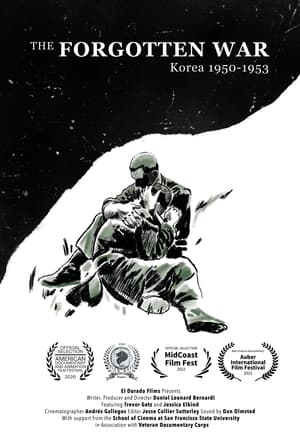
The Korean War saw three years of heavy combat take place on the small Korean peninsula, ending in a stalemate that remains contested to this day. This documentary tells the story of the Forgotten War from the point of view of the veterans that were sent to fight it.
Near the end of the Korean War, a platoon of U.S. soldiers is captured by communists and brainwashed. Following the war, the platoon is returned home, and Sergeant Raymond Shaw is lauded as a hero by the rest of his platoon. However, the platoon commander, Captain Bennett Marco, finds himself plagued by strange nightmares and soon races to uncover a terrible plot.
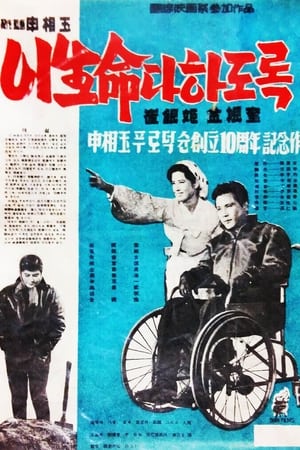
Captain Kim is grievously wounded in the first days of the war. When the northern troops continue their advance, his wife and small daughters flee south to Taegu, dragging him along in a two-wheel handcart. His wife struggles to keep herself and their surviving daughter alive. Working as a market trader, she meets a kind young man -- who happens to be tall, dark and handsome.
Fighting Korea
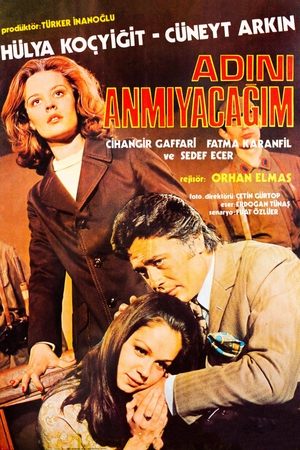
Gul is a famous singer, married to Captain Engin, who has studied law. Engin goes to Korea during the war. One day Gul is told that he is dead. Her violinist, Cemil fancies her. One day Gul meets Engin again, yet Cemil continues molesting her. Engin takes his daughter while Gul gives becomes an alcoholic and is miserable. Engin learns about her condition and decides to go to her but in a car accident he becomes blind. Gul starts to work in their house under a false name, Seher. In the meantime she gives piano lessons to their daughter Oya. Engin regains his eyesight after a surgery. Cemil attempts to rape Oya, but Gul reaches in time, saves Oya and kills Cemil. Oya finds out that Gul is her mother and asks Engin to defend her in court. A happy future awaits all three.
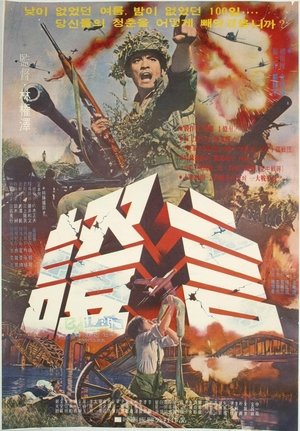
June 25, 1950. When second lieutenant Jang has a date with his girl friend during weekend, numerous North Korean jet fighters make sudden air raids to the skies of Seoul. It is the beginning of Korean War. In spite of Korean Army's brave defense, North Korean army reddens South Korea with their state-of-the-art weapons. This movie describes the progress of war from the invasion in June 25, 1950 to the reclamation of territory on the basis of Sun-A's personal experience. Also this film reminds hard lessons from tragic history.
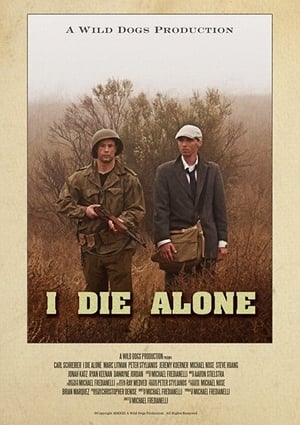
American pacifist Private Finch (Carl Schreiber) finds himself pressured by his superiors to kill a P.O.W. captured from battle. As a direct result of his apprehensions, a fatal confrontation explodes amongst his platoon, and Finch becomes stranded behind enemy lines armed with nothing but limited ammunition and an uncertain sense of direction. Making his way through foreign soil, he encounters a mysterious mailman (Marc Litman) anxious to throw himself into battle. But on their exhausting quest to find a radio and signal for help, it becomes clear that Finch's new friend harbors a few dark secrets that could prove more threatening than the next ambush.
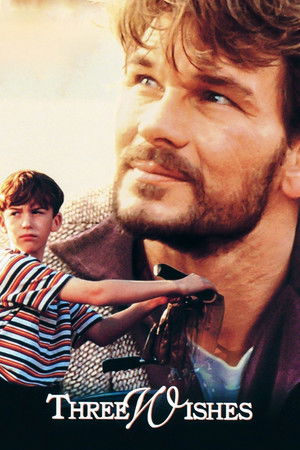
While Jane Holman is driving with her two sons, she accidentally runs into a drifter, Jack McCloud, who breaks his leg. Being responsible, Jane invites Jack, and his dog, to stay at her home until his leg has healed. Jack struggles to adapt their lifestyle, and finds himself loved by the family.
A cafe is growing, tucked in to the mountainside air raid shelter of the DMZ borderlands. A light light flickers, illuminating the past, present, and future. I'll see you at the DMZ! Shim was a free, one-day pop-up cafe staged in Yangji-ri village’s air raid shelter at the Korean DMZ. Referencing Korean cafe culture’s fixation on third place, the DMZ’s evolution from security tourism, to ecological peace tourism, and its repurposing as art production site, Shim attempts to intervene and align the past and present. Yangji-ri was one of many minbuk propaganda villages established by the Park Chung Hee regime in the 1960s to showcase the farming bounty and prosperity of the south for a North Korean gaze. The village was formerly part of the Civilian Control Line (CCL) until 2013 when it was reterritorialized as a normal part of South Korea.
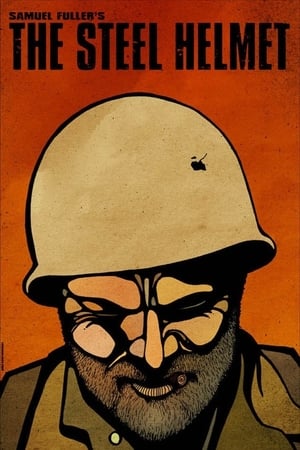
A ragtag group of American stragglers battles against superior Communist troops in an abandoned Buddhist temple during the Korean War.
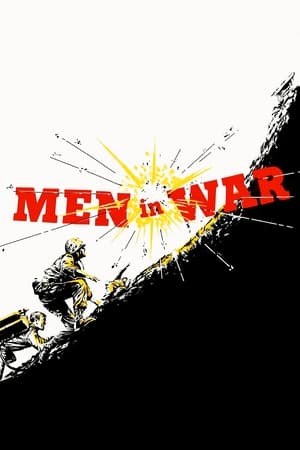
In Korea, on 6 September 1950, Lieutenant Benson's platoon finds itself isolated in enemy-held territory after a retreat. Soon they are joined by Sergeant Montana, whose overriding concern is caring for his catatonic colonel. Benson and Montana can't stand each other, but together they must get the survivors to Hill 465, where they hope the division is waiting. It's a long, harrowing march, fraught with all the dangers the elusive enemy can summon.
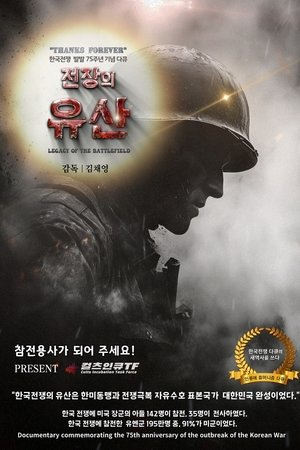
Legacy of the Battlefield
A visit to the famed aircraft carrier USS Midway and interviews with men who served aboard it bring the exciting story of the vessel to life in this dramatic documentary. In service for 47 years, the Midway saw heavy action during the Vietnam War, and its hair-raising missions to rescue downed pilots were legendary. After Vietnam, the Midway, now berthed in San Diego, participated in numerous operations, including the Gulf War.
In June 1950, soon after the start of the Korean War, a troop of North Korean soldiers enter a small South Korean village. Captain Jeong-woong proclaims that they came to liberate the villagers but their true agenda is to ferret out the reactionaries. The villagers and Seol-hee, who is separated from her fiance on her wedding day, offer them heartfelt hospitality and cooperation to avoid falling out of the army's favor. Eventually friendships starts to build up between the soldiers and the villagers.
In 1951, Marcus Messner, a working-class Jewish student from New Jersey, attends a small Ohio college, where he struggles with anti-Semitism, sexual repression, and the ongoing Korean War.
The movie focuses on the battle of Cheolwon, where the 63rd Army of the Chinese People's Volunteer Army (CPVA) was ordered to enter the battlefield of Cheolwon in May 1951, just after a month-long battle, to fight against four divisions of the United Nations Army (UNA). The volunteers fought with bloodshed and finally brought the enemy to the negotiation table.
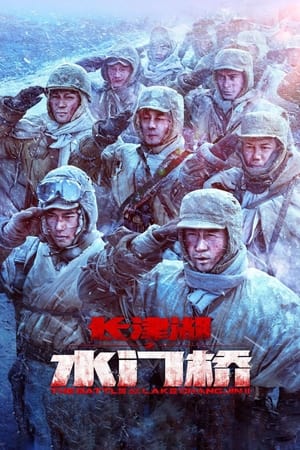
Commander Wu Qianli leads the 7th Infantry Company soldiers to Funchilin Pass where they are tasked to destroy a bridge to stop enemy troops from retreating.
Army Captain Edward Hall returns to the U.S. after two years in a prison camp in the Korean War. In the camp, he was brainwashed and helped the Chinese convince the other prisoners that they were fighting an unjust war. When he comes back he is charged for collaboration with the enemy. Where does loyalty end in a prison camp, when the camp is a living hell?