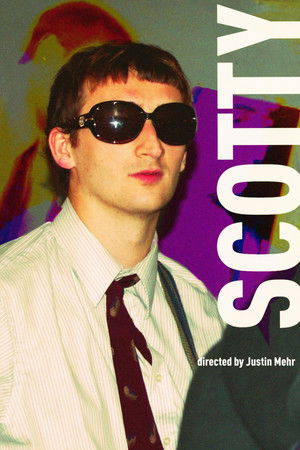
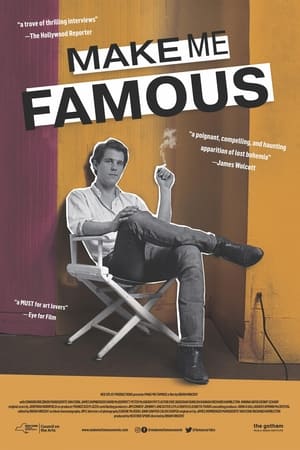
Filmmaker Jonas Mekas follows the surrealist artist around the streets of New York documenting staged public art events.
Rosa is from Croatia and lives in Switzerland, with her husband who depends on her care. She takes care of everything. Her children have grown up and want to leave home. Rosa stays behind alone.
In 2012 two members of anarchistic female band Pussy Riot were sentenced to two years in a Mordovian labor camp for "hooliganism motivated by religious hatred". Russian film collective Gogol’s Wives follow each step of the feminist punk band’s battle against Putin including their first disruptive performances on a trolley bus, shooting a video about transparent elections, a controversial performance in a Red Square cathedral, and footage shot in a jail cell. Support comes from many corners including Madonna who painted the words "Pussy Riot" on her back and wore a balaclava during her Moscow show. The documentary portrays the grim state of present-day Russia, a country starkly divided between conservatism and anarchy. Pussy Riot believes that art has to be free and they're willing to take it to extremes. "Pussycat made a mess in the house," they say, and the house is Russia. The filmmakers do not seek to moralize, they simply edit events and leave viewers to draw their own conclusions.
The encounter with a growing, and mostly undocumented, brazilian community allows us to bear witness to its energy, its vivacity, and its diversity. This film attempts to work for a larger acceptance of foreigners in their land of exile.
Boiling Point (original title Kiehumispiste) describes the different reactions the Finnish people had to the large immigration amounts in 2015-2016.
This film from Bill Moyers is the first documentary to focus exclusively on people formerly detained in New York City’s notorious Rikers Island Jail. They tell their compelling stories direct to the camera, revealing the violent arc of the Rikers experience – from the trauma of entry to extortion and control by inmates, to oppressive corrections officers, violence and solitary confinement.
Woman on Fire follows Brooke Guinan, the first openly transgender firefighter in New York City. A character-driven documentary, the film follows Brooke as she sets out to challenge perceptions of what it means to be transgender in America today.
A documentary about the difficulties of immigration, culture shock and the loss of social references that destabilize new arrivals. Arriving in a new country is the beginning of a difficult journey, full of trials and tribulations. An unprecedented incursion into the DPJ helps us to understand how these many pitfalls are experienced within families themselves.
“Discard Records [is] a cumulative work responding to my experience as the Artist in Residence at the NY Department of Sanitation. Coupling my experiential research in the agency and my revitalization of their TV studio, this film is a very personal response to a treasure trove of historical material about waste in our current era of the climate crisis. It is not only the preservation of a long lost archive but a contemporary activation that is to be shared as a public artwork in this moment of ecological awareness. Adapting the aesthetics and recycling the materials of the sanitation department, Discard Records is a remixed historical film that is intended to spark new conversations that explore the intimate but often ignored relationship between the public and their waste.” - sTo Len, Director
William Hart McNichols is a world renowned artist, heralded by Time magazine as "among the most famous creators of Christian iconic images in the world". As a young Catholic priest from 1983-1990 he was immersed in a life-altering journey working as a chaplain at St. Vincent's AIDS hospice in New York city. It was during this time that he became an early pioneer for LGBT rights within the Catholic church. "The Boy Who Found Gold" is a cinematic journey into the art and spirit of William Hart McNichols. The film follows his colorful life as he crosses paths with presidents, popes, martyrs, and parishioners, finding an insightful lesson with each encounter. McNichols' message as a priest, artist and man speaks to the most powerful element of the human spirit: Mercy.
As beautiful and sleek as it is deadly, 52 Blocks merits special conservation efforts as the United States' only existing native martial culture, as it is indeed, the jazz of the martial arts world. Across the African diaspora, there are manifestations of African-derived warrior-dances, capoeira in brazil, mani in Cuba, ladja in Martinique, pinge in Haiti- yet the US offshoot has remained esoteric, because it was suppressed throughout slavery, Reconstruction and Jim Crow and then obscured in the criminal justice system. The history, interviews and training of the martial arts style that created Breakdance and boxing greats like Mike Tyson.
Chris Colombo, 44, the son of slain mob boss Joseph Colombo, is on home confinement while he's out on bail for federal racketeering charges. The film follows Colombo on some unsavory outings when he is supposed to be on family outings or running errands.
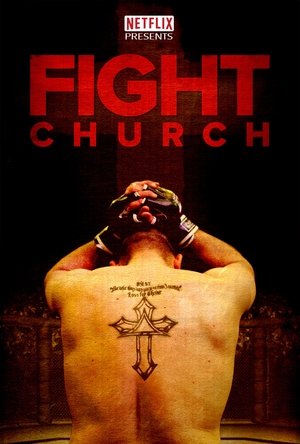
A documentary about the confluence of Christianity and mixed martial arts, including ministries which train fighters. The film follows several pastors and popular fighters in their quest to reconcile their faith with a sport that many consider violent and barbaric. Faith is tried and questions are raised. Can you really love your neighbor as yourself and then punch him in the face?
Die Menschenfischer
Xiara Trujillo is a precocious seven-year-old who moved from the Bronx to Maryland with her mom, Aracelli Guzman, four years ago. Though she seems happy hanging out and playing with her pal Melissa, Xiara becomes defensive and emotional when talking about her father, Harold Linares. As we see and learn, Harold is in jail serving a ten-year sentence for weapons possession; Xiara seems to blame his incarceration on her mother, whom she says "kept calling the police." Xiara, who has always been extremely close to her father, acts out with her mother.
Documentary that shows the changing attitude towards immigrant labor in The Netherlands. The documentary follows three immigrants that arrived in Holland 30 years ago to work in a bakery.
Traces the life and mental illness of New York artist and photographer Ruth Litoff, and her sister's struggle to come to terms with her tragic suicide.
The video revolution of the 1970s offered unprecedented access to the moving image for artists and performers. This Is Not a Dream explores the legacies of this revolution and its continued impact on contemporary art and performance. Charting a path across four decades of avant-garde experiment and radical escapism, This Is Not a Dream traces the influences of Andy Warhol, John Waters and Jack Smith to the perverted frontiers of YouTube and Chatroulette, taking in subverted talk shows and soap operas, streetwalker fashions and glittery magic penises along the way.
This feature documentary takes us to the heart of the Jane-Finch "Corridor" in the early 1980s. Covering six square blocks in Toronto's North York, the area readily evokes images of vandalism, high-density subsidized housing, racial tension, despair and crime. By focusing on the lives of several of the residents, many of them black or members of other visible minorities, the film provides a powerful view of a community that, contrary to its popular image, is working towards a more positive future.
Bas Jan Ader's first fall film shows him seated on a chair, tumbling from the roof of his two-storey house in the Inland Empire.