In 1989, the largest trade in NFL history sent Herschel Walker from Dallas to Minnesota. The Vikings destroyed what appeared to be a budding dynasty by selling the farm for Walker. Dallas restored its place as America's Team, became the team of the 1990's and won three Super Bowls. Most people consider it to be the worst trade ever made. Except for Jimmy Johnson. He'd say it's the best.
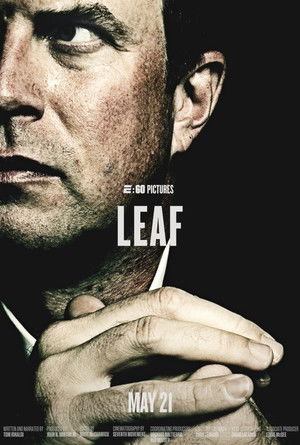
From can't miss future NFL star to incarcerated addict, former San Diego Charger Ryan Leaf shares insight into the choices and mistakes he made that changed his life forever.
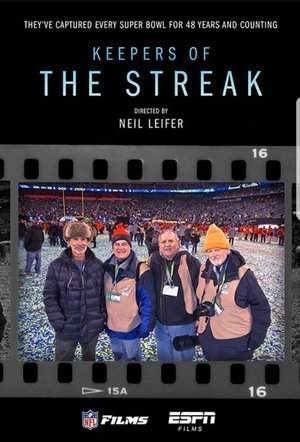
The NFL has staged 48 Super Bowls. Four photographers have taken pictures at every one of them. In KEEPERS OF THE STREAK, director Neil Leifer tells the story of this exclusive club, made up of John Biever, Walter Iooss, Mickey Palmer and Tony Tomsic. With their cameras, they have captured football's biggest game of the year for almost five decades.
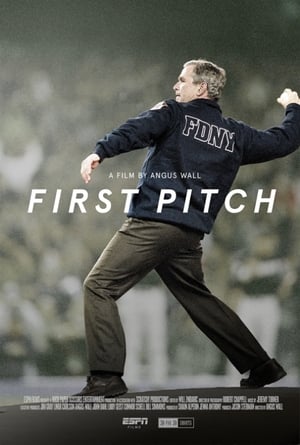
Part of ESPN's 30 for 30 Shorts. On October 30, 2001, with the United States of America still reeling from the aftermath of the September 11 terrorist attacks, George W. Bush took to the mound at Yankee Stadium to throw the "first pitch" of the 2001 World Series' third game. Includes interviews with former United States Secretary of State, Condoleezza Rice; former New York City mayor, Rudy Giuliani; Yankees shortstop, Derek Jeter; former Yankees manager, Joe Torre; former United States Director of Central Intelligence, George Tenet; members of the Bush family; and the 43rd President of the United States, George W. Bush.
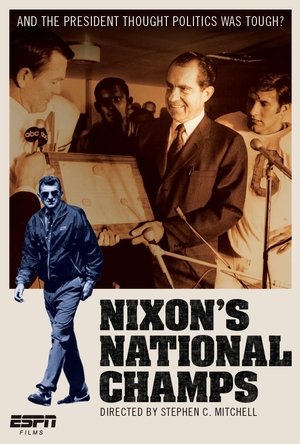
NIXON'S NATIONAL CHAMPS is the story of how the 1969 college football national champion was crowned and the drama that surrounded it. Using rare footage of Nixon and his unexpected antagonist, Joe Paterno of Penn State, this film captures the folly of the President as he waded through the hornet's nest of polls and regional rivalries.
In this daring follow-up to The History of White People in America, comedian Martin Mull takes us on an in-depth look at such topics as White Religion, White Stress, White Politics, and White Crime.
This documentary captures the sounds and images of a nearly forgotten era in film history when African American filmmakers and studios created “race movies” exclusively for black audiences. The best of these films attempted to counter the demeaning stereotypes of black Americans prevalent in the popular culture of the day. About 500 films were produced, yet only about 100 still exist. Filmmaking pioneers like Oscar Micheaux, the Noble brothers, and Spencer Williams, Jr. left a lasting influence on black filmmakers, and inspired generations of audiences who finally saw their own lives reflected on the silver screen.
In June 1893, European prospectors unlawfully took claim to ‘The Golden Mile’ on Aboriginal land. In little over a hundred years the natural landscape has been transformed into the industrial hellscape of Kalgoorlie-Boulder. As incumbent Mayor John Bowler starts to campaign for a second term, independent prospector John ‘General Hercules’ Katahanas decides to run against him on an anti-corruption ticket. What starts out as a quirky David-vs-Goliath political battle, unravels into a portrait of a man, a town and a country sent mad by the timeless cycles of exploitation, racism and greed.
We follow Henrik Ibsen throughout his life. From early shame over his father's bankruptcy, via bitterness over the then conservative public life, to his older years as a national institution that tourists gathered to watch on their way to their very punctual, daily lunch at the Grand Café in Oslo.
It's nighttime in Prague, 21 August 1968. Soviet troops and tanks are occupying the city - random attacks, soldiers shooting, bodies lying dead on the sidewalk. With an impromptu crew, the director (Karel Roden) captures some unique evidence - material which is, however, worthless in occupied Prague; it has to be shown to the rest of the world. So, while the Soviets are concocting false reports of heartfelt receptions without military resistance for propaganda purposes, the director sets off on a risky trip across the closed Czech-Austrian border to Vienna.
Sometime in the 1980s, Caspar Salmon's grandmother was invited to a gathering on the Welsh island of Anglesey, attended exclusively by people with fish surnames. Or so he says. Thirty years later, film-maker Charlie Lyne attempts to sort myth from reality.
A documentary about four African-American comediennes set in 1984. Restored in 2021 by the Academy Film Archive.
The Gettysburg Address is the subject of a new documentary by Ken Burns. The documentary tells the story of students at the Greenwood School whose study of the Gettysburg Address brings new understanding to the speech.
This film explains what James Ensor (1860-1949) meant for the development of art and makes palpable where he got his inspiration from.
Director Kevin Booth navigates through the cutting edge of Cannabis research while becoming a foster parent to a child court ordered to take powerful mind altering drugs.
The carnage in Sarajevo provides the focus of this French documentary which seeks to call attention to the terrible conflict in the hopes of finally ending it. The film is divided into five parts. Each part covers a time frame ranging from April 4, 1992, the beginning of the war, to the present. The major issues that occur are three-fold. It depicts the systematic genocide of Bosnians, the silence of Western countries, and the determination of the Bosnians to resist. They refuse to be seen as victims, even though the filmmakers portray them so. Also included are the origins and political aspects of the war. It offers interviews with participants. It also reveals how the U.S. State Department censored reports about Serbian death camps.
The ideologies underlying the foundation of modern Israel are explored in this documentary, the third of a trilogy (created over a twenty year span) exploring the Jewish experience. The two earlier documentaries, "Porquoi Israel," and "Shoah," have had great effect on the ways documentaries are produced. "Tsahal" zeroes in on the crucial role of the military in Israeli society and politics. The film uses many in-depth interviews to present the many feelings and thoughts about the Israeli military.
This program provides, through 1st hand accounts & contemporary films & photographs, a rare insight into what really happened. Together with meticulously researched stories, it provides a unique analysis of the Gallipoli campaign, including never-seen before interviews with the last 10 Gallipoli Anzacs, rare film footage showing the beach & trenches at Gallipoli.
The Gallipoli campaign of World War I was so controversial & devastating, it changed the face of battle forever. Using diaries, letters, photographs and memoirs, acclaimed director, Tolga Ornek, traces the personal journeys of Australian, New Zealand, British and Turkish soldiers, from innocence and patriotism to hardship and heartbreak.
Using never-before-seen footage, Japan's War In Colour tells a previously untold story. It recounts the history of the Second World War from a Japanese perspective, combining original colour film with letters and diaries written by Japanese people. It tells the story of a nation at war from the diverse perspectives of those who lived through it: the leaders and the ordinary people, the oppressors and the victims, the guilty and the innocent. Until recently, it was believed that no colour film of Japan existed prior to 1945. But specialist research has now unearthed a remarkable colour record from as early as the 1930s. For eight years the Japanese fought what they believed was a Holy War that became a fight to the death. Japan's War In Colour shows how militarism took hold of the Japanese people; describes why Japan felt compelled to attack the West; explains what drove the Japanese to resist the Allies for so long; and, finally, reveals how they dealt with the shame of defeat.