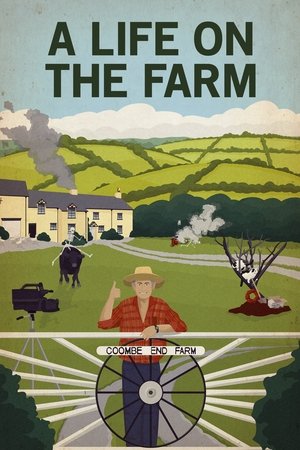
A strange story from Somerset, England about a filmmaking farmer and the inspiring legacy of his long-lost home movies.
Ripley shows an aged Japanese statesman, a strange fish with legs, the 'Rubaiyat' in a finger ring, how a house of cards is torn up, and a giant typewriter in Atlantic City, New Jersey. Vitaphone No. 1294.
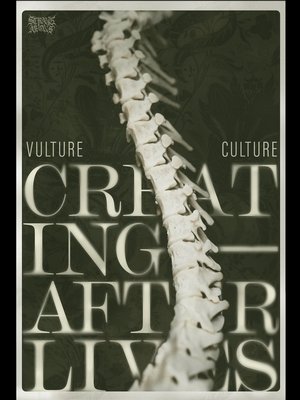
What do we have to learn from dead things and the people who love them? For some, vulture culture offers a deeper connection to nature. For others, it is a way of confronting death and processing grief. For others, the ultimate form of artistry.
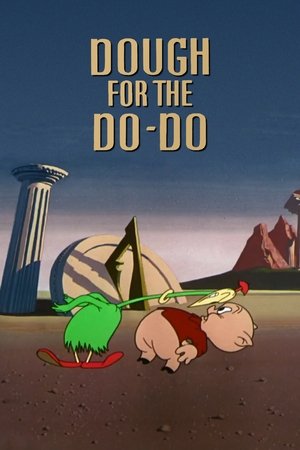
Porky Pig has an adventure in Wackyland while searching for the last Do-Do bird.
This is the second volume of ultra-rare oddities, obscurities and jaw-droppers that may be among the best 85 minutes Something Weird has ever assembled and almost all of them from the original negatives! Titles include The Martians (1962), Tops ‘n Tunes (1964), Swinger (1966), Slumber Party (196?), Chemical Pop (196?), The Assignation (1963), A Christmas Fantasy (196?), Woton’s Wake (1964) and some newly-discovered trailers for live midnight shows.
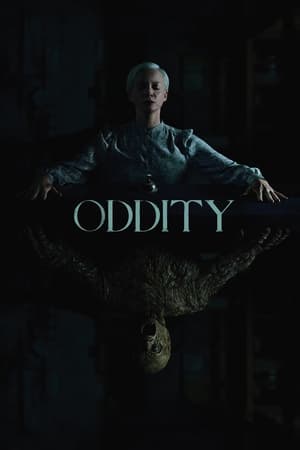
After the brutal murder of her twin sister, Darcy goes after those responsible by using haunted items as her tools for revenge.
Rare footage from the Sesame Street season 18 cast and crew wrap party. 1986 When the Sesame Street cast and crew finish taping a season, they traditionally celebrate with a wrap party where they have dinner, watch a reel of outtakes and highlights from the season, and enjoy live skits that often poke fun at the show. In addition, toasts are exchanged, and awards and bottles of wine are presented to people who got engaged, married or had babies since the last party. In the earliest days of the show, Richard Hunt took it upon himself to provide entertainment for the parties, for one party, cameraman Frank Biondo was given the role of introducing one of Hunt's acts and from then on, he served as the organizer and emcee for the live show, eventually he was granted a full stage so they could set up the show. Includes an "adult version" of the song People in your neighborhood, sung by Bob McGrath.
When an unnamed protagonist puts on a Colonel Sanders mask he transforms into Wun Blee Chung Dee in this zero budget oddity. Physical copies included a free wet wipe. See Wun Blee Chung Dee visit his shut in old lady lover, frolic thru the cemetary with stolen flower bouquets, converting non-believers on the streets of Salt Lake City, visit with the chicken folk and appear on cable access TV with Gene Simmons of the rock band KISS! Wun Blee Chung Dee remains one of the strangest pieces of cinema-flotsam & jetsam around.
A film crew follows two leopard cubs as they make the fascinating journey from infancy into adulthood in this up-close-and-personal nature documentary.
This film is unique educational video course which basis on a long-term experience of practical work and teaching activity of the leading masters of Russian animation: Feodor Hitruk, Jury Norshteyn, Edward Nazarov, Andrey Khrzhanovsky.
Les Outre-mer, des terroirs en or
A young journalist is looking to learn and talk with the Lebanese legend, Fairuz.
After having suffered two strokes, and ending up ill and half-blind, Ricardo is now seeking euthanasia. However, before he dies, he wants to reconcile with his two sons because throughout the years he allowed their relationship to fade. Adrian decides to help him achieve it, capturing in the meantime the journey of different people towards a commonplace, and speaking emotionally yet humorously, and lightly yet profoundly about mistakes and forgiveness, the passing of the times, choices and their impact, as well as the unseen ties that bind together a family
"Saxophonist, artist and Whitehot Magazine publisher Noah Becker visited music legend Ornette Coleman at his music studio in New York City. The following film is the result of that interaction."
A family with five children flees the war raging in their home village on the Russian border. They end up in Mshanets, a farming village on the other side of the country, remote and unknown. Here the family starts building a new home. At the same time, two documentary makers come to the village, looking for a story. In the Lymar family they find the ideal characters for their film. But one day, when the renovation of their house is almost finished, the family disappears. The filmmakers go in search of their characters and along the way they try to find an answer to the question: what does a person need to feel at home?
A visually stunning film on acclaimed author David Adams Richards and his connection to one of Canada’s most overlooked yet breathtaking regions.
What does it mean to lose a colour? Losing Blue is a cinematic poem about losing the otherworldly blues of ancient mountain lakes, now fading due to climate change. With stunning cinematography, this short doc immerses the viewer in the magnificence of these rare lakes, pulling us in to stand on their rocky shores, witness their power and understand what their loss would mean—both for ourselves and for the Earth.
Ice has always moved. When glaciation took hold some 34 million years ago, interconnected rivers of ice combined to produce the Earth's vast ice sheets. As temperatures slowly warmed glaciers developed a unique balancing act; advancing and retreating to calibrate their annual winter accumulation against summer melt. Sometimes calving colossal icebergs into the sea. A positive feedback loop that has regulated the movement of ice for millions of years.
At 68 years old and due to the depression and anguish that partly come with being an old man in exile in Sweden, Igor and his memories will decide where to go next.
Continuing the series started with Intervened Events (2014), the Buenos Aires Film Museum presents the second feature film made entirely with material from its archives and by fourteen outstanding Argentine filmmakers. These are nine issues of Cine Escuela Argentino, a project created in 1948 by the Argentine Ministry of Education during the first government of Juan Domingo Perón. The latter promoted “the use of the cinematographer as a didactic assistant destined to complete the educational and cultural work, mainly in what concerns exalting the feelings of the nationality, with the heroic example of the heroes, Christian morality and the multiple civil duties, great and small”. Hence, most of the films produced by Cine Escuela Argentino were aimed at scientific dissemination and tourism promotion of the various regions of the country. (Museum of Cinema)