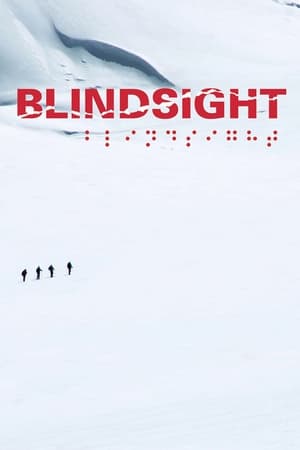
Six blind Tibetan teenagers climb the Lhakpa-Ri peak of Mount Everest, led by seven-summit blind mountain-climber Erik Weihenmayer.
In southern Germany, winter can still be admired in all its glory every year. With its white coat of snow and icicles and myriads of small crystals that look like geometric works of art. In the valleys and on the slopes the snow is still so thick every year that the alpine huts are snowed in up to the windows. Cows and dairymen are safe in their farms at lower altitudes. But not the wild creatures of the mountains! They need strategies to survive the cold season and to defy snow masses, cold and ice. And some seem to do it so easily that they even raise their young in the middle of winter. But how do animals, plants and fungi cope with the annually recurring ice age, which from our perspective is a time of need? The many adaptations in nature prove that winter is an integral part of the natural cycle of the year and the living environment of species. They are adapted to cold and frost. That is why the animals and plants at the edge of the Alps suffer particularly from climate change!
Once again Absinthe Films raises the bar to bring you 'More'. This title marks the beginning of a new era for Absinthe Films as they have broadened their scope to include and properly represent urban riding while still keeping the overall blend fresh and un-repetitive.
Optigrab
Man Ray, the master of experimental and fashion photography was also a painter, a filmmaker, a poet, an essayist, a philosopher, and a leader of American modernism. Known for documenting the cultural elite living in France, Man Ray spent much of his time fighting the formal constraints of the visual arts. Ray’s life and art were always provocative, engaging, and challenging.
Draw
.TV is a found footage essay film: Voicemails left by an anonymous caller from the future guide us to the remote islands of Tuvalu, a place the global media has described as “the first country to disappear due to rising sea levels”. Surrounded by thousands of miles of open water, much of Tuvalu’s revenue comes from its country-code web extension .TV, a popular domain choice among global video-streaming and television industries. The caller describes how heat, digital screens, and distance gave him no choice but to leave his sinking home and escape into cyberspace where rising waters will never reach him.
An anthology of one-minute films created by 51 international filmmakers on the theme of the death of cinema. Intended as an ode to 35mm, the film was screened one time only on a purpose-built 20x12 meter public cinema screen in the Port of Tallinn, Estonia, on 22 December 2011. A special projector was constructed for the event which allowed the actual filmstrip to be burnt at the same time as the film was shown.
"Adrift" is shot on the arctic island of Spitzbergen and in Norway. It combines time-lapse photography with stop-motion animation of the landscape. Through camera-angles and framing the film gradually dislocates the viewer from a stable base where one loses the sense of scale and grounding.
This film is depicts early lesbian sexuality, using reenacted scenes from the experience of a 12-year old girl as the platform for a meditation on forbidden desire, transgression, and Lacanian psychoanalytic concepts of identity formation. Raw adolescent memories counterpoint staged scenes, exploring mechanisms of power and submission.
A look at the various modes of transportation made for the Expo '86 World Fair in Vancouver, Canada.
Every year, thousands of Antarctica's emperor penguins make an astonishing journey to breed their young. They walk, marching day and night in single file 70 miles into the darkest, driest and coldest continent on Earth. This amazing, true-life tale is touched with humour and alive with thrills. Breathtaking photography captures the transcendent beauty and staggering drama of devoted parent penguins who, in the fierce polar winter, take turns guarding their egg and trekking to the ocean in search of food. Predators hunt them, storms lash them. But the safety of their adorable chicks makes it all worthwhile. So follow the leader... to adventure!!
The rare short film presents a curious dialogue between filmmaker Julio Bressane and actor Grande Otelo, where, in a mixture of decorated and improvised text, we discover a little manifesto to the Brazilian experimental cinema. Also called "Belair's last film," Chinese Viola reveals the first partnership between photographer Walter Carvalho and Bressane.
What do Daniel Webster, Dr. Seuss, C. Everett Koop, Robert Frost and 100+ Winter Olympians have in common? They all spent time at Dartmouth College, Hanover, NH where winters are long and snowy. Passion for Snow traces over 100 years of ski history in the United States with a focus on the many contributions of Dartmouth College and its alumni to the formation, growth and ongoing innovations in all aspects of snowsports. Passion for Snow combines firsthand accounts from early ski pioneers, veterans of the 10th Mountain Division, Olympians, members of the U.S. Ski Hall of Fame and top ski industry and resort executives, who explain how the most remotely located college in the Ivy League helped spawn a $25 billion industry, and continues to shape it today.
An experimental ethnographic documentary that criticizes the colonizer view of anthropology.
The painter Alfredo Romero locks himself in his studio-apartment in the Estación de Francia neighborhood in Mollet del Vallès (Barcelona) to create the final painting of his series Paisajes interiores (Inner Landscapes). The director of this film does the same, but to create his own work about the painter's creative process. Premiered at Documenta Madrid in 2009.
Thanks to his myriad film roles, Lon Chaney is known as “the man of a thousand faces,” and you could say that the early horror era never beheld a figure more intriguing. Yet because of his numerous transformations, his face never became as iconic as that of, say, Boris Karloff. Accompanied by a soundtrack from Bernhard Lang, this “re-imagination of shots” taken from Chaney´s forty-six surviving films offers a beguiling excursion into the history of film. The director reveals surprising associations, while highlighting the enduring magic of works which are now more or less forgotten.
In his essay film, Jerry Tartaglia, longtime archivist and restorer of the film estate of queer New York underground, experimental film, and performance legend Jack Smith, deals less with Smith’s life than with his work, analyzing Smith’s aesthetic idiosyncrasies in 21 thematic chapters. It's a film essay about the artist’s work, rather than a documentary about his life. An unmediated vision of Jack Smith, an invitation to join him in his lost paradise.
Frank Zappa: The Present-Day Composer Refuses To Die is a 2000 documentary about Frank Zappa.
"This installation or performance work puts my own earlier film of the Mona Lisa (1973) through another stage of transformation – my own irretrievable self of some 34 years ago is now also part of the subject I first saw the ‘actual’ ‘Mona Lisa’ when I was about thirteen. Of course I had seen dozens of reproductions in books and postcards by then and the popular mythology of the enigmatic smile was already well engrained in my mind. My strongest impression, as I recall, was how small and unsurprising it was – a heavily protected cultural icon – no longer really a picture – and I was much more excited by the painting of the distant landscape than by the face. My own ‘version’ of ‘la Giaconda’ was never an homage, nor like Marcel Duchamp’s ‘L.H.O.O.Q’, an attack on its cultural power. Instead it came from a fascination with change and transformation – maybe also with arbitrary appropriation." Malcolm Le Grice