A documentary on how British double-dealing during the First World War ignited the conflict between Arab and Jew in the Middle East. The bitter struggle between Arab and Jew for control of the Holy Land has caused untold suffering in the Middle East for generations. It is often claimed that the crisis originated with Jewish emigration to Palestine and the foundation of the state of Israel. Yet the roots of the conflict are to be found much earlier – in British double-dealing during the First World War. This is a story of intrigue among rival empires; of misguided strategies; and of how conflicting promises to Arab and Jew created a legacy of bloodshed which determined the fate of the Middle East.
After the end of the Cold War, the Baltic was viewed almost as a quiet backwater. A nice place to visit to see charming Hanseatic cities and sandy beaches. But since the war in Ukraine the Baltic sea, bordered by eight European Union countries as well as Russia, has become a hot spot of world geopolitics. And tensions are high.
Turkey's history has been shaped by two major political figures: Mustafa Kemal (1881-1934), known as Atatürk, the Father of the Turks, founder of the modern state, and the current president Recep Tayyıp Erdoğan, who apparently wants Turkey to regain the political and military pre-eminence it had as an empire under the Ottoman dynasty.
A "Chinese" father reflects on the changing relationship of China and US during his trip to Beijing to retrieve his 3-year-old "American" daughter who has been stranded because of the recent "decoupling" of the two countries. Born in China and living in the American Midwest, filmmaker Yinan Wang attempts to unpack his own experience of how a transnational migrant family deals with the distress caused by identity, nationalism, and geopolitics.
A courageous pastor uses his underground network to rescue and aid North Korean families as they risk their lives to embrace freedom.
A new reading of the historical period that began with the reign of the Catholic Monarchs (1479-1516) and the discovery of America (1492), as well as an analysis of its undeniable influence on the subsequent evolution of the history of Spain and the world.
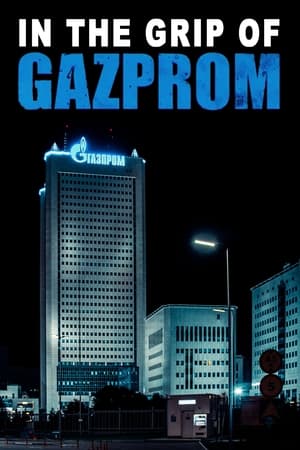
The war in the Ukraine has changed the way many European countries view Russian politics. Suddenly it became clear how dependent countries had become on Russian gas imports for decades and what Vladimir Putin was up to. However, no country needs more gas than Germany. It was only after Russia's invasion of the Ukraine that the German government realized that Russia had long used gas as a weapon to impose its will on states. The instrument created for this purpose is the natural gas production company GAZPROM. So how did Germany become so dependent on Russian gas? The documentary shows how, over several decades and several changes of government, a broad alliance of politicians and business representatives did everything possible to secure Germany's energy supply with cheap Russian gas, while the Kremlin's foreign policy became increasingly aggressive and the warnings of experts went unheeded.
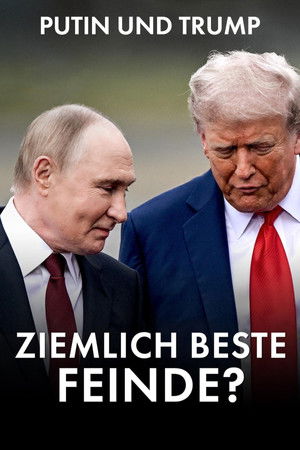
Vladimir Putin and Donald Trump — one the President of the United States, the other the President of Russia. Two men at the pinnacle of global power whose relationship keeps the world on edge. One a former businessman, the other a former KGB agent. Both have been active in politics for years. What drives them? The struggle over a possible ceasefire — or even peace — in Ukraine brought the two together last summer in Anchorage. But the question remains: who wants what? And who is succeeding with what agenda?
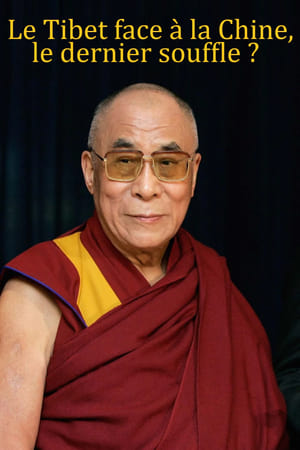
As the crucial question arises of the future succession of the Dalai Lama, we take a look back at the tormented history of the "Land of Snows" which lives under Chinese domination and which remains a geopolitical issue of the first order. A valuable documentary that gives voice to a people that China is trying to permanently silence.
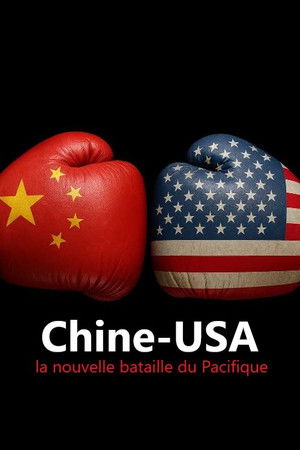
Chine-USA : la nouvelle bataille du Pacifique
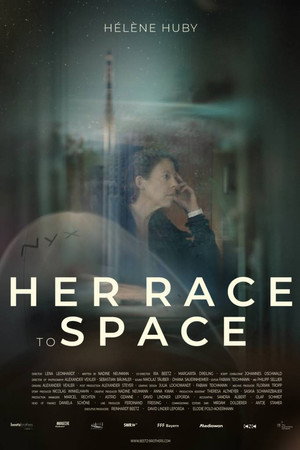
As the first woman in Europe to found a private space company, Hélène Huby sets out to challenge the dominance of SpaceX. In doing so, she enters a global race in which Europe barely has a foothold. But this is about more than technology: whoever controls access to space also shapes the order of our world. Over the course of several years, the film follows Huby through negotiations, setbacks and the lead-up to a crucial first rocket launch in the United States. Between airports, conference rooms and ever fewer moments with her family, it becomes clear what this ambition demands. As she tries to change the system, she risks becoming part of it herself.
China’s President Xi Jinping is a force to be reckoned with. As leader of the Communist colossus, he commands the world’s attention, but who is China’s strongman and what is his agenda?
An enlightening investigative report on Rosatom, Russia's powerful atomic energy agency and Vladimir Putin's formidable geopolitical tool for increasing his influence around the world.
Iran : rêves d'Empire
The interview, held on January 4, 2001, was the last given by Professor Milton Santos, who died from cancer on June 24 of the same year. The geographer is gone, but his thoughts remains. Its political and cultural ideals inspire the debate on Brazilian society and the construction of a new world. His statement is a true testimony, a lesson that the world can be better. Based on geography, Milton Santos performs a reading of the contemporary world that reveals the different faces of the phenomenon of globalization. It is in the evidence of contradictions and paradoxes that constitute everyday life that Milton Santos sees the possibilities of building another reality. He innovates when, instead of standing against globalization, proposes and points out ways for another globalization.
Until recently, Europe felt safe under the US nuclear umbrella. But since Russia invaded Ukraine and Donald Trump was re-elected, transatlantic relations have deteriorated. Experts are calling for Europe to focus more on its own nuclear deterrent. But what options do nations on the continent have?
We travelled to Georgia, a country living in the shadow of Russia, where many believe they could be next. This film explores what that fear actually feels like on the ground - speaking to people whose lives, identity, and future are shaped by the possibility of invasion. From conversations on the street to a deeper look at how history, politics, and culture collide, this is a portrait of a country caught between independence and uncertainty. This film documents real people and perspectives.
Zentralasiens Kampf ums Wasser
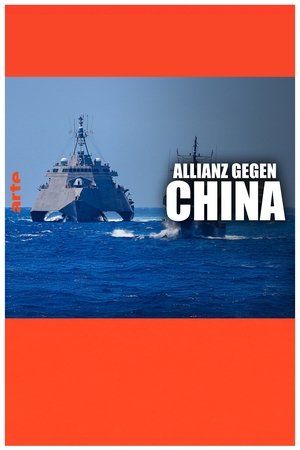
While global attention focuses on Ukraine, the Middle East, and Trump’s trade policies, the situation in East Asia is shifting rapidly. Former wartime enemies Japan and South Korea are drawing closer and aligning themselves with Taiwan. An emerging alliance is forming—one that, together with the U.S., positions itself against China. But does this strengthen peace, or turn East Asia into a powder keg?
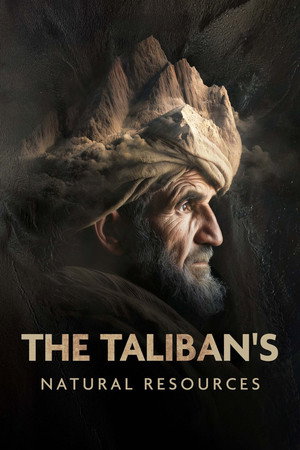
Since the Taliban returned to power in August 2021, Afghanistan has drawn growing international attention for its enormous reserves of rare earths and strategic minerals essential to the global energy transition. The country is believed to hold more than €1 trillion in resources, including copper, lithium, cobalt, iron, uranium, chromite, mercury, and rare earth elements, as well as valuable gemstones and gold. Often described as the “Saudi Arabia of minerals,” Afghanistan has become the focus of a geopolitical race for supplies. While Europe and the United States remain hesitant to engage with a regime accused of serious human rights abuses, countries such as China, Russia, Turkey, Qatar, Pakistan, and India are already positioning themselves in Kabul to secure access to these critical resources.