RASHAWN'S DESIRE: THE UNTOLD STORY OF RASHAWN BRAZELL is a feature-length documentary film that closely examines the story behind the 2005 murder of 19-year-old Rashawn Brazell of New York City, whose dismembered body parts were found on a trackbed in a subway station in what one magazine referred to as the "most horrific murder since Jack the Ripper." Through in-depth examination of the sensational media coverage of the case and interviews with those who knew Rashawn best, the film tells the story of who Rashawn Brazell truly was, what likely led to the crime, the stalled investigation and one determined mother's continuing quest to find justice for her son.
There are about 600 murders each year in the UK. So, what drives people to kill? Are some people born to kill or are they driven to it by circumstances? Michael Mosley delves into the BBC archives to chart scientists' progress as they probed the mind of the murderer to try to understand why people kill, and to find out whether by understanding murder we can prevent it.
An animated short documentary crafted by people on the move in the refugee camp of the island of Lesbos (GR), following the story of Orhan, a Syrian Kurd who fled war with his family in 2013, seeking safety in Turkey—only to find that peace was still a distant dream.
A vivid portrait of a generation of Hong Kongers committed to creating a new more democratic Hong Kong. Schoolboy Joshua Wong dedicates himself to stopping the introduction of National Education. Whilst former classmate Ma Jai fights against political oppression on the streets and in the courts. Catapulting the viewer on to the streets of Hong Kong and into the heart of the action. The viewer is confronted with Hong Kong's oppressive heat, stifling humidity and air thick with dissent. Filmed over 18 months this is a kaleidoscopic, visceral experience of their epic struggle.
Hear from the prosecutors who handled Susan Smith's case and why authorities doubted her story from the beginning. The boys' father, David Smith, talks about why he believes 30 years in prison isn't long enough for Susan and what he's prepared to tell a SC Board of Pardons and Paroles to keep her behind bars.
ABC retells the dark, disturbing story of Manson — and his twisted cult of devoted followers he instructed to carry out a series of grisly homicides in 1969. In this two-hour documentary.
T'es où, Youssef?
Nach dem Mord an Theo van Gogh
In the privacy of her own home, a Syrian woman shares her thoughts and feelings, talking about her existence, and her desire to be open about her sexuality in a conservative society.
In 1967 Canadian filmmaker Hugh O'Connor came with a crew to eastern Kentucky to make a film showing people from all walks of life in the United States. They finished the day by filming coal miners and their families in rental houses. As the filmmakers were leaving, Hobart Ison, the owner of the property, drove up and fired three shots, killing Hugh O'Connor. Elizabeth Barrett, from Kentucky herself, explores why this happened by trying to understand the people and culture of eastern Kentucky.
"The Boy Of The Fish" follows Noon, a young boy living in a Syrian refugee camp, who finds solace and a sense of freedom in a whale-shaped doll he names "Bahr." Set against the challenging realities of camp life, Noon’s journey is both a story of resilience and a testament to the boundless imagination of childhood. Through vivid symbolism and a unique soundscape, the film explores themes of loss, hope, and the longing for freedom amidst confinement. Shot entirely on an iPhone due to restrictions in the conflict zone, the film combines raw authenticity with poetic depth to capture the emotional landscape of a young soul navigating adversity.
Two thousand years ago, it was a flourishing city in the middle of what is now a Syrian desert. At the crossroads of trade routes, Palmyra attracted caravanners from Mesopotamia, India and China. In what remains of its ruins, rediscovered by Europeans in the 17th century, its numerous necropolises bear witness to a prosperous past. Carved in limestone in the first centuries of our era, the faces of the representatives - men, women and children - of its greatest families adorn the walls of its tombs. Since 2012, Danish archaeologist Rubina Raja has been leading a long-term project to find, document and retrace the family trees and daily life of these Palmyrenians.
An animated documentary film, based on an actual story of a woman from Damascus countryside. Suleima evokes some of childhood memories, when her thoughts refusing injustice had arisen. The film is a portrait of Suleima, and a monitoring of intellectual and social shifts she experiences during the events. The visual environment: has been presented graphically fully of sharp contrasts, and imaginary mixed with reality.
Kinder des Lichts
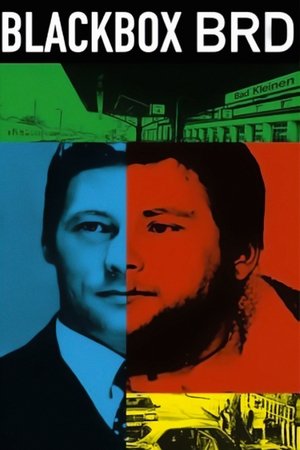
Black Box BRD steps back into German history, showing the Federal Republic of Germany of the 70s and 80s. The country is polarized due to the power struggle of the German state and the "Red Army Faction". Society is torn, the fronts are irreconcilable. The life stories of both Wolfgang Grams and Alfred Herrhausen are tragically linked to this era. Grams is the one who takes up arms for moral rigor; Herrhausen however seizes power and dies when powerful.
Over three nights in April 1922, 13 men were murdered in west Cork, because, according the late Canadian historian Peter Hart, they were Protestants. This documentary goes to the root of the bitter dispute his controversial views have created.
Robert Oppel's documentary about the life and murder of his uncle and namesake, Robert Opel, the man who streaked the Academy Awards in 1974.
A documentary on Rojava/North-East Syria and the social change there.
Shot by a reported “1,001 Syrians” according to the filmmakers, SILVERED WATER, SYRIA SELF-PORTRAIT impressionistically documents the destruction and atrocities of the civil war through a combination of eye-witness accounts shot on mobile phones and posted to the internet, and footage shot by Bedirxan during the siege of Homs. Bedirxan, an elementary school teacher in Homs, had contacted Mohammed online to ask him what he would film, if he was there. Mohammed, working in forced exile in Paris, is tormented by feelings of cowardice as he witnesses the horrors from afar, and the self-reflexive film also chronicles how he is haunted in his dreams by a Syrian boy once shot to death for snatching his camera on the street.
Between January 1st and 31 December 2017, 768 people died as a result of murder or manslaughter in Britain - approximately 14 people a week. This powerful and original film tells the stories of some of those cases, exploring the human cost of murder - the ordinary people whose lives are changed forever and the communities left to wrestle with the consequences. Filmed over 12 months, it follows families and friends from the immediate aftermath of the crime, through the court process, and as they try to rebuild their lives. These stories are shown alongside statistical analysis of homicide figures for Britain since the Millennium, which reveal that so far this century, the pattern of homicides has remained strikingly similar in terms of the profiles of victims and the circumstances of the killing. This urgent, unflinching and intimate film goes beyond individual incidents to ask what the patterns of murder in our time say about the state of Britain.