Film by the National Dairy Council about how to lose weight by adjusting daily caloric intake. Discusses the dangers of being overweight and the importance of maintaining a healthy weight through proper diet. It follows a group of overweight individuals, including students and adults, who participate in a weight reduction program at Michigan State College. The program involves a low-calorie diet plan, regular physical activity, and close monitoring of food intake. The participants are taught how to select nutritious foods, control portion sizes, and make healthier choices to achieve and maintain a healthy weight. The video shows the progress of the participants over a period of several months, highlighting successful weight loss and improved overall health.
In this Coronet instructional film, we learn how to manage and self regulate our emotions when it comes to dealing with short comings and disappointments.
This project by the National Center for Preservation Technology and Training (NCPTT) produced a video for training technicians in correct methods for preserving stone walls and rock fences. The video is a primary training resource, providing graphic instruction on how to repair, rebuild and relocate stone walls and rock fences. In addition to providing training to practitioners, the video explains fence and wall construction to archeologists, engineers, preservationists and conservators.
An instructional film released by the UK Warning and Monitoring Organization which depicts its operations in the lead-up to and aftermath of a hypothetical nuclear attack on the United Kingdom.
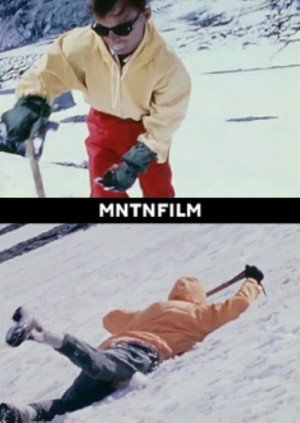
Instructional film about a mountaineering technique to prevent falling. Narrated by Jim Whittaker, who describes basic self arrest positions, common mistakes and how to prepare for self arrest while climbing or descending. Several climbers demonstrate falls and safety techniques. This film was made on Mt Rainier, above the east side of Nisqually Glacier, in 1967. The film opens with a scene of a climber falling and sliding out of control after losing his ice axe. The narrator describes the basic self arrest position, common mistakes, and how to prepare for self arrest while climbing or descending.
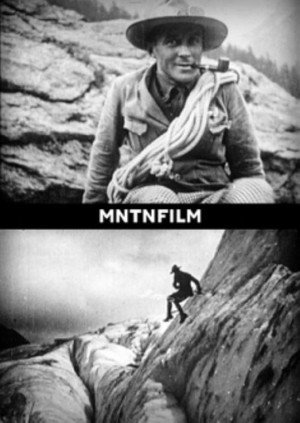
Taking footage from the film 'A la conquete des cimes', this instructional film distributed for the home market as a Pathe Baby film in two reels, makes a presentation of the mountaineering equipment and techniques. The film starts with a mountaineer wearing double socks and nailed boots; then he makes a demonstration of the rock climbing and rappeling technique. In the second reel two climbers show us the use of crampons and ice axe and the way to progress in the glacier.
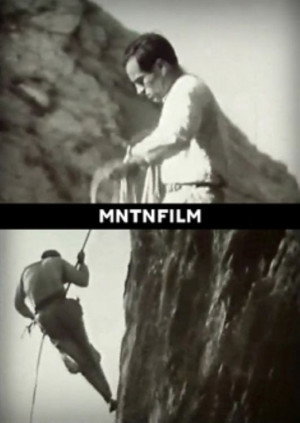
An exceptional cinematographic document on Emilio Comici, shot in 1938 in Val Rosandra by a MGM operator. The documentary shows Comici with the mountain guide Gianni Macor, in all the stages of the rock climbing technique, in the way of an instructional film. Comici, nicknamed the 'Angel of the Dolomites', is considered as the most extraordinary climber of the period between the two World Wars. He made over 200 first ascents in the Dolomites during his short career. Comici perfected the Bavarian technique of mountain climbing, and began the era of 'sixth grade' climbing. It was Comici who originated the concept of climbing direttissima routes, following the path a drop of water would take down the mountain.
This film instructs American Telephone & Telegraph Co. truck drivers on how to be safe drivers. It deals with motor vehicle safety and shows locations where most accidents occur. Concentration, control, and courtesy are higlighted as key components in defensive driving techniques and encourages each driver to accept responsibility for the safety of others as well as himself.
Presented by professional yo-yo artists and comedians Dick and Tommy Smothers, they showcase the fundamentals of yo-yo basics to get started, tricks, and how to reach the pure "state of yo".
Made in the 1970s by the National Highway Traffic Safety Administration, this film presents a study of the efficacy of motorcycle helmets, by looking at the effects of riders who wore them in an accident. It is presented by the U.S. Department of Transportation.
A documentary about the making of The Turin Horse, the last film directed by Hungarian master Béla Tarr.
An extraordinary film about memory, and specifically the fading memory of an 86-year-old political activist who has fought tirelessly against historical amnesia and for justice in Argentina. The director’s grandmother, Laura Bonaparte, was one of the founders of the Mothers of the Plaza de Mayo, formed during the 1970s by women whose children and family members had been disappeared by the Videla military dictatorship. Laura herself lost three children and their partners, including the director’s parents. Today, after a lifetime battling that the disappeared never be forgotten, Laura faces her own struggle to remember.
Neuropsychologist Paul Broks travels America in search of the soul of legendary jazz guitarist Pat Martino who was brutally silenced by memory stripping brain surgery. Tracing his remarkable ascent from the depths of amnesia, back to the peak of artistry, Broks explores the nature of memory, self, creativity and the brain systems underlying personal identity. Filmed throughout the US in 2006 and 2007 the film features Delmar Brown, Red Holloway, John Patitucci, Les Paul, Joe Pesci, Carlos Santana and Pete Townshend.
Diana Mariscal reached a moment of fame in the sixties, when at just 18 years of age she was the lead actress of the movie Fando and Lis by Alejandro Jodorowsky. The moment seemed to trigger a promising career, but her public image faded little by little until disappearing. Forty years later the traces of her existence have not been entirely erased.
At the beginning of 2012 the so called war against crime, led by the Mexican Federal Government brought, as consequence, a number of nearly 50,000 casualties and a social climate of violence and distrust. How was this experienced by the men and women who fight this violence from the trenches of science? To the End of Reckoning tells through the eyes of the Jalisco Forensics Institute the development of this engagement, in one of the most violent states in the Country.
During 1950, Miguel Contreras Torres led a group of filmmakers to officially denounce William O. Jenkins' monopoly on film theaters, which was built throughout the country upon crime and corruption. Ever since, Uncle Miguel was ridiculed and eventually forgotten, but it is certain that his proclaim announced the separation of Mexican cinema and its audience. Discoveries may be found in the films made by Miguel, and bringing back to life these moving pictures might recover this history that was never told, a story that is almost lost and that Contreras Torres himself tried to pass on through his writings in The Black Book of Mexican Cinema.
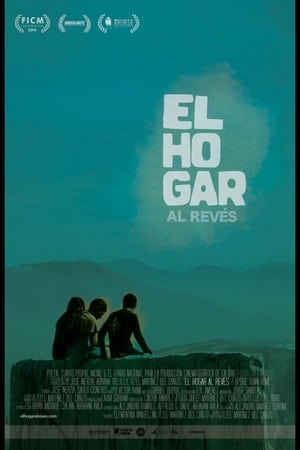
In an unfair country women work day and night far from home while their children learn to survive between loneliness and emptiness. They grow to become teenagers, locked down in one of many low income neighborhoods made up of identical small houses, outlined by overcrowding and scarcity. Their mothers, mostly workers in transnational factories, go in and out in buses that take them to a work place where they carry out twelve hour shifts two hours away from home, while their children muddle through their upbringing in tiny houses of 40 square meters. In spite of everything, they look for a way to move ahead and chase their illusions. This is a story full of youthful aspirations set in a context of difficulties and shortages.
The story of a trade that is dying out, and the strength of those who view this way of life, passed from father to son for generations and now doomed to disappear, with nostalgia and place their hopes for its survival in someone they would never have imagined.
Openland is an art film guided by issues surrounding micro states and its derivative definitions. Through intertwining interviews, meta-narratives, and digital landscapes, Openland unfurls a dialogue between consciousness, individuality and collectivity.
For its reproduction, the megaloprepus dragonfly specifically relies on periodic puddles in tree holes and bromeliacea in tropical rain forests. Territorial males tenaciously defend these resources. Females lay their eggs in the water holes of the territorial males and are guarded by them. Any satellite male - i. e., one without a territory - who tries to grab a female is driven away by the territorial male.