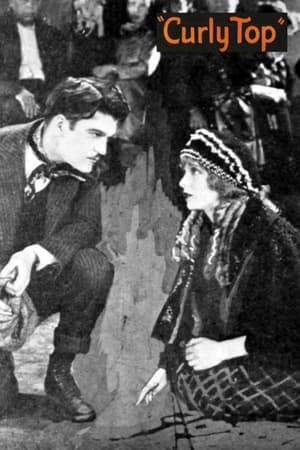
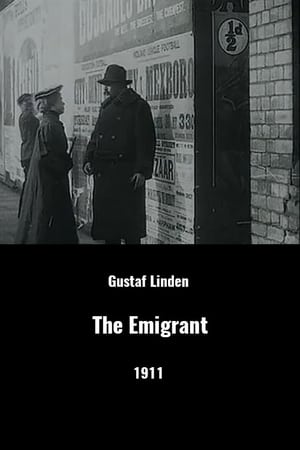
A young woman becomes infatuated with the leading man of a traveling theatrical troupe. She sneaks away to join him in the next town, but her father forces her to return home...
Third part of the "Verlorene Töchter" series
France in the first half of the 17th century, at the time of the Duke and all-powerful Cardinal Richelieu. The courtesan Marion Delorme falls in love with the nobleman Didier de Lassigny, although she is still with another nobleman at the time, the Marquis de Saverny. Marion then leaves the Marquis. This leads to a duel between the two aristocratic gentlemen, although duels were strictly forbidden in these circles by Richelieu. When this becomes known, Didier is put in chains and sentenced to death. Marion sacrifices herself for the sake of her new love, but the sacrifice is in vain. Didier, who refused to flee, is finally beheaded by order of the "red executioner" Richelieu.
Darta, a man from an impoverished family, is rejected by the wealthy parents of the woman he loves. Desperate, he strikes a bargain with the Monkey King, performing a dark ritual to gain wealth. However, in doing so, he accidentally curses his wife and child to a life of suffering. Rooted in Indonesian mysticism, this universal narrative explores the insatiable hunger to become something one is not and the boundaries one is willing to cross to achieve it.
A tramp cares for a boy after he's abandoned as a newborn by his mother. Later the mother has a change of heart and aches to be reunited with her son.
An aging doorman, after being fired from his prestigious job at a luxurious hotel, is forced to face the scorn of his friends, neighbours and society.
Dr. Mabuse and his organization of criminals are in the process of completing their latest scheme, a theft of information that will allow Mabuse to make huge profits on the stock exchange. Afterwards, Mabuse disguises himself and attends the Folies Bergères show, where Cara Carozza, the main attraction of the show, passes him information on Mabuse's next intended victim, the young millionaire Edgar Hull. Mabuse then uses psychic manipulation to lure Hull into a card game where he loses heavily. When Police Commissioner von Wenk begins an investigation of this mysterious crime spree, he has little to go on, and he needs to find someone who can help him.
Two brothers compete for the love of a woman while the impending war threatens to separate them from both sides of the border. Based on the novel "La Débâcle" by Émile Zola.
John Stonehouse (William Russell) checks into a hotel, intending to commit suicide. But instead he winds up helping a girl, Gilberte Bonheur (Fritzi Brunette), out of a jam. He finds her bending over a man who she has apparently killed, and since he's about to kill himself anyway, he offers to assume the blame. Throw a valuable emerald into the works, and the fact that the dead man suddenly comes back to life, and Stonehouse -- not to mention the audience -- becomes thoroughly befuddled by it all. Everything clears up, however, when Gilberte gives him a theater ticket -- it turns out that everything he went through was the plot to a stage play, enacted in real life by the actors. The critics roasted the play, saying it wasn't true to life, and this was their proof that the situations really could happen. Gilberte retires from acting when Stonehouse proposes.
A gang of crooks evade the police by moving their operations to a small town. There the gang's leader encounters a faith healer and uses him to scam gullible public of funds for a supposed chapel. But when a real healing takes place, a change comes over the gang. Lost film, only the most famous scene has survived.
Esther
Judith and Holophernes
A series of seven short films of varying length demonstrating each of the seven deadly sins.
The Exodus
An entire city has lost its voice. Mr. TV, the owner of the city's only television channel, is carrying out a sinister plan to control all of the city's inhabitants.
A two-reel adaptation of Dante Alighieri's Inferno from the Divine Comedy by Helios Film. It is less well-known than the five-reel feature produced the same year by Milano Films, but it was released earlier in 1911.
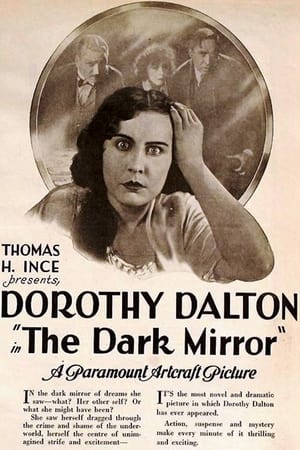
When Florette, a popular actress, and her friend Edith become rivals for the love of Walter Stanley, a leading man, Florette sacrifices her feelings for the other girl. Three years later, Phillip Rowland, a young aristocrat, falls in love with Florette. When Edith intrudes in her affairs, Florette--although she fears unhappiness will result because of their differing social positions--decides to marry Rowland regardless of the consequences. Rowland stands by his wife, although she is snubbed by his family, but when Edith conspires with Walter Stanley to place Florette in a compromising position, Judge Rowland accepts circumstantial evidence as truth and plans for a divorce. Florette, however, cleverly puts her brother-in-law on the defensive; making amends, he has her reinstated in the family's good graces. A lost film.
A gold prospector in Alaska struggles to survive the elements and win the heart of a dance hall girl.
When housewife Trina wins the lottery, her comfortable life with her dentist husband John slowly deteriorates, in part by her own increasing paranoia and partly by the machinations of villainous acquaintance Marcus.
The love story of an abused English girl and a Chinese Buddhist in a time when London was a brutal and harsh place to live.