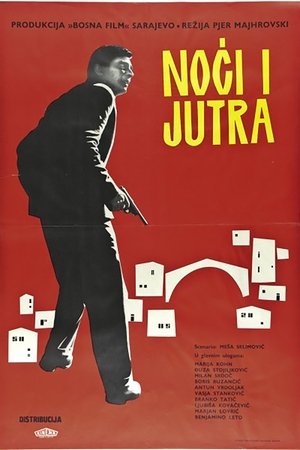
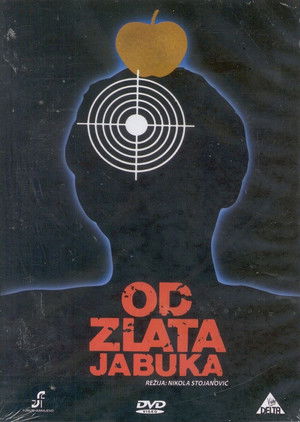
A solitary nurse bonds with a badly burned patient who survived an accident on an oil rig.
They meet in Yugoslavia. Katharina, daughter of a Yugoslavian immigrant worker, has grown up in the Federal Republic of Germany. She is a confident, energetic career woman who has managed to work her way up to become a successful television journalist. She goes to visit her parent's country, to do a story about the children of immigrant workers in their home country. Although she says she doesn´t need a "home" any more, even she feels strange in her own country. Peter is a rather "untypical" sort of man: a dreamer, a thinker. He has given up his steady job as a composer for advertising films and is divorced. He goes to Jugoslavia to find something out about the past. He travels to the places where his father was stationed during the Second World War.
Belgrade in 1963. In a yard surrounded by buildings, a group of young people of different backgrounds and social status, but of similar views about love and self-affirmation, spend their time together. Their friendship is dyed with various events typical for socialism, such as working actions or Youth Day's parade. All what happens within this yard may become an allegory of one generation's destiny.
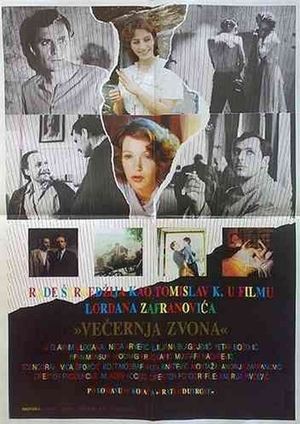
A frustrated and unemployed architect experiences flashbacks of his youth and 1968 protests while the life passes by. Unable to adapt and to accept the reality, he’s constantly getting into conflicts with the people around him.
In late summer 1991, three Italians reach a hunting reserve in Croatia with a station wagon. They go to deer, but, unaware of what's in store for months, they do not decipher the enigmatic signs that surround them. One of the three is suddendly wounded in the knee by a bullet of unknown provenance, and they end up in a hotel targeted by snipers night and day.
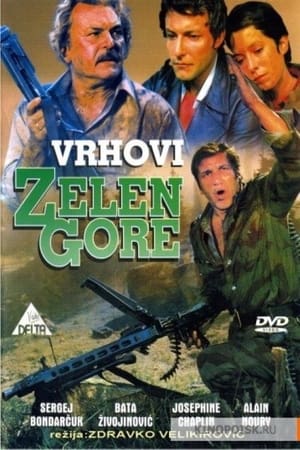
World War II, 1943. Mallory and Miller, the heroes who destroyed the guns of Navarone, are sent to Yugoslavia in search of a ghost from the past.
Leah Weiss, a Polish Jew, was first forced into prostitution at Auschwitz. Afterwards, she was victimized in medical experiments. Now, twenty years later, German war crimes prosecutors hope she will be their star witness. But can she stand up to the shame, the publicity, and the reliving of those experiences?
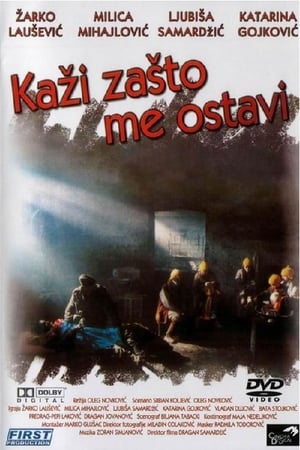
In the opening stages of the Bosnian War, a small group of Serbian soldiers are trapped in a tunnel by a Muslim force.
Trials and tribulations of a Croatian communist intellectual in the turbulent years before, during and after the Second World War.
Belgrade, Yugoslavia, 1979; a mysterious "Phantom" occupies the attention and hearts of Belgrade. Every night, he exhibits spectacular driving maneuvers using a stolen white Porsche car through the city streets.
In a post-WWII Yugoslavia still under Stalinist rule in the 1950s, six-year-old Malik is oblivious as to why his father, Mehmed, has suddenly disappeared. In truth, Mehmed has been sent to a labor camp as punishment for acts of sexual indiscretion involving young girls. Malik's mother, Senija, however, has no answers, and the family must cope in the father's absence.
During the Battle of Sutjeska, partisan troops must endure 24 hours of big and heavy attacks on German units Ljubino grave, to the main Partisan units, with the wounded and the Supreme Headquarters, pulled out the ring that is tightened around them.
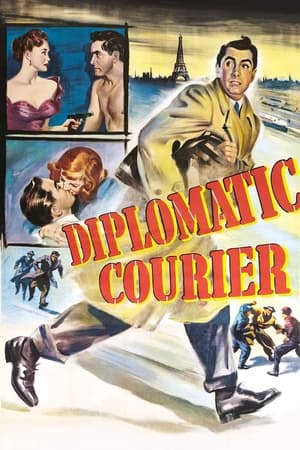
During the Cold War, diplomatic courier Mike Kells must retrieve a dispatch containing top-secret intelligence. But when he arrives at the meeting point, a train station in Salzburg, his contact turns up dead, and the message is nowhere to be found. With no clear suspect in sight, Kells must sort through his uncertain relationships with two women, while sidestepping the pitfalls of subterfuge, sabotage and spies in his search for the documents.
A flat broke aging boxer, living on the verge of existence, teams up with the equally desperate people in the city's suburbia to steal, cheat, and even kill for the money.
A French woman falls in love with a Yugoslavian man, not realizing that he is an illegal immigrant.
In the first year of freedom after WW2, a poor family from rocky Herzegovina moves to fertile province of Vojvodina hoping for a better life. However, there they face different type of troubles following the Tito's break-up with Stalin in 1948. Destinies of individual members of this family are about to have a tragic epilogue.
A journalist investigates the smuggling of gypsy children on the black market and tries to save a young boy.
A painter gets infected by AIDS, and finds himself at disease clinic in Belgrade. He shared the hospital room with an ex-musician, junkie who tries to discontinue treatment and returns home to his wife. The painter believes in recovery through his paintings, believing that they have supernatural powers. In their room, the medics bring a boy suspected to be infected with the AIDS virus. Meanwhile, the musician's wife leaves him. Having desire for revenge, high on drugs and labile, he rapes nurse. The painter's health deteriorates and he dies. Shortly afterwards, the musician commits suicide. Only the boy remains in the room - a child of uncertain fate and in possession of dozens of "totemic paintings".
During the Yugoslav break-up, Federal Army officer is fed up with war and takes some leave in Belgrade. However, it turns out that he is less haunted by war horrors than with some sentimental skeletons in the closet. He meets his former comrade and best friend who is AWOL, but can't report him because he had an affair with his wife.
In 1985, four middle-aged Yugoslav emigres return to Belgrade for the funeral of Mariana, their beautiful compatriot. They called her Esther, for Esther Williams, she was the coxswain for their four-man rowing team, and they each loved her. They'd last seen her in 1953, when they rowed her across the Adriatic, pregnant, to join her exiled father in Italy. In flashbacks we learn the story of their youthful baptism into sex, smoking, rock and roll (Hey Ba-ba-re-bop), Hollywood and Swedish films, blue jeans on the black market, and their rivalry with Ristic, the Communist Party youth leader for whom they had instant antipathy.