The film explores the campaign waged by the Hindu right-wing organisation Vishva Hindu Parishad to build a Ram temple at the site of the Babri Masjid in Ayodhya, as well as the communal violence that it triggered. A couple of months after Ram ke Naam was released, VHP activists demolished the Babri Masjid in 1992, provoking further violence.
When one thinks of the American Deep South, the image of veiled Muslim students strolling the University of Alabama campus is the last thing that comes to mind. VOICES OF MUSLIM WOMEN FROM THE US SOUTH is a documentary that explores the Muslim culture through the lens of five University of Alabama Muslim students. The film tackles how Muslim women carve a space for self-expression in the Deep South and how they negotiate their identities in a predominantly Christian society that often has unflattering views about Islam and Muslims. Through interviews with students and faculty at Alabama, this film examines representations and issues of agency by asking: How do Muslim female students carve a space in a culture that thinks of Muslims as terrorists and Muslim women as backward?
Documentary feature about 11-time Jeopardy! champion and Internet iconoclast, Arthur Chu.
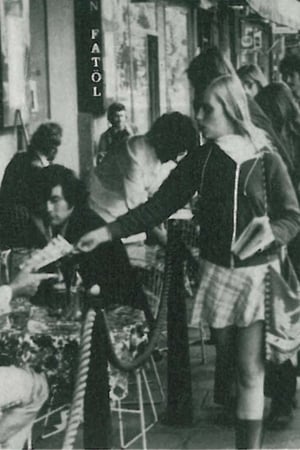
Nine fictitious documentaries and films reflect the mood of late 1970s Germany, particularly the two-month period in 1977 when a businessman was kidnapped by the RAF (Red Army Faction). The kidnap had been made to orchestrate the release of the original leaders of the RAF, aka the Baader-Meinhof.
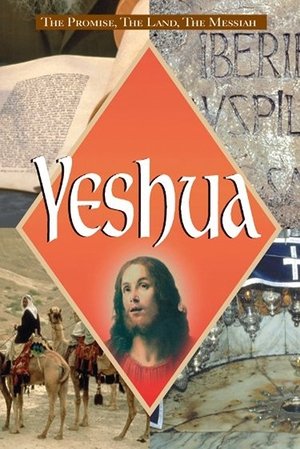
A fascinating new look at the biblical, historical, and scientific evidence for Creation and the Flood. Learn from more than a dozen scientists and scholars as they explore the world around us in light of Genesis. Dr. Del Tackett, creator of The Truth Project, hikes through canyons, climbs up mountains, and dives below the sea in an exploration of two competing views... one compelling truth.
Esteemed documentarian Anand Patwardhan directs a portrait of his parents, whose families were intertwined with Gandhi and India’s independence movement. His view on history extolls unity between Hindus and Muslims, a value that needs reasserting in modern politics.
Openland is an art film guided by issues surrounding micro states and its derivative definitions. Through intertwining interviews, meta-narratives, and digital landscapes, Openland unfurls a dialogue between consciousness, individuality and collectivity.
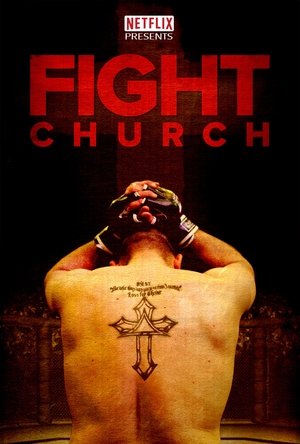
A documentary about the confluence of Christianity and mixed martial arts, including ministries which train fighters. The film follows several pastors and popular fighters in their quest to reconcile their faith with a sport that many consider violent and barbaric. Faith is tried and questions are raised. Can you really love your neighbor as yourself and then punch him in the face?
An exploration of the intersection between religion and homosexuality in the U.S. and how the religious right has used its interpretation of the Bible to stigmatize the gay community.
In Bettina Büttner’s exquisitely lucid documentary Kinder (Kids), childhood dysfunction, loneliness, and pent-up emotion run wild at an all-boys group home in southern Germany. The children interned here include ten-year-olds Marvin and Tommy. Marvin, fiddling with a mini plastic Lego sword, explains matter-of-factly to the camera, “This is a knife. You use it to cut stomachs open.” Dennis, who is even younger, is seen in a hysteric fit, mimicking some pornographic scene. Boys will be boys, but innocence is disproportionately spare here. Choosing not to dwell on the harsh specifics, Büttner reveals the disconcerting manner in which traumatic episodes can manifest themselves in the mundane — a game of Lego, Hide and Seek, or Truth or Dare. Filmed in lapidary black-and-white, Büttner’s fascinating film sheds light on childhood from the boys’ characteristically disadvantaged perspective — one not yet fully cognizant — leaving much ethically to ponder over.
In a poetic hour and a half, director Mani Kaul looks at the ancient art of making pottery from a wide variety of perspectives.
Documentary film about Catholic Church teachings about homosexuality. Describes the "third way", the lifestyle lead by orthodox gay Catholics practicing celibacy out of personal choice, an often overlooked demographic in the debates about homosexuality in the Church.
It is a fetish, a mantra, a secret religion to modern man: work. In times of the financial crisis and massive job reductions, this documentary movie questions work as our 'hallow' sense in life in a way that both humors and pains us.
On 25th December 2011 the Georgian Patriarch Ilia II described his 34 year-long leadership as head of the Georgian Orthodox Church as a ‘sunny night’. Beginning in 1989, and going up to the present, the film essay Sunny Night tells of political and social events since Georgian Independence. A variety of formats and sources, disparate images and voices report on protests, recommencements, uproars and wars, and religious identity that centres around the dominant religion of the nation. In the midst of the ongoing shifts and the various state of affairs, the patriarch stands out as the only constant figure. Meanwhile the sermonised religion begins to take on radical forms, going as far as priests forming front row human-chains, leading protests of several thousand orthodox believers chasing a handful of LGBT activist throughout the streets of Tbilisi in May 2013.
At the age of 54, Binode Bihari Mukherjee, an accomplished painter, lost his sight following an unsuccessful cataract operation. He continued to create art despite his loss of sight. The documentary explores Binode Bihari’s inner eye that guides his fingers to create art.
Bill Nye and Ken Ham debate whether creation is a viable model of origins in today's modern scientific era.
Scott Mills travels to Uganda where the death penalty could soon be introduced for being gay. The gay Radio 1 DJ finds out what it's like to live in a society which persecutes people like him and meets those who are leading the hate campaign.
Each night the only border crossing between India and Pakistan on a 1000km stretch becomes the sight of an extraordinary event. Thousands of people gather to witness the ritual closing of the border, after which the masses get as close as possible to the gate to greet their former neighbors. This "festival" is therefore on the one hand a celebration of the partition, but on the other hand also the only connecting element. What do the terms separation, home and proximity mean to the people on both sides?
In a cluttered news landscape dominated by men, emerges India’s only newspaper run by Dalit women. Armed with smartphones, Chief Reporter Meera and her journalists break traditions on the frontlines of India’s biggest issues and within the confines of their own homes, redefining what it means to be powerful.
A true animated film about invented islands. About an imaginary, linguistic, political territory. About a real or dreamed country, or something in between. Archipelago is a film of drawings and speeches, that tells and dreams a place and its inhabitants, to tell and dream a little of our world and times.