An experimental short from Oskar Fischinger
The first Studies were synchronized with records (Fischinger made a total of 13 Studies all without sound). It was only with the introduction of sound, beginning with Study No 6 that the films did full justice to this musical principle. The play of the white lines, the arcs, and the upside-down U’s running hither and thither like ballet dancers was brought into perfect synchronization with the music, and thus the films offered an abstract illustration of the melodies. Study No 6 is certainly the best of his films in terms of forms. - Hans Scheugl and Ernst Schmidt, Jr. Preserved by the Academy Film Archive in 2001.
Melancholie vnějších mezí
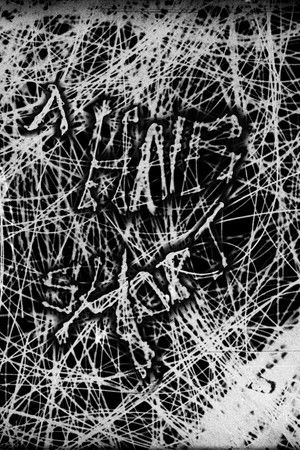
Exploring the conscious, the unconscious and the self, By Winds and Tides takes a deep experimental dive into the birth of an idea—how it takes shape, how it is released. An allegorical quest, the film combines images and words into a singular sigh.
Plaga Alada
The encounter of a wound, a body and a city results in the alteration of the whole.
Two figures —an angel bathed in light and a widow veiled in mourning— mirror each other’s gestures. Through the interplay of costume, color, and hand-drawn intervention, Emerge & Fade explores how innocence and disillusion coexist and transform one another.
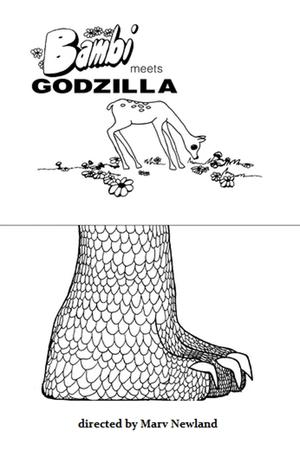
A deer, disillusioned by the consumerism that defines his life. A lizard, ostracized from society, forever wandering. A chance meeting in the middle of a field. Who will survive? And who will transcend existence? Preserved by the Academy Film Archive in 2009.
The sun’s energy circulates throughout the earth, feeding the cycle of life. Everything is connected in a natural loop, which repeats, like the circular discs of magical optical toys. This perfectly balanced rhythm is disrupted by human excess, throwing the cycle out of orbit and temporarily stopping the circulation of energy in nature.
"I relocated to the Redwoods of Sonoma County upon graduation and in that relocation process the animation for Sonoma began. The design was built around the concept of the long wide horizontal 'pan' shot to express the concept of a dynamic landscape that passes across the screen like a traditional Chinese Scroll Painting. The deep personal meaning relates to the 'relocation' that was occurring within my own being after having done 2½ terms of active combat in the jungle as a carrier enlisted with the 82nd Airborne Division of the Army" -D. Pies. Preserved by the Academy Film Archive in 2012.
Sarah and her two cats go about their separate lives. The cats have strange dreams about their desires, and Sarah develops an unshakable paranoia that something is wrong with them. Sarah's paranoia bleeds into her social life, and her two cats have their dreams come true.
undressed
An experimental sampled film which shows the pleasurable art of movies about movies through scenes inside of theaters.
Begins as a whimsical piece with 'sheets' of lines running down the screen, progressing into more and more complex geometic patterns but without deviating from the basic precepts of 'dot and line' animation. Jazz piano on a lazy Sunday afternoon, and a spring color palette. -- Stephanie Sapienza. Preserved by the Academy Film Archive in 2001.
Gore's second solo film, DREAM OF THE SPHINX is highly representative of his fluid, expressive line work and characteristic traversals through space. Preserved by the Academy Film Archive in partnership with CalArts and iotaCenter in 2009.
A collaborative piece by Gore and Beckett, the film begins with one of Gore's characters composing a letter, to eventual mail it. Beckett's animation takes over at this point, transforming the envelope into a looping, cascading form that seems to be perpetually turning itself inside out. A brief Gore finale bookends the piece, which is one of only two extant examples of Gore's unique animation work. This film is usually appended to Gore's own Dream of the Sphinx. [Source: Mark Toscano] Preserved by the Academy Film Archive in partnership with CalArts in 2009.
An animated film drawn in india ink directly on 65 mm film. It was reduced optically to 35mm film with colour added. The story of the film concerns a rivalry between two simple stick figures characters for the championship in a unicycle race. Preserved by the Academy Film Archive in 2011.
For the multimedia exhibition Tangenten I (Tangents I), Dammbeck and co-organizer, sculptor and painter Frieder Heinze had planned to collaborate on a film that would combine non-camera animation with 35mm footage of a train ride between the two Dresden districts of Radebeul and Pieschen. When the exhibition was banned in 1978, Heinze turned to other projects, but Dammbeck continued working on the film by himself. Metamorphoses I—the first experimental film ever to be shown publicly in East Germany—marks the filmic beginning of Dammbeck’s long-term art project the Herakles-Konzept (Hercules Concept).
Abstract video art set to the music of Philip Glass.
An NTSC space opera.