Rito do Amor Selvagem
Aconteceu, virou Manchete! A História da Rede Manchete
Boca Fechada
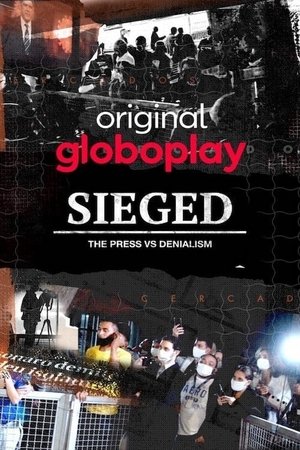
Behind the scenes of news coverage during the pandemic. Follow the work of the professional press in a fight against denialism.
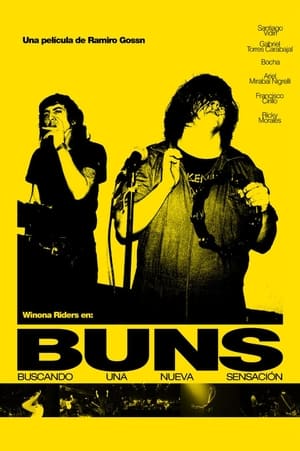
BUNS
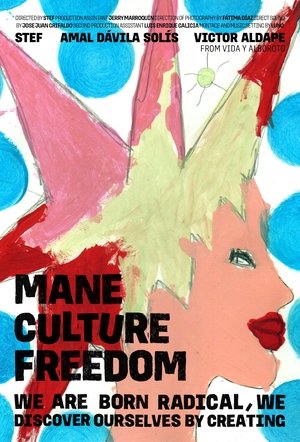
Greña Cultura Libertad
Um real a hora
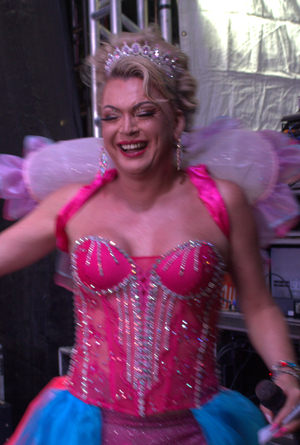
In the form of a documentary, this Final Year Coursework chronicles the career of Selma Light, a transgender woman, drag queen, and activist, a prominent voice in the LGBTQIA+ movement in Florianópolis, Santa Catarina. The construction of the biographical narrative revisits key moments in Selma's career, such as when she traveled with theater companies, her first time as a drag queen, and her debut as a performance artist. Her personal life is also explored, from her childhood in the countryside of Rio Grande do Sul to her acceptance of her gender identity. Her current work adds a new challenge to the struggle of the LGBTQIA+ community in the capital of Santa Catarina: she holds a public office, never before held by a trans person. She has the decision-making power to advance the struggle of the LGBTQIA+ community in the capital of Santa Catarina.
Jornal News
James Fairfax, editor of the scandalous Morning Argus, stops at nothing for a juicy story, much to the disdain of his staff—especially reporter Dolly Clare.
Jornal da Semana Retrasada
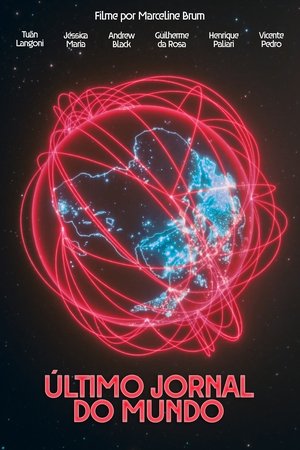
Último jornal do mundo
Drama-documentary recounting the events of the 1st July 1916 and the Battle of the Somme on the Western Front during the First World War. Told through the letters and journals of soldiers who were there.
In his Soundstage special, Brian Wilson performs hits from his illustrious award-winning career as a Beach Boy, as well as selections from his new album No Pier Pressure.
A full on examination of the two presidential terms of Carlos Andres Perez in which he led the venezuelan fates: 1974-1979 and 1989-1993, known respectively as "La Gran Venezuela" and "El Gran Viraje". Two models of government that, separated by ten years, were very different but produced a change in the history of the country.
The only surviving film from the first trip of Aleksandr Medvedkin's Kinopoezd (film train). A 'film-newspaper' demonstrating one key aspect of the train's work: the desire to encourage shame. In it, poor workers are named and shamed outright and local leaders are filmed at a lengthy and ill-focused meeting, ignoring the urgent demands of the work that surround them.
This documentary tells the untold story of the Sachsenhausen camp that between 1936 and 1945 was a Nazi concentration camp, and between 1945 and 1950 a Soviet special camp.
Presents a socio-economic analysis of present day Puerto Rico. Uses archival footage, re-enactments of historic events, and interviews with participants to recount the long history of U.S. involvement in Puerto Rico and the anti-colonial struggle.
A ski film unlike any other, Monumental: Skiing Our National Parks celebrates the 100th anniversary of the National Park Service by paying homage to these monuments of nature and solitude, reminding us skiers where we came from, and that we belong to something greater than ourselves. Follow contemporary explorers through the lens of KGB Productions with skiers Andy Mahre, Lynsey Dyer, Griffin Post, Colter Hinchliffe, Kalen Thorien, Greg Hill, Max Hammer, and Connery Lundin at Yellowstone National Park, Yosemite National Park, Grand Teton National Park, Glacier National Park, and Olympic National Park.
Belgian art historian and filmmaker Paul Haesaerts (1901–1974) made a significant contribution to the promotion of modern Flemish art. In the late 1940s, he started experimenting with the medium of film to practice a new form of lens-based art criticism. The understudied documentary "Quatre peintres belges au travail" (1952) presents Belgian artists Edgar Tytgat, Albert Dasnoy, Jean Brusselmans and Paul Delvaux at work in their studio. On a large sheet of glass placed in front of the camera, they each paint one of the seasons that also represent a stage in a person’s life. A close reading of this Kodachrome color film sheds light on the context of mid-century art reproductions, mass media and post-war Flemish culture. It also examines in what way this film operates as Haesaerts’s concept of cinéma critique, while raising questions as to the way Haesaerts attempted to reconcile the spatial art of painting with the temporal medium of film.