Just after midnight on 10 March 1945, the US launched an air-based attack on eastern Tokyo; continuing until morning, the raid left more than 100,000 people dead and a quarter of the city eradicated. Unlike their loved ones, Hiroshi Hoshino, Michiko Kiyooka and Minoru Tsukiyama managed to emerge from the bombings. Now in their twilight years, they wish for nothing more than recognition and reparations for those who, like them, had been indelibly harmed by the war – but the Japanese government and even their fellow citizens seem disinclined to acknowledge the past.
Ergui as Mãos aos Céus e Não Havia Mais Luz
L'Épopée des gueules noires
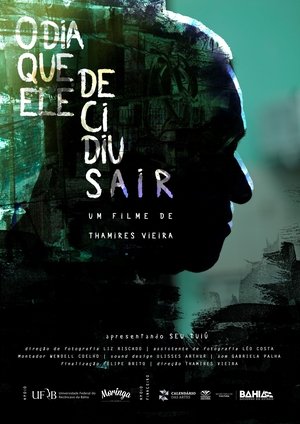
After a premonition of an unusual bird, a father loses his voice. His daughter undertakes a search to rediscover him, through an intimate narrative that explores the past, the new facets and the silences of a man who is no longer the same.
An experimental documentary engaging with decades of DIY activist media, two death bed/legacy videos, and the wisdom of many living AIDS workers, as we all sit together in one (changing) format, video—VHS, hi-8, digital, Zoom—to address these and other questions: How do neighborhoods, sweaters and scarves, videotapes and queer bars hold ghosts? How do we let them go?
A manufactured memory.
Can exercise sharpen the brightest minds? In this ground-breaking experiment, four world-class gamers, competing in eSports, Chess, Mahjong and Memory Games, put this to the test.
Seven strangers are interviewed to talk about the relationship they have with their mother.
The lastest neuroscience discoveries show surprising results: false memories, distortion, modification, déjà vus. Our memory is affected in many ways, and deceives us every day. The very fact of recalling souvenirs modifies them. The everyday consequences are manyfold. To what extent can we rely on our souvenirs? How much credit can we give them during trials? Even more shocking, scientists have proved to be able to manipulate our memory: creating artificial souvenirs, deleting, emphasizing or restoring them on demand.
In the streets of Marseille, René Allio encounters, once again, the spaces of his childhood, and remembers his family history.
Nesrin and Erdem talk about their relationship, which they don’t remember in exactly the same way. Çevik’s visually stunning essay uses their conversations to forge a pensive treatise on what it means to forget, where word and image play an equal role.
In 1952, Amédée took his own life by jumping into the Seine. No one knows the reason for this tragic act. His story comes to us in bits and pieces.
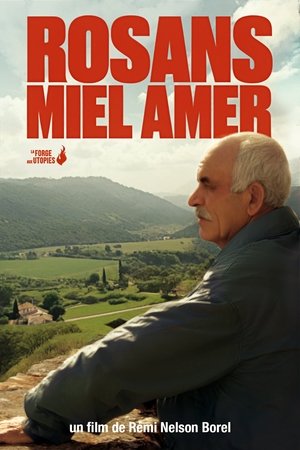
In 1963, Rosans, a village in the Hautes-Alpes region depopulated by the rural exodus, welcomed Harkis (military soldiers) forced to leave Algeria for supporting France during the Algerian War. Around thirty families settled in a camp below Rosans. Nearly half a century after their arrival, first- and second-generation Harkis and native Rosanais recount their experiences of this culture clash, often painful, sometimes happy. Language barriers, religious differences, living in barracks for 14 years, and unemployment were all obstacles to overcome in order to be accepted and then achieve mutual enrichment. Enriched with archive footage to explain the historical context of the time, the film seeks above all to express feelings and unspoken words.
Mel Schwartz escaped the Great Depression on a bicycle adventure he'd remember for the rest of his life... until Mel lost his memory to Alzheimer's. Now over seventy-five years later, his grandchildren set out to recreate his life-changing journey and find those memories before they slip away. Cycle of Memory explores the importance of intergenerational connection, healing painful pasts, and leaving a meaningful time capsule for the future.
A glimpse into a visual representation of memory; A Christmas-time series of meals, coffees, and movies, with friends, lovers, and housemates. Faced with the compounding of faces and places, each moment begins to collide with one another: voices are muddled, and faces are broken. How is memory created? How are they separated from one another?
An unnamed passer-by is forced to trace a circular route inside an abandoned tram station, facing loss and time. The broken walls act as a channel, transmitting fragmentary, blurred and analogical memories.
Told through the tales of love of a retiring film projectionist and a late-blooming actress, the short documentary delves into the journey of Manila’s oldest movie theater from grandiosity to obsolescence.
"Surrounded by dozens of soldiers like me, I was led by bus to a remote camp in the desert, a place I knew nothing about. As a military photographer, I collected fragments of moments in my photos, serving as solid evidence for me." Shivtown is the story of an ordinary soldier who, in an intimate and courageous act, revisits memories from his military service through the still images he captured with an analog camera.
10 May 1943. Something is spotted drifting ashore off the coast of Northwest Donegal, Ireland. Something that would change the lives of the local people forever.
A flock of memories activated by various musical exercises, to strike the past to the heart, to build something utopian: the future, a sonic architecture. Music as a tool, transcriptions of YouTube tutorials as poetry, percussion exercises as descriptions of reality.