Howard Carter hunts for the tomb of the boy king Tutankhamun.
Explores the Pyramids of Giza as Egyptologists try to unravel the mysteries and decipher the clues behind these stone giants built over 4,500 years ago.
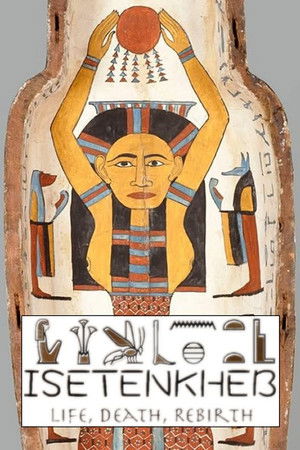
Follow from the amazing restoration process of one of the most cherished and mysterious pieces of History: an Egyptian sarcophagus covered with hieroglyphics (painted wood). With exclusive interviews of experts, art curators and restorators, discover everything about the story of the Isetenkheb coffin of Ancient Egypt dated from around 664-500 BC !
Le monde de Khéops
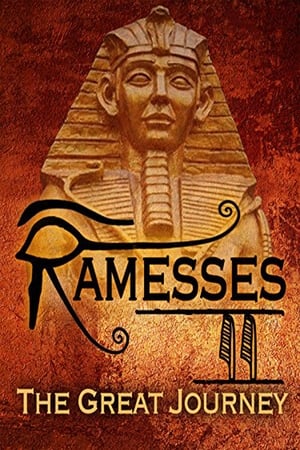
3,200 years ago, Egypt is living the final hours of its golden age under the reign of Ramesses II. After ruling the country for 67 years, the great pharaoh dies at the old age of 92. His mummy is burried in the heart of the Valley of the Kings. This is the beginning of his great journey towards the afterlife but only under one condition: that his tomb remains off limits forever. However, in the 19th century, many European adventurers explore the tomb of the king searching for the burial chamber. Then begins an archeological investigation, which reveals the story of Ramesses II after-life.
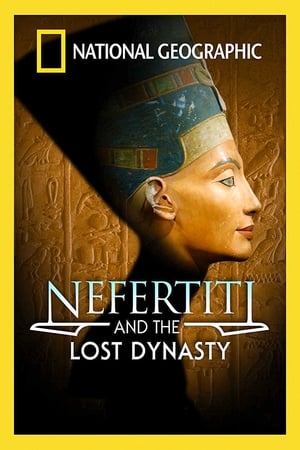
It is one of Egypt's enduring mysteries. What happened to Nefertiti and her husband, Akhenaten - the radical king, and likely father of King Tut? In a dark and mysterious tomb located in the Valley of the Kings, there is a small chamber with two mummies without sarcophagi or wrappings. At times, both have been identified as Queen Nefertiti by scholars, filmmakers and historians. But the evidence has been circumstantial at best.
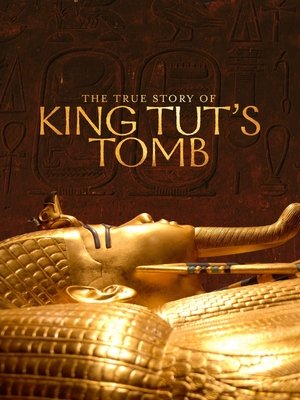
Almost 100 years after the discovery of King's Tut's Tomb, it is time to tell the story in a new light. Using 2D and 3D imagery to reconstruct the tomb, the mummy, the funerary objects and the topography of the famous valley of the Kings.
This documentary follows a team of archaeologists, mandated by the Louvre Museum, as they pick up where Egyptologist Auguste Mariette left-off with his discovery of the Serapeum tomb of the bull of Apis - one of the most sacred places in Saqqara, Egypt, in 1850. Mariette also managed to map out a network of underground tunnels leading to other burial sites that he did not have time to uncover. With exclusive access, we follow a team of archaeologists continue the research of Mariette.
January 2011: a team from the University of Basel makes two spectacular discoveries. The first was a previously unknown tomb, which was given the number KV64 and contained two mummies. It had originally been created at the time of Amenhotep III for a princess of the 18th dynasty and was reused a few centuries later for the burial of a noblewoman of the 22nd dynasty. Right next to it is the already known burial site KV40, where the Basel researchers have now carried out excavations for the first time. They discovered dozens of mummies - an unusual find in the Valley of the Kings, where most tombs were built for just one pharaoh. Initially, the archaeologists estimated the number of dead at 30, but after months of collaboration with evolutionary scientist Frank Rühli from the University of Zurich, they came to the conclusion that there must actually be more than 90. Who were these women?
Tutankhamun: The Mystery of the Burnt Mummy
This special takes a 21st century approach to ancient history, bringing together the latest scientific evidence to build the ultimate picture of King Tutankhamun.
Built in 1500 BC on the west bank of the Nile, the temple of Hatshepsut serves as a spectacular new kind of temple and amazes Egyptologists with its unique design and historical significance.
The BBC version of "King Tut In Color" documentary. A century after the world’s most exciting archaeological find - the tomb of Tutankhamun - we can witness the dramatic scenes of its discovery and marvel at its extraordinary treasures exactly as they were then, in colour.
La Malédiction de Toutankhamon : L'Énigme des morts suspectes
Professor Joann Fletcher explores what it was like to be a woman of power in ancient Egypt. Through a wealth of spectacular buildings, personal artefacts and amazing tombs, Joann brings to life four of ancient Egypt's most powerful female rulers and discovers the remarkable influence wielded by women, whose power and freedom was unique in the ancient world. Throughout Egypt's history, women held the title of pharaoh no fewer than 15 times, and many other women played key roles in running the state and shaping every aspect of life. Joann Fletcher puts these influential women back at the heart of our understanding, revealing the other half of ancient Egypt.
Berlin’s Museum Island, the cultural center of the German capital on the Spree river, houses a large number of art pieces from all over the globe, from the Stone Age to the present day. A walk through their great institutions to marvel at their masterpieces.
La Révélation des Pyramides 2 : l'Équateur penché, l'enquête continue...
This documentary follows a team of local archaeologists excavating never before explored passageways, shafts, and tombs, piecing together the secrets of Egypt’s most significant find in almost 50 years in Saqqara.
After 20 years seeking Cleopatra's tomb, archaeologist K. Martinez's search shifts to an underwater Mediterranean site. She's joined by Titanic finder Bob Ballard, Egyptian Navy and dive teams to explore the location.
For years, archaeologists have been fascinated by the statue with a lion's body and human head. To discover the mysteries of the Sphinx, the team go inside the magnificent monument.