Outtakes, commentary from Zefier's third film: Jo; or The Act of Riding a Bike.
Short documentary about the making of Twin Peaks: The Return.

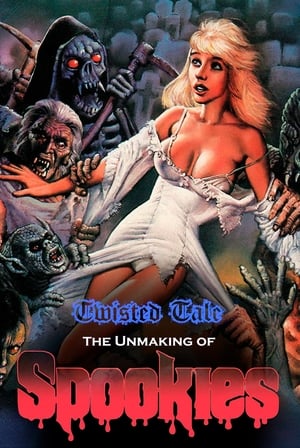
A feature-length, retrospective documentary about the troubled production of 1985's SPOOKIES, which began its life under the title TWISTED SOULS.
A short documentary about the making of Twin Peaks: The Return. This time focused in the planing and technical execution of some particular scenes.
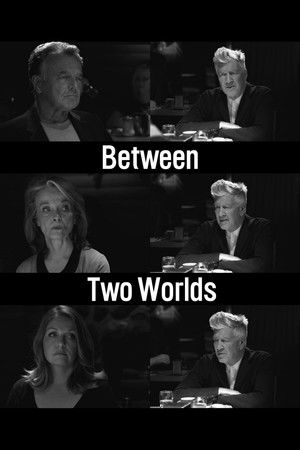
"Between Two Worlds" is a featurette included in the Twin Peaks: The Entire Mystery and Twin Peaks: From Z to A Blu-ray releases. It features David Lynch interviewing Grace Zabriskie, Ray Wise and Sheryl Lee, first as their characters (Sarah Palmer, Leland Palmer, and Laura Palmer, respectively), then as themselves. The second portion of the featurette was later released in the Criterion Collection release of Twin Peaks: Fire Walk with Me. The Palmer family interview was written by Lynch.
Documentary about 'Twin Peaks Festival'.
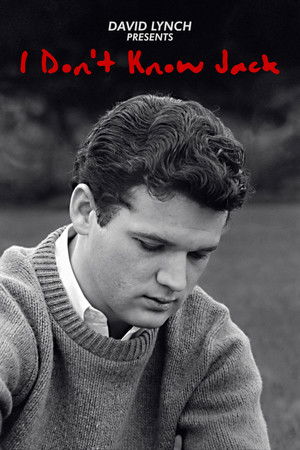
The life of actor Jack Nance, whose rise to prominence after starring in David Lynch's 1977 cult classic Eraserhead led to involvement in various further projects with Lynch.
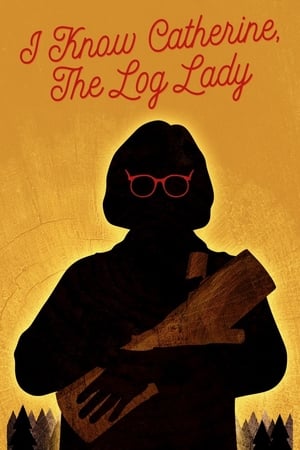
An authorized feature documentary about Catherine E. Coulson, best known as the Log Lady in David Lynch & Mark Frost's "Twin Peaks".
A man finds a way to travel to another dimension. It's beautiful and fascinating there...but not everything is what it seems.
This pioneering documentary film depicts the lives of the indigenous Inuit people of Canada's northern Quebec region. Although the production contains some fictional elements, it vividly shows how its resourceful subjects survive in such a harsh climate, revealing how they construct their igloo homes and find food by hunting and fishing. The film also captures the beautiful, if unforgiving, frozen landscape of the Great White North, far removed from conventional civilization.
Starting with a long and lyrical overture, evoking the origins of the Olympic Games in ancient Greece, Riefenstahl covers twenty-one athletic events in the first half of this two-part love letter to the human body and spirit, culminating with the marathon, where Jesse Owens became the first track and field athlete to win four gold medals in a single Olympics.
Part two of Leni Riefenstahl's monumental examination of the 1938 Olympic Games, the cameras leave the main stadium and venture into the many halls and fields deployed for such sports as fencing, polo, cycling, and the modern pentathlon, which was won by American Glenn Morris.
Working men and women leave through the main gate of the Lumière factory in Lyon, France. Filmed on 22 March 1895, it is often referred to as the first real motion picture ever made, although Louis Le Prince's 1888 Roundhay Garden Scene pre-dated it by seven years. Three separate versions of this film exist, which differ from one another in numerous ways. The first version features a carriage drawn by one horse, while in the second version the carriage is drawn by two horses, and there is no carriage at all in the third version. The clothing style is also different between the three versions, demonstrating the different seasons in which each was filmed. This film was made in the 35 mm format with an aspect ratio of 1.33:1, and at a speed of 16 frames per second. At that rate, the 17 meters of film length provided a duration of 46 seconds, holding a total of 800 frames.
Antônio Conselheiro: O Taumaturgo dos Sertões
Louis Ortiz, a down on his luck 40-something Puerto Rican resident of the Bronx, looks in the mirror one day and believes he’s found gold—he’s a dead ringer for Barack Obama. With visions of finally living the American Dream, the charismatic Ortiz launches a complete makeover. He dons Obama’s trademark suit, adopts his mannerisms, mimics his voice and steps out onto the street as a presidential impersonator. Taken on by a casting agent, Ortiz and a gang of other political impersonators, including a Bill Clinton and a Mitt Romney, hit the road during the run-up to the 2012 presidential election to perform satirical debates for mostly Republican conventions, throwing Ortiz into conflict with his personal political beliefs. As Ortiz struggles to make ends meet, the distance between the White House and the Bronx becomes increasingly acute. The life of a president isn’t always as easy as it looks.
Successful British band Japan filmed live in concert at the Hammersmith Odeon, London on 16th November 1982.
The film explores the journeys and philosophies of a select group of experimental musicians including Keith Rowe, Evan Parker, Eddie Prevost, Otomo Yoshihide, Toshimaru Nakamura and Christian Fennesz.